Coat care
How often should a long-haired cat actually be brushed?
The short answer
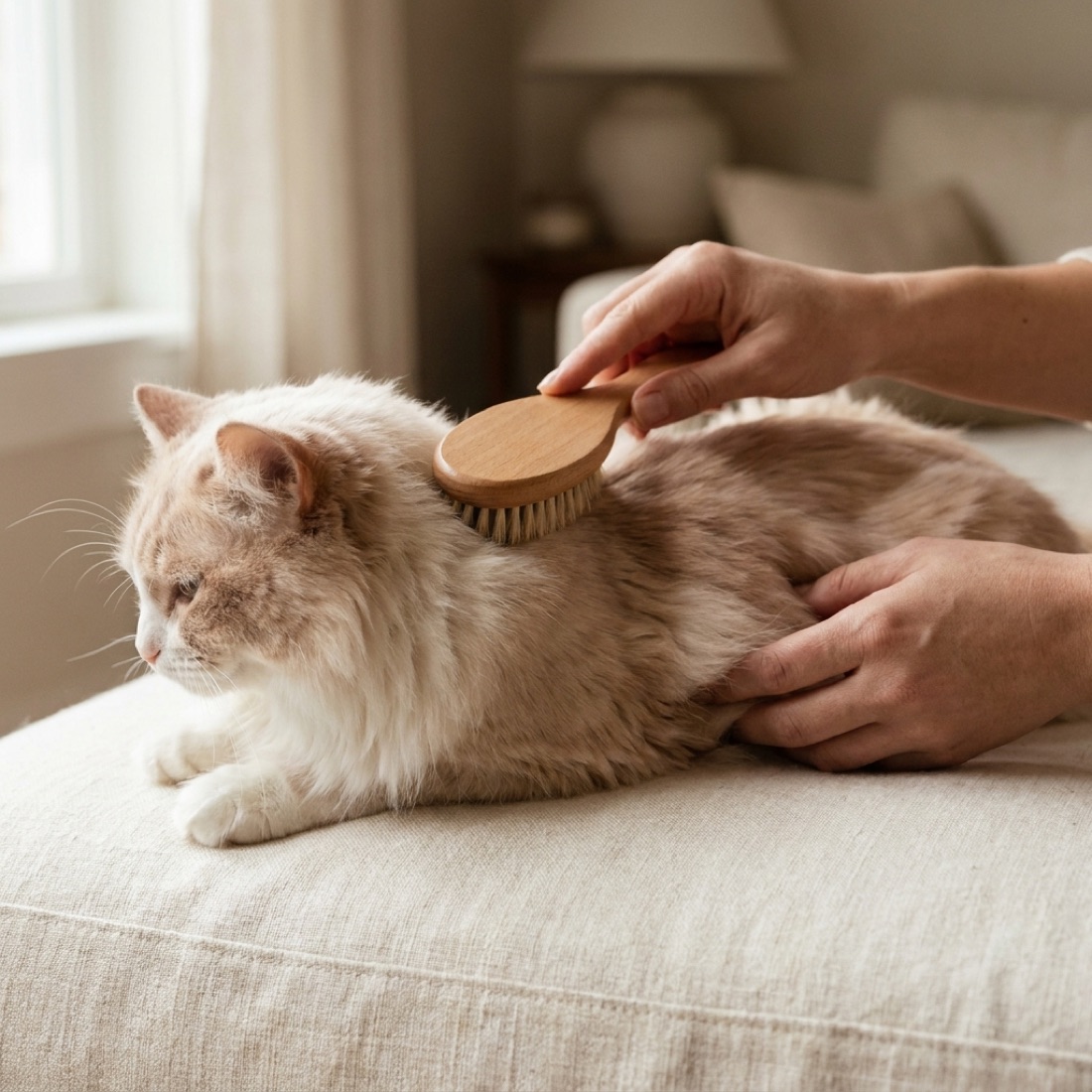
A long-haired cat generally needs brushing every day or every other day. A short-haired cat can usually go a week. That difference is not about tidiness — it is about whether loose undercoat gets removed before it has a chance to knit itself into a mat.
If you only remember one thing: it is far easier to prevent a mat than to remove one.
Why daily, and not weekly
Long coats shed continuously rather than seasonally, and the shed hair does not always fall clear. It gets caught in the surrounding coat, particularly in the friction points — behind the ears, in the armpits, along the back legs, and under the collar.
Once trapped hair starts to twist, it forms a mat that tightens against the skin. A tight mat pulls every time your cat moves, and can hide skin irritation underneath it.
How the seasons change things
Expect heavier shedding in spring and again in autumn as the coat changes. During those weeks, daily brushing is not optional for a long-haired cat — it is the difference between a manageable coat and a trip to a groomer.
Indoor cats under artificial light often shed year-round at a lower level rather than in sharp seasonal bursts, so their routine should stay consistent all year.
Reading your own cat
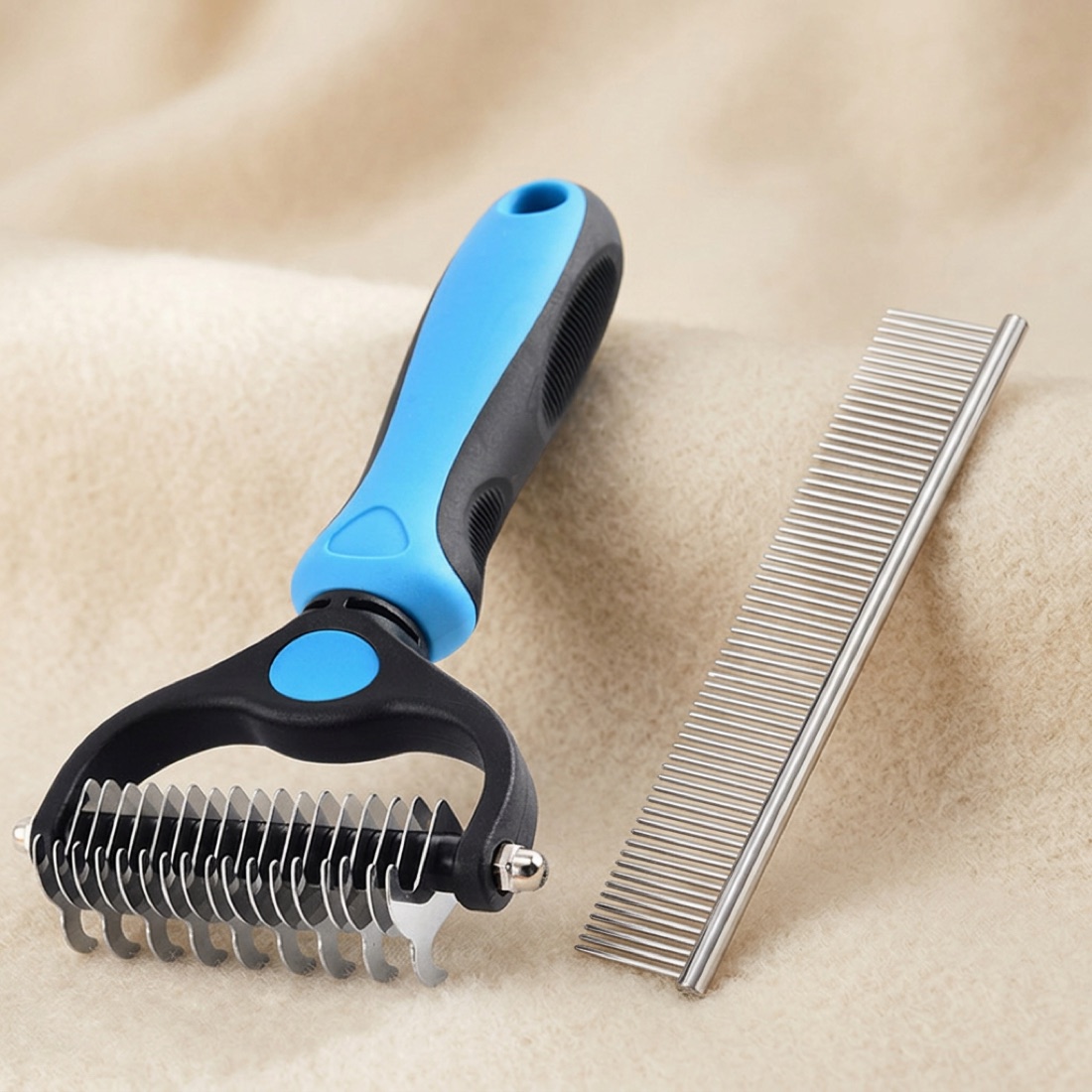
- If the comb passes through without catching, your interval is working.
- If you find small tangles each session, shorten the interval.
- If you find mats you cannot comb out with light pressure, stop — do not keep working at it.
- If your cat starts avoiding the brush, the sessions are too long or too firm, not too frequent.
When to stop and call a groomer
Do not cut a mat out with scissors. Cat skin is thin and mobile, and it tents up into the mat — this is one of the most common ways owners cause an injury that needs stitches.
Book a professional if the mat is tight to the skin, if the coat is matted over a large area, or if your cat reacts with pain when you touch it. If there is redness, a smell, or discharge under the mat, that is a vet visit, not a grooming one.
Making the session shorter
Stopping before your cat becomes restless is what makes the next session easier. Two calm minutes beats ten fought-for ones, every time.
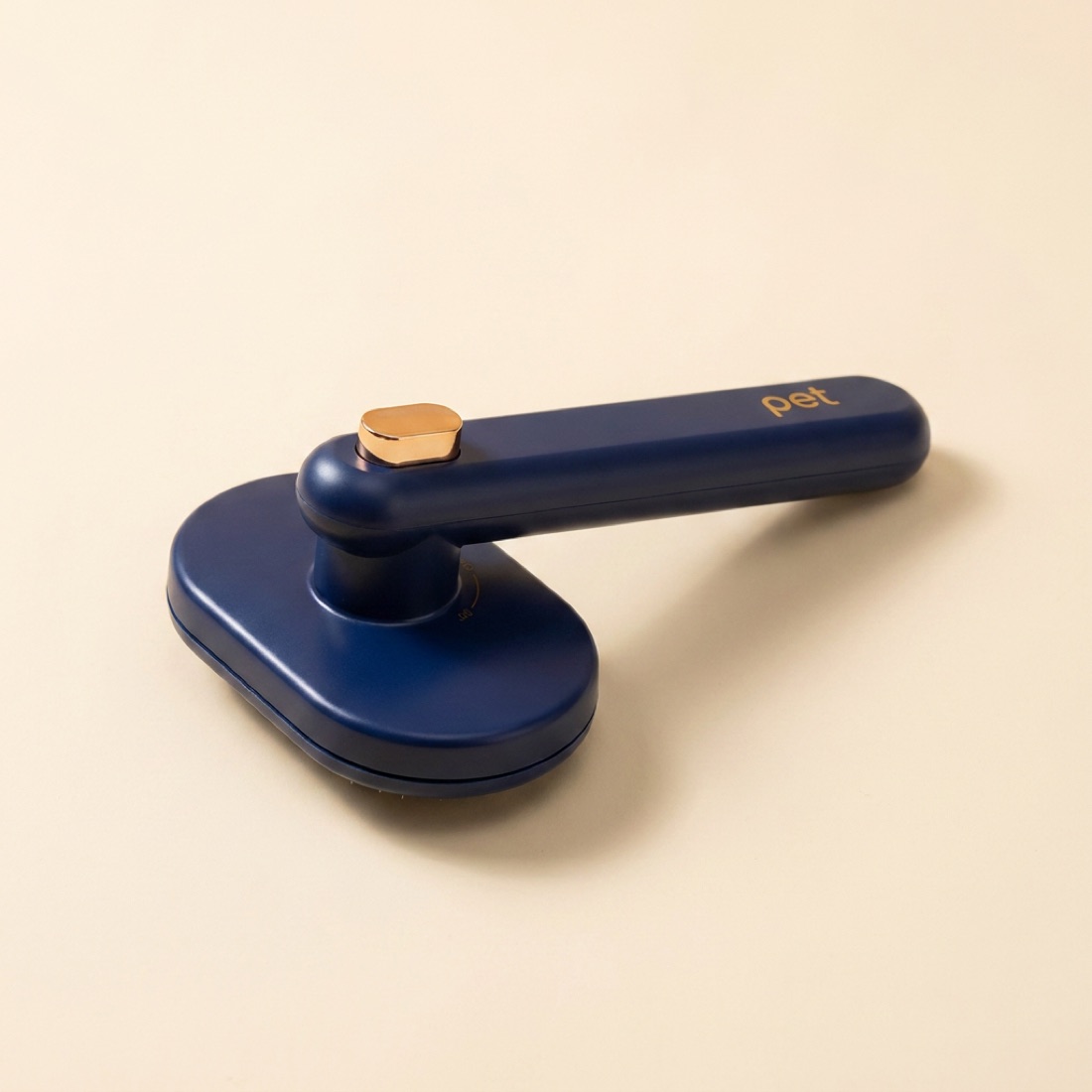
Misting the coat lightly before you start reduces static and drag. A brush that clears its own collected fur means you interrupt the session less often, which matters more than it sounds when your cat has a short patience budget.