What to do with your dog's ashes: 8 options and how to choose
The crematory gave you back a small box. Inside is all that is left of your dog. Now it sits on a shelf, and you do not know what to do with it.
That is normal. Here is the most useful thing to know: you do not have to decide now. This guide lists the common choices, the rules to check, and how to make the choice as a family.
This page gives general information. Rules on scattering and burial differ by place.
You do not have to decide now
There is no deadline. Many owners keep the ashes at home for months or years. Some keep them for good. The ASPCA says it is your choice whether to keep the ashes as a remembrance.
Grief comes in waves. The AVMA says it is common to feel sadness, anger, guilt and doubt after a pet dies. A choice made in the first week may not be the one you want in a year. Wait until it feels right.
Option 1: keep them at home
Put the ashes in a place that means something: near your dog’s favourite window, beside a photo, or with the collar and lead. Some urns look like a plain box or a vase. Some have room for a photo.
Keep the ashes in a closed container, away from children and other pets who might knock it over.
Option 2: scatter them where your dog loved
A favourite walk, a beach, the back garden, or the field where your dog ran. Before you scatter:
- On your own land: usually fine.
- On someone else’s land: ask the owner.
- In parks, beaches and public land: check the rules. The ASPCA says burial on public land such as parks is typically illegal. Scattering may also need permission.
Scatter on a calm day, and stand with the wind at your back. Ashes are heavier and grittier than many people expect.
Option 3: bury them
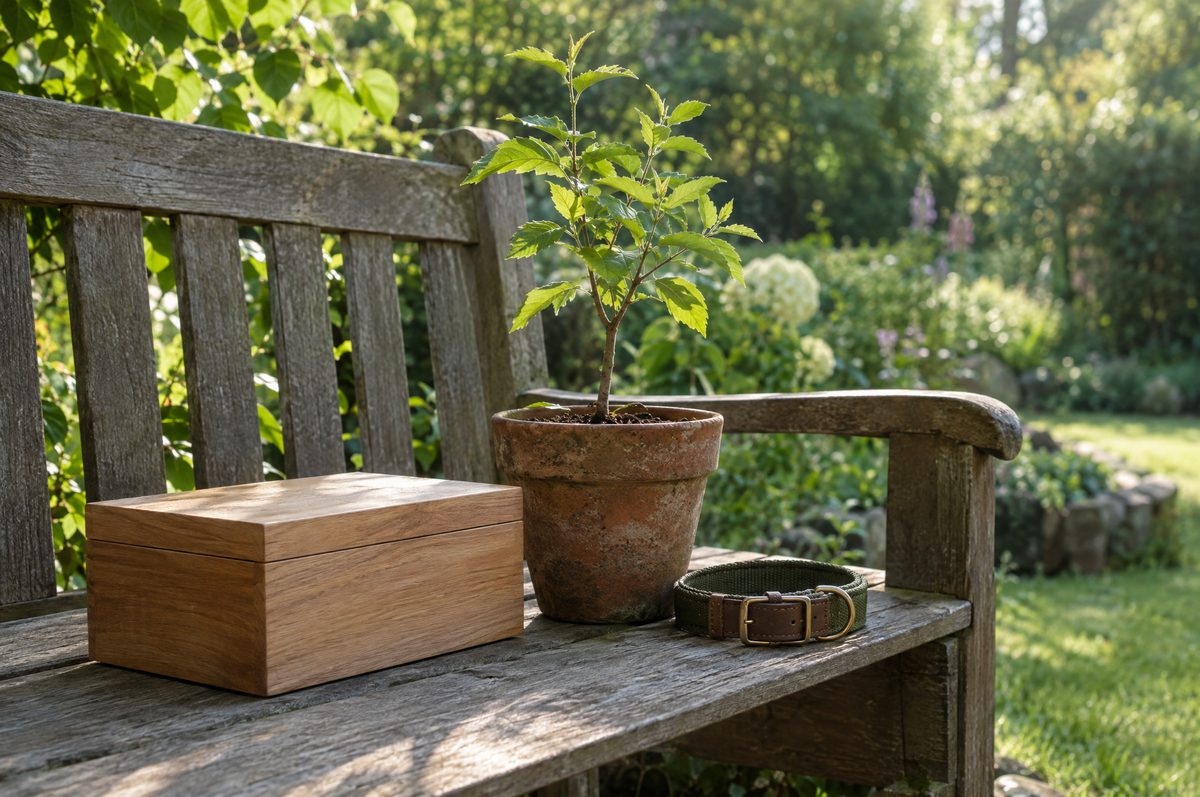
Burying ashes is simpler than burying a body. You do not need a deep grave. Choose a spot in your garden, or in a pot if you may move house. Mark the spot with a stone, a plant or a small plaque.
Option 4: plant a tree or shrub
A tree or flowering shrub gives you something living to tend. Lap of Love says ashes alone can be too concentrated for good plant growth, and suggests mixing them with organic soil. Use a deep hole, and mix the ashes through a good amount of soil. A large pot works if you rent or may move.
Option 5: split them
You can share the ashes among family members, or keep part and scatter part. Ask the crematory for small containers, or do it yourself over a tray with a clean spoon.
Option 6: a keepsake with a small share
A small amount of ashes can go in a locket, a ring, a glass piece or a small keepsake urn. Many makers offer these. Ask how much ash they need, and how they keep your dog’s ashes separate.
Option 7: a pet cemetery
Some pet cemeteries accept ashes, with a small plot or a niche. The ASPCA suggests a pet cemetery or memorial park for owners without land. Ask about yearly fees.
Option 8: a memory without the ashes
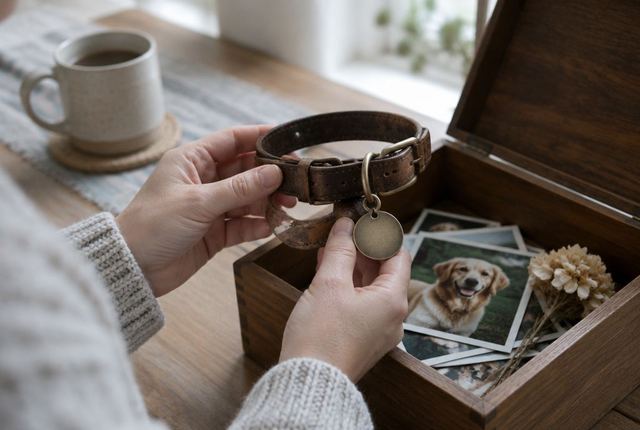
Some owners keep the ashes in a box and put their energy into another memory: a photo book, a paw print, a framed collar, a donation to a shelter in the dog’s name, or a written story of the dog’s life. These can sit beside any of the choices above.
Making the choice as a family
The American Academy of Child and Adolescent Psychiatry gives advice for children when a pet dies:
- Be honest. Vague or wrong explanations can cause worry and mistrust.
- Use simple words that match the child’s age.
- Let them take part. Children may want to bury the pet, make a memorial or hold a ceremony.
- Let them choose how. Some children prefer to write or draw about the pet.
It also says children may feel sadness, anger, fear, denial and guilt. If a child cannot keep up with normal routines for a long time, it suggests a check with a mental health professional.
If adults in the family disagree, keep the ashes safe and wait. Splitting the ashes lets each person do what helps them.
When grief is heavy
The AVMA says support from friends, family or a pet loss support group can help. Talk about the good times too: the walks, the habits, the silly moments.
Before and after
If you have not yet chosen between cremation and burial, read pet cremation vs burial. For the cost of euthanasia and cremation, read how much it costs to put a dog down. If your dog died at home, read what to do when your dog dies at home. For the end of a long illness, read how to know when to put your dog down, and our guides to dog dementia stages and dog chemo side effects.
Keep the memories together
The Dog End-of-Life and Memory Book has an aftercare plan and memory pages for photos, stories and the small things you want to remember. It can sit beside the urn, or travel with you wherever you scatter the ashes.
This guide is one step in our complete guide on how to cope with losing a pet: the decision, the day, aftercare and grief, in order.
Questions
How long can I keep ashes at home?
As long as you want. There is no time limit. Many owners keep the ashes for years before they choose a final place, and some never do. The ASPCA says it is your choice whether to keep the ashes as a remembrance.
Can I scatter ashes in a park?
Ask first. Parks and public land have their own rules. The ASPCA says burying a pet on public land such as parks is typically illegal. Scattering may also need permission. Your own garden, or private land with the owner's consent, is simpler.
Can I split the ashes?
Yes. Many families share the ashes so that each person can keep some, or keep a little in a keepsake and scatter the rest. Ask the crematory for small containers, or do it yourself with a clean spoon over a tray.
Are ashes good for plants?
Not on their own. Lap of Love says ashes alone can be too concentrated for good growth, and suggests mixing them with organic soil. Use a larger pot or a deep hole, and mix well.
Should children be involved?
Often, yes. The American Academy of Child and Adolescent Psychiatry says children may want to bury the pet, make a memorial or hold a ceremony. It says some children prefer to write or draw about the pet. Let each child choose.
What if the family cannot agree?
Keep the ashes safe at home until you can. Nothing needs to be decided soon. Splitting the ashes lets each person do what feels right.
Sources
- ASPCA: End of life care
- Lap of Love: Burying your pet
- American Academy of Child and Adolescent Psychiatry: Death of pets, talking to children (Facts for Families No. 78, April 2017)
- AVMA: Euthanasia
This article helps you organise care. It does not replace advice from your vet.