Can't afford the vet bill? What to do, step by step

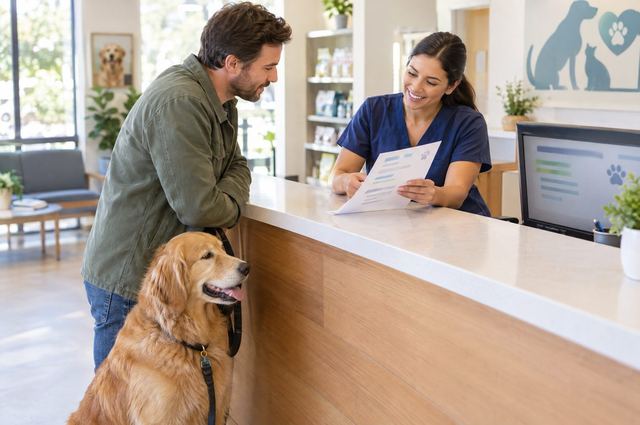
The vet hands you an estimate. The number is far more than you have. Your dog is sitting next to you, and you do not know what to say. This happens to many owners. It is not a failure, and you have more options than you think.
This guide is one step in our complete guide on how to pay for vet bills: every option, before, at the desk and after.
This page gives general information. It is not medical, financial or legal advice. Your vet decides your dog’s care.
First: is it an emergency?
Money must not delay care for an emergency. The Cornell Riney Canine Health Center lists these reasons to go to an emergency vet:
- Trouble breathing: fast or hard breathing at rest, blue gums or tongue.
- Collapse, sudden weakness, or trouble using the legs.
- Your dog ate a poison, a medicine, or an object that can block the gut.
- A swollen belly and dry heaving, with nothing coming up.
- Straining to pee, with no pee coming out.
- A first seizure, more than one, or one that lasts more than 5 minutes.
- Repeated vomiting or diarrhea in 24 hours, with blood or no energy.
If you see any of these, go now. Call on the way. At the desk, say what you can pay and ask for an estimate before more than urgent care. For a poison, Cornell lists the ASPCA Animal Poison Control Center at (888) 426-4435. A fee may apply.
Why so many owners never hear Plan B
In 2025, Gallup and PetSmart Charities surveyed 2,498 US dog and cat owners. The results explain the problem:
- 52% skipped or declined care their pet needed in the past year.
- 71% of them named cost as a reason.
- 73% of owners who said no because of cost were not offered a cheaper option.
- Only 23% say a vet has ever offered them a payment plan.
Gallup then surveyed 933 US vets in late 2025. 81% say they always or often recommend another plan when cost is a problem. So why the gap? The same survey found that 49% of vets ask about money only after they present their plan, and 34% only if the client asks or says no.
The lesson is simple. Say your number first. Then the first plan you hear can already fit.
Step 1: say what you can pay, early
Before the vet makes a plan, say something like this:
“I want to do the right thing for my dog. I can pay about ___ today. Please tell me the options, from simple to advanced.”
It feels hard to say. But it helps your vet. The College of Veterinarians of Ontario says the most advanced care, often called the “gold standard”, is not a legal or a regulatory requirement. Vets are supported in offering care along a range, based on your dog, the evidence and your own goals and resources. The college also says every option must still be safe care that does not harm your dog’s welfare.
It helps to know your number before a crisis. Write down three numbers: what you can pay today with no help, what you can pay this month with some help, and the most you can pay over a year.
Step 2: ask for a written estimate and a Plan B
Ask for a written estimate with a low and a high number. When it is safe to wait a few minutes, ask before tests or treatment start. Then ask:
- “Is there a Plan B that fits my budget? What does it do, and what does it leave out?”
- “Which part must happen today? Which part can wait?”
- “Which test will change what we do?”
- “Please call me before you go above the high number.”
Ask the vet or nurse to put the plans side by side. For each plan, write what it does, what it leaves out, the cost range, the deposit, the rechecks, the risk, and the signs to watch at home. Seeing every plan on one page makes the choice clearer.
Step 3: ask if care can happen in steps
Many problems do not need every test on day one. Questions to ask:
- “Can we do this in steps, and decide after each step?”
- “Can my dog go home with care, instead of staying in hospital?”
- “Can my own vet do the next part?”
- “What happens if we wait and watch? Which signs mean I must come back at once?”
These are questions only. Your vet gives the answers, because only your vet has examined your dog.
Step 4: ask about ways to pay
At the front desk, ask before you agree to a plan:
- How much is the deposit today, and what does it pay for?
- Do you offer a payment plan? What is the amount each month, the end date and any fee?
- Can I pay part today and the rest on a set date, in writing?
Gallup asked owners about payment plans. 64% said an interest-free plan over one year for lifesaving care would at least double what they could pay. That is why asking matters.
Some clinics offer vet financing or a medical credit card instead. These can help, but read the terms first. The US Consumer Financial Protection Bureau says these products have largely replaced the low-cost informal payment plans that providers once offered. It warns that they can increase the financial burden on patients. Ask how long any interest-free time lasts, and what happens if you do not pay the full amount in that time.
Step 5: look for lower-cost care and help
If the clinic cannot make it work, ask:
- “Is there a lower-cost clinic or a vet school for this?”
- “Do you know of a local fund that helps with vet bills?”
Humane World for Animals points owners to its Pet Help Finder for financially friendly vet care. Local shelters and rescue groups sometimes have funds for families in their area. Many funds need a written estimate from your vet and an answer fast, so keep copies of every estimate.
If it is still too much
Tell your vet honestly: “Even Plan B is more than I can pay. What is the safest plan within ___?” Then, before you leave:
- Never take a very sick dog home without a plan from the vet.
- Ask which signs mean you must come back at once, and write them down.
- Ask when to call, and who to ask for.
Gallup found that 14% of owners who declined care said their pet got worse or died. A plan, even a small one, is better than no plan. You can also ask for a second opinion. Ask for a copy of the records to take with you.
Get ready before the next bill
The best time to plan is on a calm day. Three things help most:
- Know your numbers. Write what you can pay today, this month and this year.
- Map your clinics. Find the nearest 24-hour emergency clinic, a low-cost clinic and a vet school. Ask each one about deposits and payment plans.
- Start a small fund. Keep it apart from daily money, and decide now what counts as a vet need.
If you have pet insurance, read the policy before you need it. Our guide is pet insurance worth it for dogs? shows how to do the sum for each quote. And do vets do payment plans? shows what to ask at the desk.
Our free vet visit summary helps you write down your dog’s signs before a visit, so the exam is faster and clearer.
A plan for every vet visit
The Dog Vet Bill Plan puts all of this in one fillable PDF. It has the exact words to ask for Plan B, a Plan A, B and C sheet for your vet to fill in with you, front-desk payment questions, a page for when it is still too much, your three numbers, a local care map, and bill and claim trackers.
It gives no medical or money advice, and it never tells you to decline care. It helps you ask the right questions. See every page of the Dog Vet Bill Plan, or read about what it includes before your next visit.
To compare two ways to pay over time, read CareCredit vs Scratchpay for vet bills. For a price guide, read emergency vet cost for dogs.
For a swallowed object, read dog ate a sock: when to call the vet and what it can cost. To plan ahead, compare pet insurance vs a savings account.
For planned costs, read dog dental cleaning cost and how much it costs to put a dog down.
Questions
What happens if I cannot pay my vet bill?
Talk to the clinic before the bill is due, not after. Ask about a payment plan, paying part now, or a written agreement for the rest. Clinic rules differ, so ask early. An unpaid bill can go to collections, which is harder to fix than a plan made in advance.
Can I ask my vet for a cheaper option?
Yes. The College of Veterinarians of Ontario says the most advanced care is not a legal or regulatory requirement, and vets are supported in offering options along a range. Every option must still be safe, good care. Ask: "Is there a Plan B that fits my budget? What does it leave out?"
Do vets have to give an estimate?
Rules differ by place, but you can always ask. Ask for a written estimate with a low and a high number before tests or treatment, when it is safe to wait a few minutes. Also ask the clinic to call you before the cost goes above the high number.
Should I wait to see if my dog gets better?
Not if your dog shows emergency signs. Cornell lists trouble breathing, collapse, a swollen belly with dry heaving, straining to pee with no pee, seizures and suspected poisoning, among others. For these, go now and talk about money at the desk. For other problems, ask your vet what waiting would mean.
Where can I find lower-cost vet care?
Ask your own clinic first. Then look for low-cost or community clinics, a vet school teaching hospital, and shelter or humane society clinics. Humane World for Animals points owners to its Pet Help Finder and to local shelters and rescues, which sometimes have funds for vet care.
Is vet financing a good idea?
It can help, but read the terms. The US Consumer Financial Protection Bureau warns that medical credit cards and loans can increase the financial burden on patients. Ask how long any interest-free time lasts, and what happens if you do not pay it all in that time.
Sources
- Gallup and PetSmart Charities: Pet owners skipped or declined veterinary care, Hrynowski and Lall, April 2025
- Gallup: Veterinarians say cost is the main driver of declined care, Kemp, January 2026
- College of Veterinarians of Ontario: Balancing available health care options and client access to veterinary care, position statement, December 2022
- Cornell Richard P. Riney Canine Health Center: When to go to the ER, Dr Aly Cohen, June 2025
- Consumer Financial Protection Bureau: Medical credit cards and financing plans, May 2023
- Humane World for Animals: Resources for pet owners
This article helps you organise care. It does not replace advice from your vet.