Dog ate a sock: when to call the vet, and what it can cost
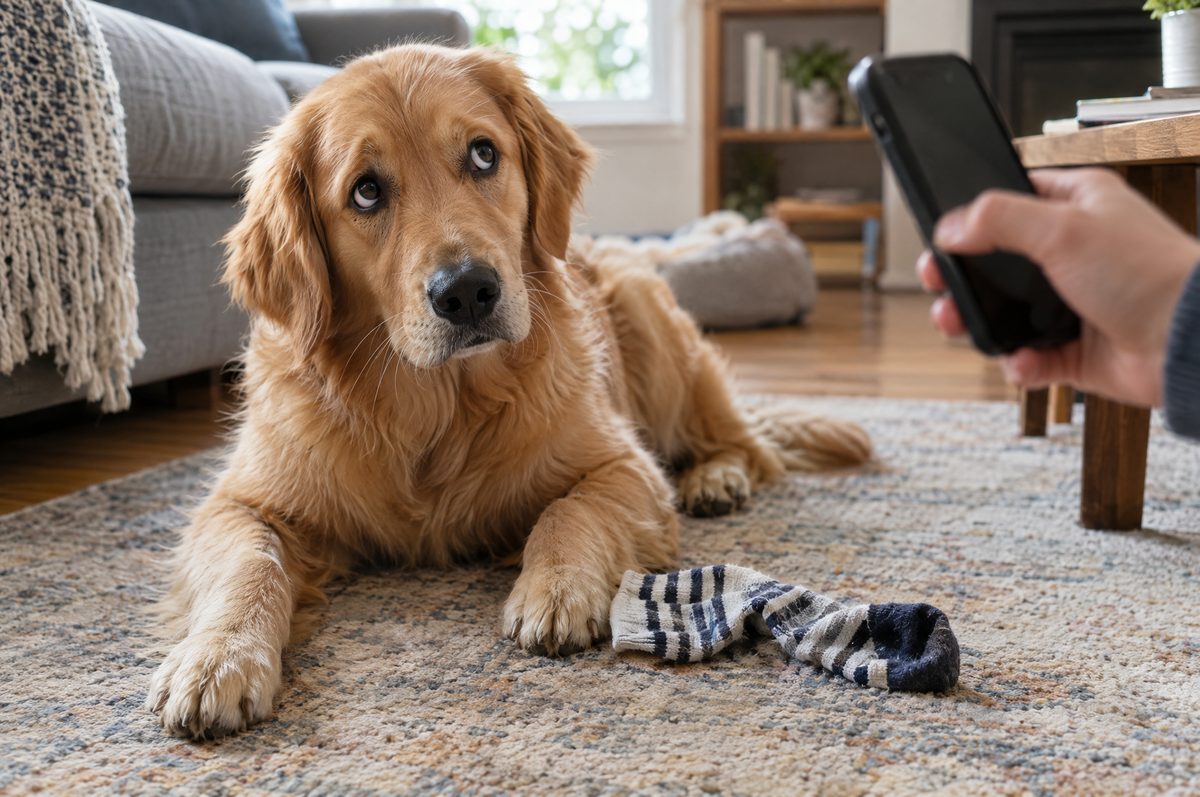
Your dog has swallowed a sock. Maybe you saw it. Maybe a sock is gone and your dog looks guilty. You want to know two things. Will it pass? And what will this cost?
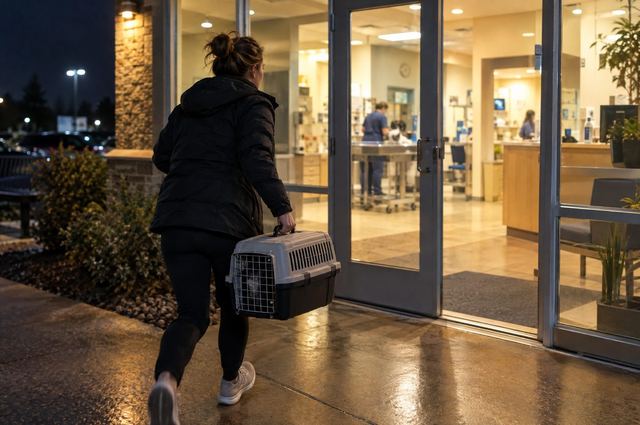
Here is the short answer. Call your vet now. Do not wait to see. This guide explains why, what the vet may do, and what each step can cost.
This page gives general information. It is not veterinary advice. Your vet knows your dog.
Call a vet now
Call your vet or the nearest 24-hour clinic now if:
- You saw your dog swallow a sock, or you think so.
- Your dog vomits, or tries to vomit and nothing comes up.
- Your dog will not eat.
- The belly is tender, or your dog growls when you touch it.
- Your dog strains to pass stool, or passes none.
- Your dog is quiet, weak or hides.
- Your dog is small, or the sock is big. A child’s sock in a large dog and an adult sock in a small dog are not the same risk.
Cornell lists vomiting, loss of appetite, belly pain, diarrhoea, dehydration and low energy as common signs of a gut blockage. VCA adds straining to pass stool and biting or growling when the belly is handled.
If you do not know whether your dog swallowed something toxic too, call a poison line. The ASPCA Animal Poison Control Center is on (888) 426-4435, 24 hours a day, every day of the year. A fee may apply.
Do not make your dog vomit at home
Many web pages tell you to give hydrogen peroxide. Do not do it unless a vet tells you to.
Pet Poison Helpline lists the risks of vomiting at home:
- Inhaled liquid, which can cause pneumonia.
- Ulcers in the food pipe or stomach.
- Injury from objects on the way back up.
- More risk for some breeds and some health problems.
It says the safest step is to call your vet or the helpline first. A sock is long and soft. It can catch on the way up. Your vet can decide if vomiting is safe, and give medicine to do it in the clinic.
Why “wait for it to pass” is a gamble
Some socks do pass. VCA says some swallowed objects go through the gut without a problem. But it also says that time is critical when an object blocks the gut. A blockage can cut off the blood supply to the stomach or bowel.
Cornell explains what happens. A blockage starts when an object is too large to move on from the stomach or small bowel. Food and waste cannot pass. The dog can get very ill from dehydration. In bad cases the bowel wall breaks and leaks. That can cause peritonitis and sepsis, which can kill.
Cornell names socks and pieces of clothing among the common objects. It says string and ribbon carry a higher risk, because they can cut the bowel. A sock with a loose thread can act the same way.
No vet source we read gives a safe number of hours to wait at home. Cornell says the best outcomes come when a blockage is found and removed early. So the answer to “how long to pass” is: let your vet decide, today.
What to tell the vet on the phone
Have these facts ready:
- Your dog’s weight.
- The type and size of the sock. Wool, cotton, a thin sports sock or a thick hiking sock.
- How many may be missing.
- When it happened, as near as you know.
- Any vomiting, food refused or stool passed since then.
- Any other thing your dog may have eaten.
Take a photo of the matching sock. It helps the vet judge size.
What the vet may do
Each step depends on the time since the sock went down and the signs your dog shows.
- Exam and history. The vet feels the belly and asks questions.
- Make your dog vomit. If the sock went down very recently, the vet may give medicine to bring it up. This is done in the clinic, not at home.
- Imaging. Cornell lists X-rays or ultrasound. VCA says X-rays are used, sometimes with a contrast liquid. Cloth does not always show clearly on an X-ray.
- Blood tests. These check for dehydration, salt balance and infection.
- Endoscopy. If the sock is still in the stomach, Cornell says a camera tube passed through the mouth may sometimes pull it out. Your dog is under anaesthesia for this.
- Watch in hospital. For a small object with no full blockage, Cornell says the vet may give fluids and monitor.
- Surgery. Cornell says most blockages need surgery. The vet opens the stomach or bowel. If part of the bowel is damaged, it is removed and the ends are joined.
Cornell says the risk of the bowel stitches failing is highest in the first 3 to 5 days after surgery. Watch for vomiting, no appetite, pain or low energy at home, and call at once if you see them.
What each step can cost
Prices change by region, clinic and time of day. Here are the figures we found. Treat them as a guide only.
MetLife Pet Insurance (21 August 2026) lists these for dogs:
- Exam at an emergency clinic: $200 or more.
- X-ray: $200 to $400.
- Ultrasound: $350 to $600.
- Overnight stay: $800 to $1,500 a night.
- Emergency surgery: $1,800 to $5,000.
MetLife also gives a sample claim. A young dog swallowed a sock and needed surgery at a 24-hour clinic near San Jose. The family paid over $10,000. The insurer paid back over $8,800. MetLife says the figures are an example only.
The lesson is clear. Making a dog vomit in the clinic, early, costs far less than surgery a few days later. Early care is often cheaper care.
How to ask for an estimate
Ask before treatment starts, unless your dog needs care at once. Use these words:
- “Can I have a written estimate, with each line?”
- “What must happen today, and what can wait?”
- “If we try vomiting or a scope first, what does surgery add if that fails?”
- “Do you offer a payment plan, or accept a care credit card?”
Our guides to whether vets do payment plans and what to do if you cannot afford the vet bill list more options. For a line-by-line view of emergency bills, read emergency vet cost for dogs.
Insurance
NAPHIA, the North American pet insurance body, lists foreign body ingestion as an example of an accident claim. If you have a policy, check whether it covers accidents and whether your waiting period is over. Call the insurer from the clinic if you can.
After surgery
Cornell gives these steps:
- Feed small, frequent, low-fat, easy meals for several days.
- Watch appetite, vomiting, pain and energy.
- Keep the follow-up visits.
Some dogs need a short-term feeding tube. Your vet will tell you if yours does.
Stop it happening again
Cornell’s tips:
- Keep small things that can be chewed out of reach. That means a lid on the laundry basket.
- Do not give toys or bones small enough to swallow.
- Watch your dog at play.
- Train your dog to leave things alone.
- Think about basket muzzle training if your dog keeps swallowing things.
If your dog chews out of boredom or stress, add more walks and safe chews. Some dogs steal socks because the game gets attention. Swap the sock for a treat, calmly, and do not chase.
A note on dogs that eat other things
If your dog ate chocolate, grapes or medicine, the steps are different. Read our guide to what to do if your dog ate chocolate. If your dog seems in pain but you are not sure, read how to tell if your dog is in pain.
Get ready before the next one
Our free pet emergency card puts your vet, the nearest 24-hour clinic and the poison line on one page. The Dog Vet Bill Plan has the words to say at the desk, a Plan A, B and C sheet and a fund plan, so a bill like this one does not catch you cold.
Questions
How long does it take a dog to pass a sock?
No vet source gives a safe number of hours to wait. VCA says some swallowed objects pass without problems, but others block the gut, and then time is critical. Call your vet now. They can tell you whether to watch at home or to come in.
Should I make my dog throw up the sock?
Not on your own. Pet Poison Helpline lists risks of vomiting at home, such as pneumonia from inhaled liquid and injury from objects on the way back up. Call your vet or a poison line first. A vet can make your dog vomit safely if it is the right step.
What are the signs of a blockage in a dog?
Cornell lists vomiting, loss of appetite, belly pain, diarrhoea, dehydration and low energy. VCA adds straining to pass stool and growling or biting when the belly is touched. Any of these after a lost sock means go to a vet now.
How much does sock removal cost?
It depends on the step. MetLife Pet Insurance lists X-rays at $200 to $400 and emergency surgery at $1,800 to $5,000 for dogs. Its sample sock claim cost over $10,000. Ask your clinic for a written estimate before treatment.
My dog ate a sock but seems fine. Can I wait?
Phone your vet first. Cornell says the best outcomes come when a blockage is found and removed early. A dog can seem normal for a time. Your vet will ask the size of the dog, the size of the sock and when it happened.
Will pet insurance pay for a swallowed sock?
Often, if the policy covers accidents and the waiting period is over. NAPHIA lists foreign body ingestion as an example of an accident claim. Policies differ, so read yours and call the insurer.
Sources
- Cornell Riney Canine Health Center: Gastrointestinal foreign body obstruction in dogs, Dr. Aly Cohen (updated December 2024)
- VCA Animal Hospitals: Ingestion of foreign bodies in dogs, Llera, Hunter and Ward (updated 14 August 2024)
- Pet Poison Helpline: Should I make my pet vomit at home?
- MetLife Pet Insurance: Emergency vet cost (21 August 2026)
- ASPCA Animal Poison Control Center
- NAPHIA: State of the Industry Report, highlights (June 2026)
This article helps you organise care. It does not replace advice from your vet.