When to take your cat to the emergency vet: the signs that mean go now
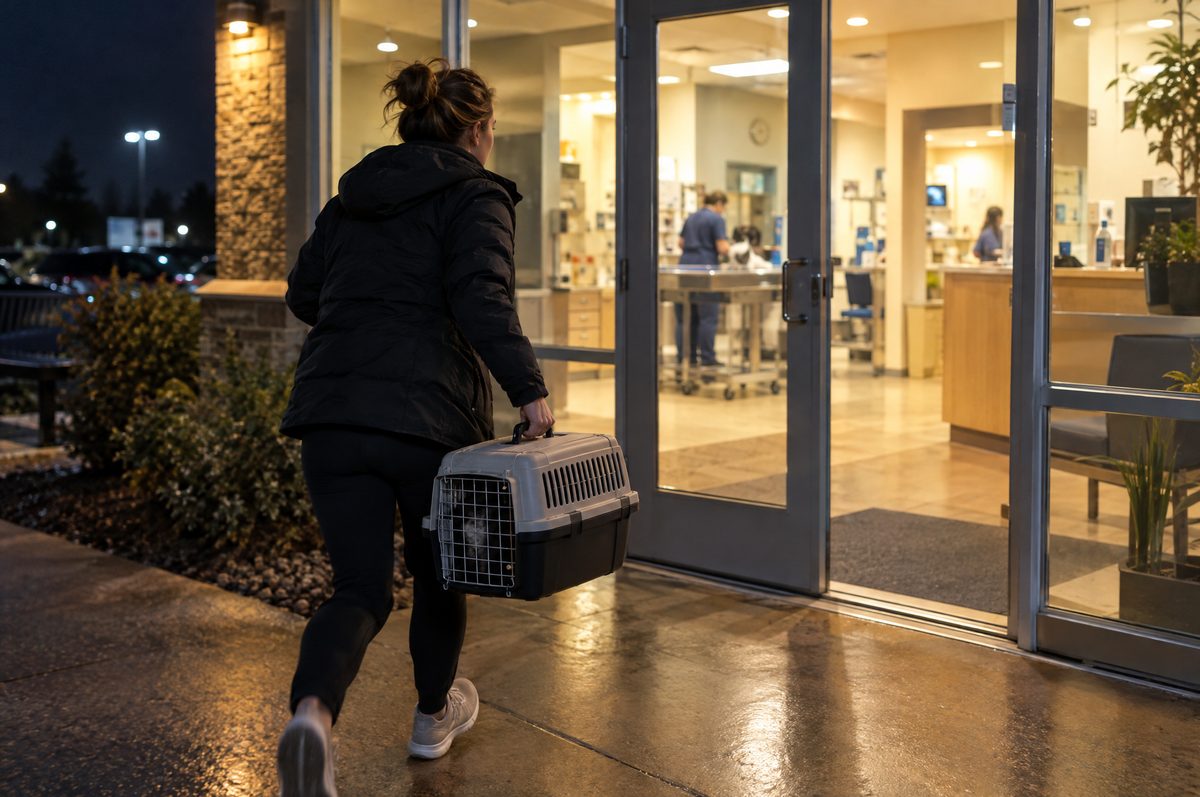
Your cat is not acting right, and it is late at night. Do you go to the emergency vet now, or wait until morning? This guide lists the signs that mean go now, two cat emergencies every owner should know, and what to say about money when you arrive.
This page gives general information. It does not diagnose your cat. If you are not sure, call a vet.
Go to an emergency vet now for these signs
Animal Trust Vets, a UK vet charity, lists these as signs that a cat needs a vet immediately:
- Trouble breathing, or breathing with the mouth open.
- Collapse, or sudden, severe weakness.
- A seizure.
- Bad bleeding, or bleeding that does not stop.
- Suspected poisoning: a medicine, a chemical, a plant or anything else that may be toxic.
- Hit by a car, or a serious injury, even if your cat seems fine.
- Repeated tries to pee, with little or no pee coming out.
- Sudden blindness, or a serious eye injury.
- Severe pain or distress.
If any of these fits your cat, go now. Put your cat in a closed carrier and call the clinic on the way, so the team can get ready.
Two cat emergencies to know
A blocked bladder
A cat that goes to the litter box again and again but passes little or no urine may have a blocked urethra. The Cornell Feline Health Center calls a urethral obstruction “an absolute emergency” that needs immediate treatment. It says a blocked cat can die in less than 24 to 48 hours.
Male cats, including neutered males, have a higher risk, because their urethra is longer and narrower. Signs to watch for:
- Many trips to the litter box, with small or no amounts.
- Straining, or crying out, in the box.
- Blood in the urine.
- Licking the genital area a lot.
- Growing distress, hiding or vomiting.
Do not wait to see if it passes. Go to a vet now, day or night.
Lilies
The ASPCA says lilies are toxic to cats. If your cat may have touched or eaten any part of a lily, call a vet or the ASPCA Animal Poison Control Center at (888) 426-4435 now. A consultation fee may apply. Do not wait for signs. Bring the plant, or a photo of it.
The safest plan is simple: keep lilies out of a home with a cat, including in bouquets.
When it can usually wait for your own vet
Not every problem needs an emergency clinic at night. If your cat is breathing normally, alert, and has none of the signs above, call your own vet when they open. Ask them which signs mean you should not wait.
If you are not sure, call. An emergency clinic can tell you by phone if your cat needs to come in. Cats are good at hiding illness, so it is better to ask than to guess.
What to bring
- Your cat, in a closed carrier.
- Any medicine, plant or package your cat may have eaten, or a photo of it.
- A list of your cat’s medicines, as on the labels.
- Your phone, with your vet’s number and your insurance details.
- A short note of what you saw and when it started.
Our free pet emergency card puts your vet, emergency clinic and pet details on one card, ready before you need it.
What to say about money at the desk
Money must not delay care for an emergency. But you can still talk about cost. At the desk, say what you can pay, and ask:
- “Can I have a written estimate before you do more than urgent care?”
- “Is there a Plan B that fits my budget?”
- “Which part must happen today, and which part can wait?”
- “Do you offer a payment plan?”
In a 2025 Gallup survey of 933 US vets, 81% said they always or often offer another plan when cost is a problem. But many talk about money only if the owner raises it first. So say your number early.
Our guide can’t afford a vet for your cat? walks through every step.
Get ready before an emergency
The best time to plan is on a calm day:
- Find your nearest 24-hour emergency clinic. Save the number and the address in your phone.
- Ask about deposits. Call and ask what an emergency exam costs and what deposit they ask for.
- Know your numbers. Write what you can pay today, this month and this year.
- Check your insurance. Our guide is pet insurance worth it for cats? shows how to compare quotes.
Everything in one plan
The Cat Vet Bill Plan is a fillable PDF with the cat signs that mean go now, a local care map, the words to ask for Plan B, a Plan A, B and C sheet for your vet to fill in with you, front-desk payment questions and bill and claim trackers.
It gives no medical or money advice, and it never tells you to decline care. See every page of the Cat Vet Bill Plan.
Paying for care is hard. Read CareCredit vs Scratchpay for vet bills. Dog owners can read emergency vet cost for dogs.
For a calm, planned visit, read our complete guide on how to take a cat to the vet, before, during and after.
Know your clinic before you need it. Read how to find a good vet.
Questions
Is open-mouth breathing in a cat an emergency?
Treat it as one. Animal Trust Vets lists difficulty breathing or open-mouth breathing among the signs that need a vet immediately. Keep your cat calm, put it in a carrier, and call the clinic on the way.
My cat keeps going to the litter box but nothing comes out. Is that urgent?
Yes, it can be. The Cornell Feline Health Center says a urethral obstruction is an absolute emergency, and a blocked cat can die in less than 24 to 48 hours. Male cats have a higher risk. Go to a vet now, day or night.
My cat touched a lily. What should I do?
Call a vet or the ASPCA Animal Poison Control Center at (888) 426-4435 now. The ASPCA says lilies are toxic to cats. Do not wait for signs. A consultation fee may apply. Bring the plant or a photo of it.
What if I cannot afford the emergency vet?
Go anyway for these signs, and say what you can pay at the desk. Ask for an estimate before more than urgent care, and ask about a Plan B and payment. Gallup found that 81% of vets always or often offer another plan when cost is a problem.
Should I call before I go?
Yes, if you can do it on the way. A call lets the team get ready, and they can tell you if you need to come in now. Do not delay the trip to make the call.
My cat seems fine but was hit by a car. Do I still go?
Yes. Animal Trust Vets lists being hit by a car or a serious injury as a reason to call a vet immediately. Cats often hide pain, and some injuries do not show at first.
Sources
- Animal Trust Vets CIC: Signs your cat needs emergency veterinary care, Gillian Burkhill MRCVS, July 2026
- Cornell Feline Health Center: Feline lower urinary tract disease
- ASPCA Animal Poison Control: Lily
- Gallup: Veterinarians say cost is the main driver of declined care, Kemp, January 2026
This article helps you organise care. It does not replace advice from your vet.