Pet emergency card: what to put on a "my pets are home alone" wallet card
Imagine you are in an accident on the way home. You are safe, but you are in hospital for two nights. Nobody knows that a dog is waiting by the door, or that the cat has no water.
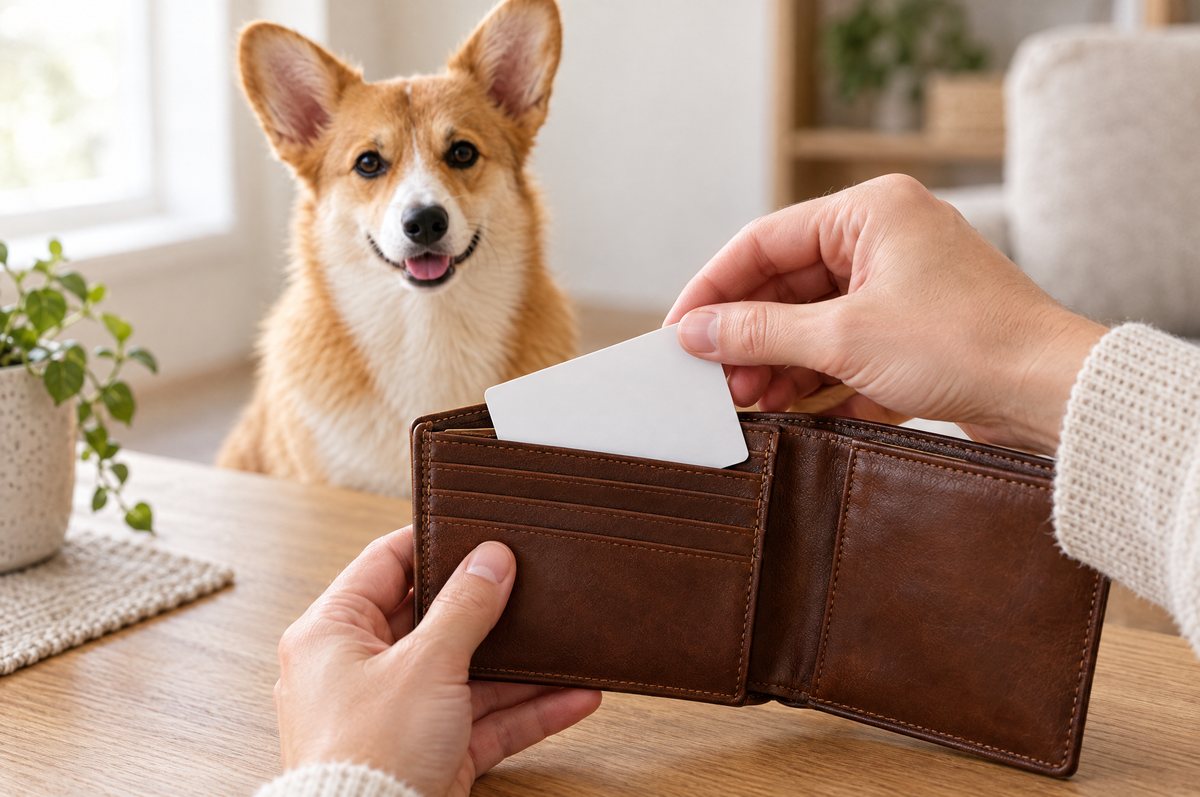
A small card in your wallet fixes that. It speaks for your pets when you cannot.
Why carry a pet emergency card?
The ASPCA recommends this exact step. Its pet plan includes a Pet Alert Card. The card tells authorities that you have a pet at home. It lists two emergency contacts who can be called if something happens to you.
The ASPCA also publishes an emergency information card. It has spaces for each pet’s name and type, your vet, an after-hours vet and an emergency carer.
What to write on the card
Front of the card
- The words “My pets are home alone”, large and clear
- “If I am hurt or cannot get home, please call:”
- Emergency contact 1: name and phone number
- Emergency contact 2: name and phone number
Back of the card
- The number of pets, and each pet’s name and species
- Your vet clinic’s name and phone number
- One line if a pet needs daily medicine, for example “Lowki needs a tablet every morning”
An example card
My pets are home alone. If I am hurt or cannot get home, please call Sam Lee, 416-555-0123, or Priya Shah, 905-555-0199.
Pets at home: Roofy (cat), Lowki (dog, daily tablet). Vet: Maple Animal Hospital, 905-555-0142.
How to choose your emergency contacts
Pick people who can get to your home within a few hours.
- They live or work near you
- They have a key, or know where one is kept
- They know your pets, and your pets know them
- They agreed to the job. Ask them first.
Do not choose only your partner. If you travel together, the card needs someone who is not with you.
Use paper and phone
A paper card works when your phone is locked or broken. A lock-screen image works when your wallet is lost. Use both.
Our free emergency card tool builds both from the same details. Type your pets and contacts once. Then print the wallet card, or save it as a lock-screen image for your phone.
Tell your contacts where the details are
The card only gets help to the door. Your contact then needs to know what to do inside: how much food, which medicine, and where the carrier is. Keep those details in one place at home, and tell your contacts where.
Check the card twice a year
Phone numbers change, and pets come and go. Check the card when the clocks change. Update it the same day if a contact moves away or a new pet joins the family.
The full emergency section
The Household Command Binder has an emergency section built for this. It holds cut-out wallet cards, a grab-and-go summary for the vet, an emergency contacts page and an “If I cannot care for my pets” page for longer absences.
Questions
Who should my emergency contacts be?
Choose two people who live near you and can get into your home quickly. A partner who travels with you is not a good first choice. Give each contact a key, or tell them where one is kept.
Where should I keep the card?
Keep it next to your driving licence or ID card. First responders look there first. Many owners also save it as their phone's lock-screen image.
Should the card list my pets' medicines?
Write only that a pet needs daily medicine, and who knows the details. A wallet card has little space. Keep the full medicine list at home, where your contact can find it.
Is there a sign for my front door too?
Many owners put a small notice by the front door that says how many pets are inside. It helps firefighters and other first responders.
Sources
This article helps you organise care. It does not replace advice from your vet.