Pet emergency go-bag checklist for dogs and cats
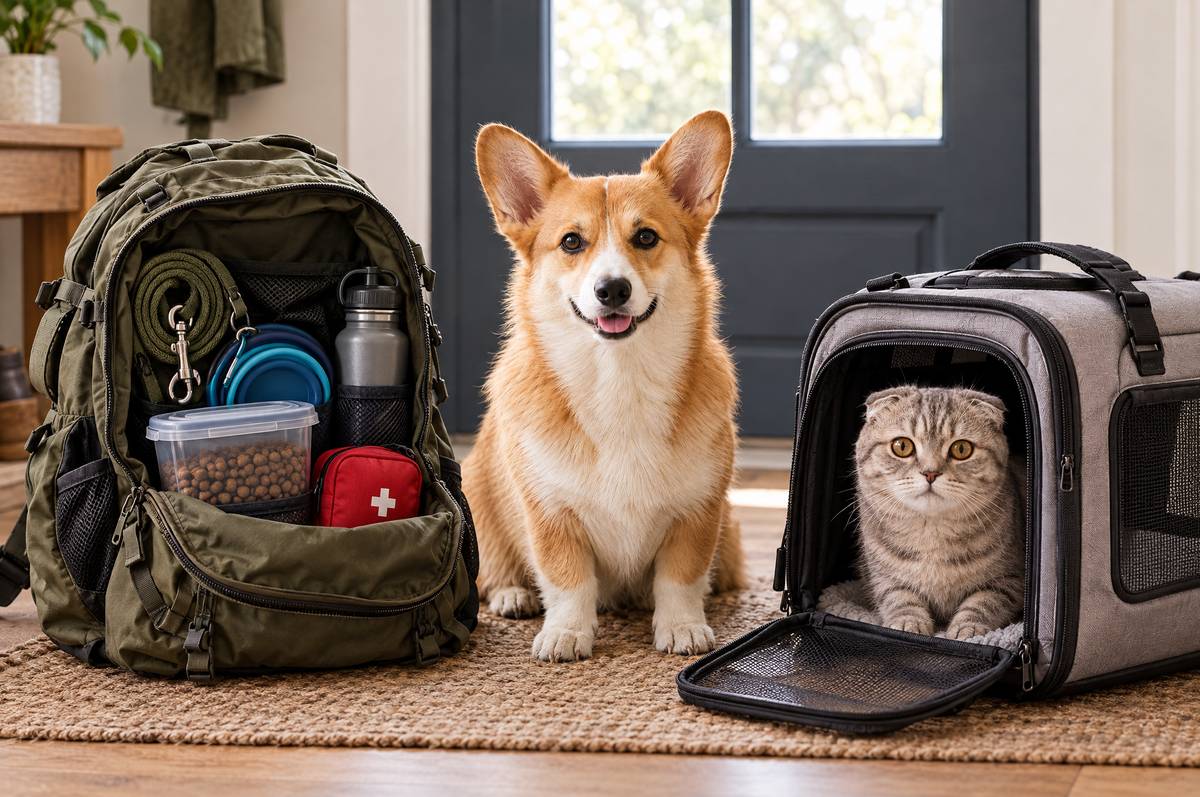
Fires, floods, storms and power cuts do not wait for you to find the carrier. A packed bag by the door turns a panic into a five-minute exit, for you and for your pets.
Ready.gov suggests two kits: a larger one for staying at home, and a light one you can carry if you must leave. This checklist is for the light one.
What goes in a pet go-bag?
Food and water
- Food for at least three days, in a sealed, waterproof container
- Bottled water for your pets, separate from your own water
- Bowls that fold flat
- A can opener, if you pack wet food
Medicines
- At least one week of each regular medicine, in a waterproof bag
- A copy of the medicine list, copied from the pharmacy labels
- Any special tools, such as a pill pocket or a syringe
Documents
- A one-page summary for each pet: medicines, allergies, weight and conditions
- Vaccination records
- A signed vet release, if someone else may take your pet to a vet
- A recent photo of each pet, in case you are separated
- Microchip numbers and insurance details
ID and gear
- A carrier or crate for each pet, labelled with your phone number
- A spare lead and collar with an ID tag
- Litter, a small tray and waste bags
- A towel, a blanket and a familiar toy
Why the photo and the microchip matter
In an emergency, pets can get lost or end up in a shelter. A recent photo proves which pet is yours. A microchip helps a shelter find you.
AVMA research found that microchipped dogs in shelters went home about 52% of the time, against about 22% without a chip. For cats, the gap was larger: about 39% against 2%. The usual reason a chipped pet did not get home was missing or wrong owner details. Check your registry details before you pack the bag.
Extra items for cats
- A carrier for each cat. Two cats in one carrier can fight when stressed.
- A small, light litter tray and a bag of litter
- A cover for the carrier, such as a towel. A dark carrier helps many cats stay calm.
Extra items for dogs
- A spare lead, plus a harness if your dog pulls
- Waste bags
- A long chew to help your dog settle in a strange place
How to keep the bag ready
- Put the bag near the door you use most.
- Set a calendar reminder to check it every three months.
- Replace food and medicine before the expiry date.
- Update the documents after any vet visit that changes medicines or weight.
- Tell your pet sitter and your neighbours where the bag is.
Add a wallet card
A go-bag helps when you are at home. A wallet card helps when you are not. It tells first responders that your pets are home alone, and who to call. Our free emergency card tool makes a printable wallet card and a phone lock-screen image from the same details.
Print the full system
The Household Command Binder includes this go-bag checklist with tick boxes. It also has a grab-and-go summary page for each pet, a signed vet release and cut-out wallet cards. Print one copy for the bag and keep one at home.
Questions
How many days of food should I pack?
Ready.gov says several days. Many emergency agencies say at least three days, and some say seven. Pack what you can carry, and refresh it before it expires.
Should I pack one bag or two?
Ready.gov suggests two: a larger kit for staying at home, and a light kit you can carry if you must leave.
How often should I check the bag?
Every three months. Replace food and medicine before they expire, and update the documents if anything has changed.
Where should I keep the bag?
Keep it near the door you use most, in a cool, dry place. Tell everyone in the house, and your pet sitter, where it is.
Sources
- Ready.gov: Prepare your pets for disasters
- AVMA (JAVMA News): Pet owners, shelters, and clinics, check the chip
This article helps you organise care. It does not replace advice from your vet.