Cat spraying vs peeing: how to tell the difference
You find a wet streak on the wall, or a small patch on the side of the sofa. Is your cat spraying, or peeing? It matters, because the causes are different and so are the fixes. The Cornell Feline Health Center says house soiling is the most common behaviour problem that cat owners report. This guide shows how to tell the two apart, and what to do next.
First: rule out a bladder emergency
Before you treat anything as behaviour, check for one emergency. Go to a vet now, day or night, if your cat strains in the box and little or no urine comes out.
The Cornell Feline Health Center says a blocked urethra is “an absolute emergency”. A blocked cat passes little or no urine and becomes more and more distressed. Cornell warns that death can follow in less than 24 to 48 hours. Male cats are at greater risk.
Spraying vs peeing at a glance
| Spraying | Peeing | |
|---|---|---|
| Posture | Stands, tail up | Squats |
| Surface | Upright: wall, chair side | Flat: carpet, bed |
| Amount | Small | A puddle |
| Litter box | Still used | Often avoided |
| Places | Doors, windows, new things | Near the box, or soft things |
Sources: the AAFP and ISFM house-soiling guidelines (2014), the Cornell Feline Health Center and the ASPCA.
What spraying looks like
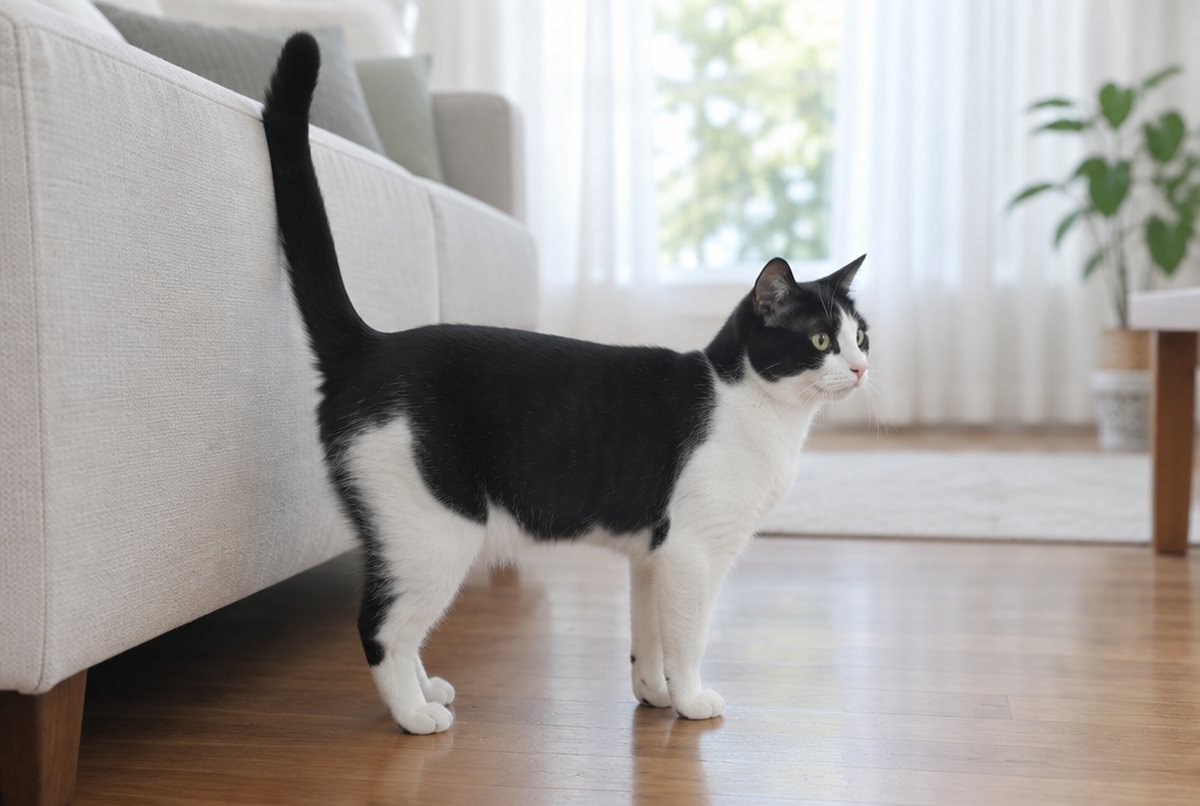
The AAFP and ISFM guidelines describe urine marking. From a standing position, with the tail up and twitching, the cat leaves small amounts of urine on vertical surfaces. The ASPCA adds that the cat usually backs up to the object, with the tail “extended straight up in the air”. Cornell says the cat lifts its tail and quivers, and that cats do not squat to spray.
The ASPCA says the amount of spray is usually less than a normal pee. And the cat still uses its litter box. This last point is the strongest clue. A marking cat has not given up on the box.
One exception: the AAFP and ISFM guidelines say some cats squat and mark on flat surfaces too. So judge by posture and amount, not only by the surface.
What peeing outside the box looks like
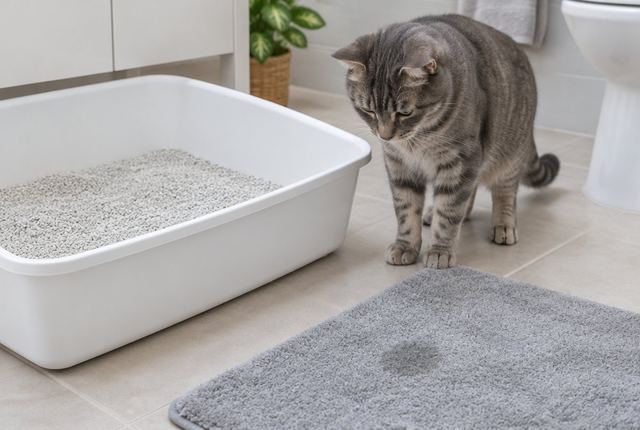
A cat that pees outside the box squats, as it does in the box. Cornell says you may find puddles on soft surfaces, such as carpets, beds or clothes. A cat that dislikes its box often uses many kinds of surfaces, Cornell says.
The ASPCA lists signs that a cat dislikes its box. It goes in, then leaves fast. Or it goes near the box but not in it. The AAFP and ISFM guidelines add a third sign: the cat balances on the edge, with only one or two feet in the box.
The causes here are often medical, or about the box. Read why is my cat peeing outside the litter box but pooping in it for those.
Which cats spray
Cornell says cats that spray are usually unneutered males and, to a lesser extent, unspayed females. Neutered cats can spray too:
- Cornell: 10% of neutered males and 5% of neutered females spray.
- The AAFP and ISFM guidelines: about 10% of neutered males and 4% of neutered females keep marking.
The two sources give slightly different numbers for females. Both agree that neutering helps. The guidelines say neutering dramatically reduces marking linked to mating. Cornell says neutering or spaying reduces the effect of hormones on spraying.
The number of cats matters too. Cornell says that in homes with more than seven cats, one or more cats will likely spray.
Why cats spray
Cats spray to send a message with scent. Cornell says cats may spray when they feel a threat to their territory. Fights between cats in the same home can cause it too.
The AAFP and ISFM guidelines explain that every home has a shared smell. It comes from the cats, the people and the furniture. A new pet, a new person, new furniture or new objects change that smell. For some cats, this is stressful enough to start marking.
Where spraying starts tells you why
The AAFP and ISFM guidelines say the first places a cat marks are a clue:
- Windows and doors: the cat feels a threat from outside. Cornell says outside cats can be the cause.
- Stairs, hallways, doorways into rooms and the middle of rooms: the stress comes from inside the home.
- Bags, suitcases, backpacks and shoes: things with new smells are often marked.
- Stoves, toasters and electronic equipment: the guidelines say things that change temperature are frequent targets.
So draw a simple floor plan. Mark each spot. The AAFP and ISFM guidelines say a floor plan with doors, windows and marked areas helps the vet find where your cat feels it must leave its scent.
What helps
- A vet check first. The AAFP and ISFM guidelines say there can be more than one cause at the same time. A cat with a bladder problem can also mark.
- Neutering, if your cat is not neutered. Ask your vet.
- Clean each spot often and fully. The guidelines say frequent cleaning reduces the habit of refreshing the scent. The ASPCA says to use an enzymatic cleaner and to avoid ammonia. Cornell also says to avoid vinegar, because it smells like urine.
- Keep outside cats away, if spraying starts at windows and doors. Cornell and the AAFP and ISFM guidelines suggest motion-activated sprinklers in the garden.
- Fix the litter boxes. The guidelines say better litter box care reduces marking in some cats, especially females.
- Make your cat feel safe at home. The guidelines say that when a cat feels secure in its space, it has less need to mark.
Medicine is a decision for your vet. Cornell says anti-anxiety drugs are more likely to help spraying than other kinds of house soiling. Your vet decides if they suit your cat.
What makes spraying worse
- Punishment. The AAFP and ISFM guidelines say physical punishment during or after spraying “only creates stress and increases the motivation to spray”. They add that punishment tends to move marking to places you do not see. This includes spraying your cat with water.
- Scolding, or rubbing the nose in it. The ASPCA says never do this.
- Ammonia cleaners. The ASPCA says they can attract your cat back to the same spot.
What to record
Write down each spot for 2 weeks. For each one, note:
- Date and time.
- The place, with a number on your floor plan.
- Upright or flat, and the amount: small or a normal puddle.
- Which cat, and how sure you are.
- What happened that day: visitors, a new bag, a cat at the window, a fight.
After 2 weeks, the pattern shows. Small amounts at the windows mean one thing. Puddles on the bath mat mean another.
The Cat Litter Box Problem Diary has a “pee, poo or spray?” page with these signs, a floor plan, an accident log with “flat or upright” and “amount” columns, and a log for other cats inside and outside. It records only. Your vet sets the plan.
Before the visit, our free vet visit summary puts your notes and questions on one page.
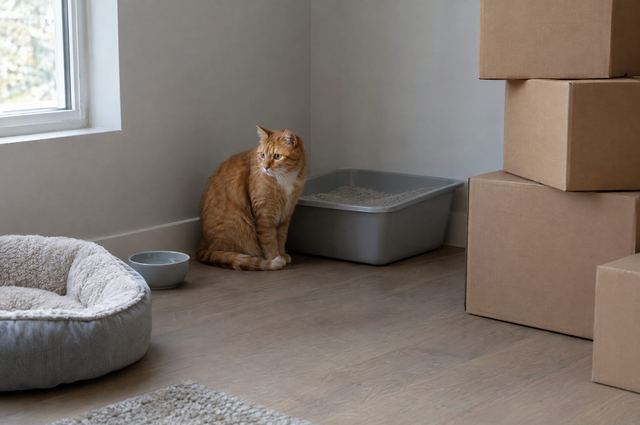
If it started after a move, read cat won’t use the litter box after moving.
Questions
How can I tell if my cat is spraying or peeing?
Look at three things. Posture: the Cornell Feline Health Center says cats do not squat to spray; they stand and lift the tail. Surface: spray usually goes on upright surfaces, a puddle on flat ones. Amount: spray is small. The ASPCA adds that a spraying cat still uses its box for normal pee and poop.
Do neutered cats spray?
Some do. Cornell says 10% of neutered males and 5% of neutered females spray. The AAFP and ISFM guidelines give about 10% of neutered males and 4% of neutered females. Neutering still helps: the guidelines say it dramatically reduces marking linked to mating.
What gender of cat is most likely to spray?
Cornell says cats that spray are usually unneutered males and, to a lesser extent, unspayed females. Neutered cats of both sexes can still spray, but much less often. Cornell also says that in homes with more than seven cats, one or more cats will likely spray.
Is spraying a cat with water a good way to stop spraying?
No. The AAFP and ISFM guidelines say physically punishing a cat during or after spraying only creates stress and increases the motivation to spray. They add that punishment tends to move marking to places you do not see. The ASPCA also says not to scold your cat.
Can a cat spray because of a medical problem?
A medical problem can look like spraying or happen with it. The AAFP and ISFM guidelines say there can be more than one cause at the same time. Cornell lists blood in the urine and peeing outside the box as signs of bladder disease. So see your vet before you treat it as behaviour.
Does a cat spray on flat surfaces?
Sometimes. The AAFP and ISFM guidelines say some cats squat and mark on flat surfaces too. So do not judge by the surface alone. Small amounts in the same places, near doors, windows or new things, point to marking.
Sources
- Carney HC and others. AAFP and ISFM Guidelines for Diagnosing and Solving House-Soiling Behavior in Cats. Journal of Feline Medicine and Surgery 2014;16:579-598
- Cornell Feline Health Center: Feline behavior problems: house soiling
- Cornell Feline Health Center: Feline lower urinary tract disease
- ASPCA: Litter Box Problems
This article helps you organise care. It does not replace advice from your vet.