Cat won't use the litter box after moving: a first-week plan
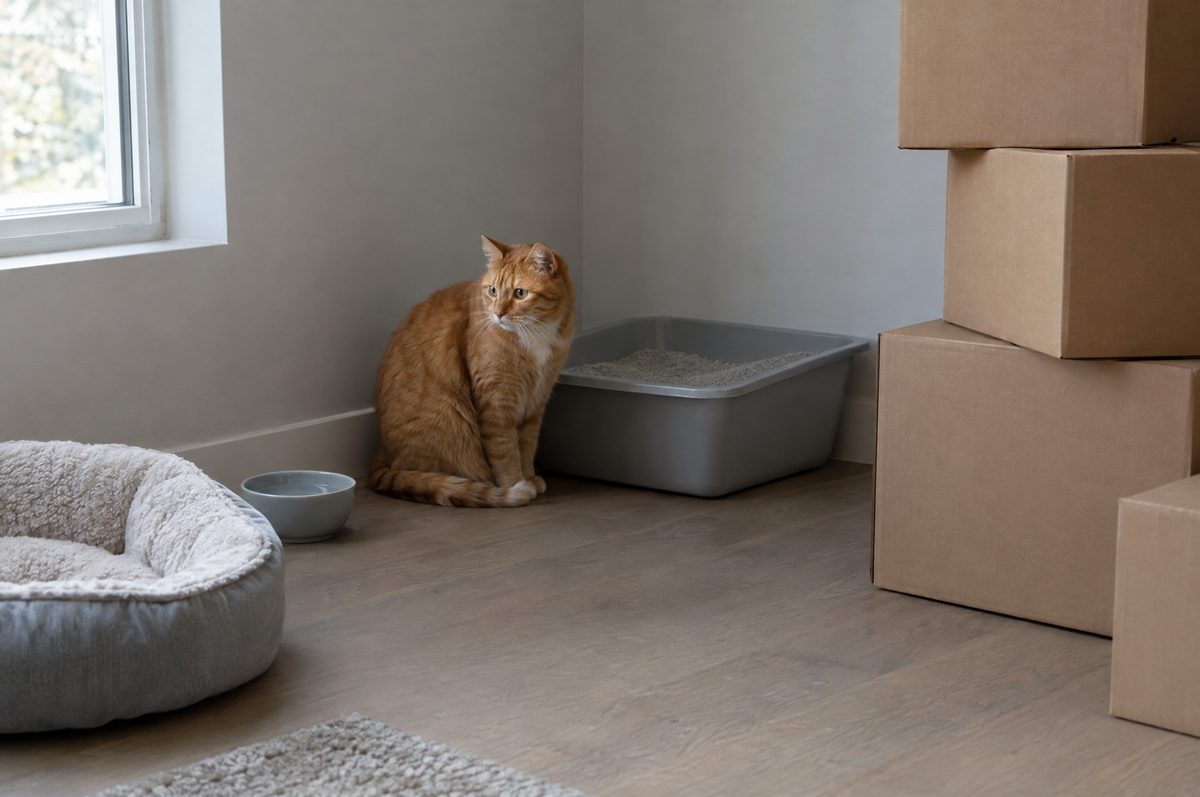
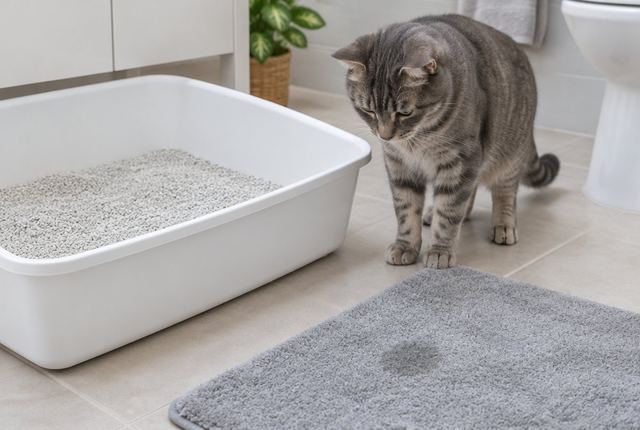
You moved house. The boxes are half empty. And your cat, who never missed the tray in years, has peed on the new carpet. Twice.
A move is one of the biggest changes a cat can face. New smells, new sounds, no familiar marks. Many cats stop using the tray for a while. Most recover with a simple plan. But a few have a medical problem that the stress set off. This guide shows how to tell, and what to do in the first week.
This page gives general information. It is not veterinary advice.
Call your vet now if
- Your cat strains in the tray and passes little or no urine.
- Your cat cries when trying to pass urine.
- You see blood in the urine.
- Your cat licks its genitals a lot, or seems in pain.
- Your cat stops eating or hides all day.
Cornell says a cat with a blocked urethra may strain often and produce little or no urine. It calls this an absolute emergency. It says death can follow in less than 24 to 48 hours. Male cats are at greater risk.
Cornell also says stress seems to be an important factor in feline idiopathic cystitis, a common bladder problem in cats. It lists changes in the home among the possible stressors. A move is a big one. So if your cat pees outside the tray after a move, a vet check is wise, even if the cat seems well.
Why moving upsets the tray habit
Cats rely on smell and routine. In a new home:
- Their own scent marks are gone.
- Old smells of other pets may be in the floors.
- The tray is in a new place, maybe a noisy one.
- The household routine has changed.
International Cat Care says stress plays a significant part in most common cat behaviour problems. It lists soiling and spraying indoors among the signs of long-term stress.
Start small: one room
Do not give a newly moved cat the run of the house. Choose one small, quiet room. A spare bedroom or a bathroom works. Put in it:
- One litter tray, at one side.
- Food and water, at the other side, away from the tray.
- A bed, and a hiding place such as a box on its side.
- Something that smells of home: an unwashed blanket or your old T-shirt.
- A scratching post.
Use the same litter your cat used before. Use the same tray if you can, scooped but not scrubbed, so it still smells familiar.
A day-by-day plan
Day 1 to 2. Keep the door closed. Visit often, sit quietly, and let your cat come to you. Scoop the tray at least once a day.
Day 3 to 4. If your cat eats, uses the tray and explores the room, open the door for short, supervised visits to the next room. Keep the safe room open as a base.
Day 5 to 7. Add more rooms, one at a time. Add a second tray in the next area your cat uses. Watch where your cat goes.
After week 1. Give access to the whole home only when the tray habit is steady. If accidents happen, go back a step.
Move faster for a confident cat. Move slower for a shy or older cat.
Where to put trays
Cornell gives these tray rules:
- Number: one per cat in the home, plus one.
- Location: in different areas of the home, not all in one room.
- Open space: each tray needs more than one way out. Do not tuck it into a corner where the cat feels trapped.
- Litter: most cats prefer unscented, fine-textured litter about one to two inches deep.
- Cleaning: scoop clumps and stool daily, and scrub the tray from time to time with a mild detergent.
- Moving a tray: move it a few inches a day, not all at once.
Also keep trays away from:
- Washing machines, boilers and other noisy machines.
- Food and water bowls.
- Busy doorways and halls.
- Windows where your cat can see outdoor cats.
For older cats, Cornell suggests a tray on every floor, with low sides so it is easy to get in.
Clean old spots
A cat will often go back to a spot that smells of urine. Cornell says odours must be removed, not just covered. It warns against products with ammonia or vinegar, because they smell like urine.
Use an enzyme cleaner made for pet urine. Soak the spot well, as urine spreads under carpet. Let it dry. Then block the area for a few days, or put a food bowl there, since many cats do not toilet where they eat.
Check the new home for old pet smells too, under carpets and around skirting boards. A UV torch can show old stains.
Is it spraying?
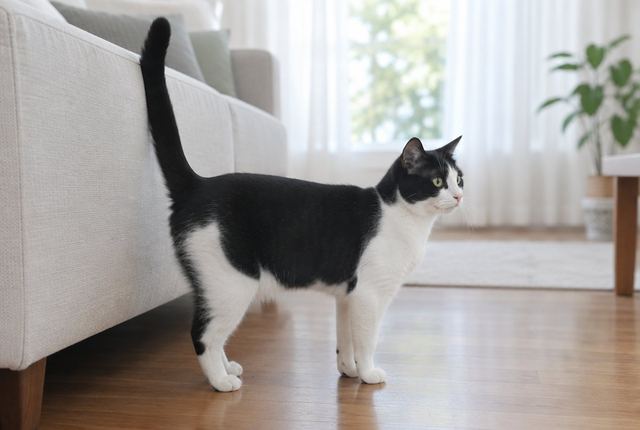
Cornell says spraying is usually done standing upright, with the tail raised, on a vertical surface. It needs a different approach from peeing on the floor. A move can trigger spraying, especially if outdoor cats are close. Read our guide on cat spraying vs peeing.
What not to do
- Do not punish your cat. It adds stress and makes the problem worse.
- Do not rub the cat’s nose in it.
- Do not change litter, tray and food all at once.
More help
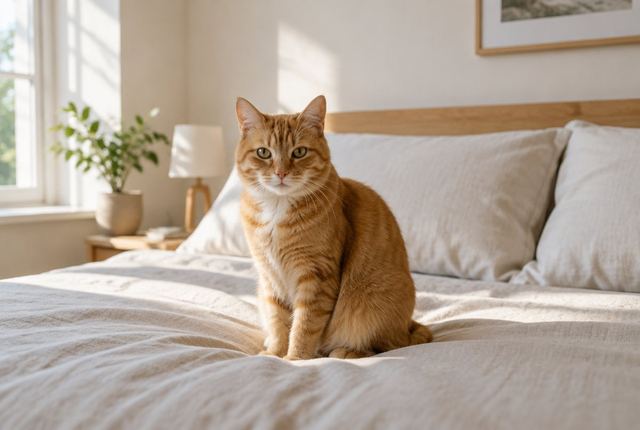
Read our guides to a cat peeing outside the litter box, why a cat pees on your bed, and a cat peeing outside the box but pooping in it.
Track where and when
A short log shows patterns: where, when, how much, and what happened before. Our free vet summary tool turns your notes into one page for the vet. The Cat Litter Box Problem Diary has “where and when” pages and a daily log built for exactly this.
Questions
How long does moving stress last in cats?
It varies. Many cats settle in a few days to a few weeks if you start with one room and add space slowly. If the problem lasts more than a week or two, or your cat also stops eating or hides all day, see your vet.
How many litter trays do I need?
Cornell advises one tray per cat in the home, plus one. Put them in different places, so one cat cannot block another. In a new home, start with one in the safe room and add the rest as you open rooms.
Should I change the litter?
Not during a move. Keep the same litter your cat used before. Cornell says most cats prefer unscented, fine-textured litter about one to two inches deep. If you must change, mix the new into the old over time.
Is my cat spraying or peeing?
Spraying is usually a small amount on an upright surface, with the cat standing and tail raised, Cornell says. Peeing is a larger puddle on a flat surface. A move can trigger both. Spraying needs a different plan.
When is it an emergency?
If your cat strains in the tray, cries while trying to pass urine, or passes little or none. Cornell says a blocked urethra is an absolute emergency and can kill in less than 24 to 48 hours. Male cats are at greater risk.
What cleaner should I use?
Use a cleaner that breaks down urine, such as an enzyme cleaner for pets. Cornell says odours must be removed, not just covered. It says to avoid ammonia and vinegar, which smell like urine and can draw the cat back.
Sources
- Cornell Feline Health Center: Feline behavior problems, house soiling (updated January 2015)
- Cornell Feline Health Center: Feline lower urinary tract disease (updated October 2016)
- International Cat Care: Stress in cats (updated 26 September 2025)
- Cornell Feline Health Center: Loving care for older cats
This article helps you organise care. It does not replace advice from your vet.