Why is my cat peeing on my bed? Causes and what to do
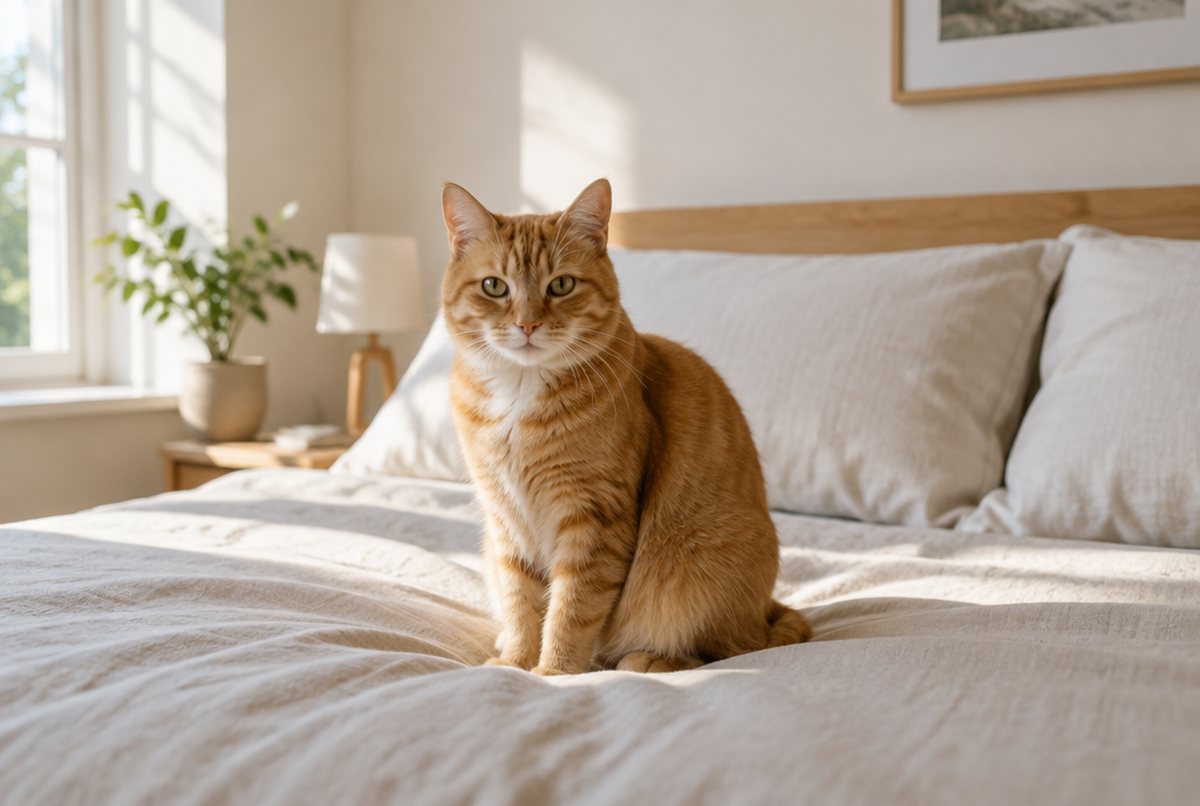
You pull back the duvet and find a wet patch. Your cat has peed on your bed, maybe more than once. It feels personal. It is not. The bed is a clue, and with a few weeks of careful notes you can usually find the reason. The AAFP and ISFM guidelines say house soiling is a major reason why owners give cats up to shelters. So it is worth the effort to solve it.
First: is it an emergency?
Watch your cat in the litter box. Go to a vet now, day or night, if your cat:
- strains, but little or no urine comes out
- goes back to the box again and again
- cries out while it tries to pee
- becomes more and more restless or distressed
The Cornell Feline Health Center says a blocked urethra is “an absolute emergency”. Cornell warns that a blocked cat can die in less than 24 to 48 hours. Male cats are at greater risk.
Why the bed?
A soft surface after pain
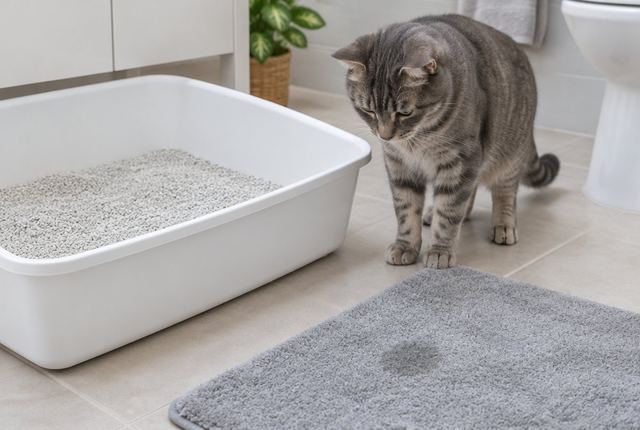
Cornell says you may find urine on soft surfaces such as carpets, beds or clothes. It also explains how it starts. A medical problem can make peeing painful. The cat then links the litter box with the pain, and looks for another place.
Cornell lists the signs of a bladder problem:
- pain or difficulty when peeing
- peeing more often than normal
- crying out while peeing
- blood in the urine
- peeing outside the box
- licking the genital area often
The ASPCA adds that a cat with a urinary tract infection may go into the box often, and make only small amounts each time.
Cornell warns that cats with medical problems do not always act sick. So book a vet check even if your cat seems fine.
The bed feels safe
The AAFP and ISFM guidelines make a point that surprises many owners: “In some households, an insecure cat feels safest on the owner’s bed and may eliminate there instead of going to the litter box.”
A cat can feel unsafe on the way to its box. The guidelines say a “despot” cat can block the boxes in a home with several cats. A timid cat may then choose the safest place it knows. For many cats, that is your bed.
Something about the box
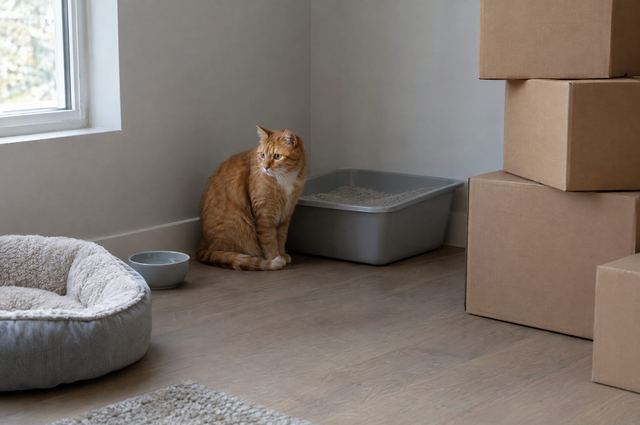
Cornell says it can be the box, the litter, the place of the box, or all three that a cat dislikes. Cornell adds that cats that prefer one kind of surface usually stick with it. So a cat that has learned to like soft bedding may keep coming back.
The ASPCA lists bedding as one of the surfaces some cats prefer. Signs that your cat dislikes its box: it goes in and leaves fast, or goes near the box but not in it.
Stress and change
Changes in the home can stress a cat. The AAFP and ISFM guidelines say a new pet, a new person, new furniture or new objects change the shared smell of the home. For some cats, that is enough to start marking. Cornell says stress seems to be an important factor in bladder inflammation with no known cause (FIC).
Sore joints in older cats
The AAFP and ISFM guidelines say arthritis, weak muscles and poor sight can stop an older cat from reaching a box. This is more likely when the box is in a basement or far away. If your older cat sleeps on your bed, the bed may simply be closer than the box. The guidelines suggest extra boxes and night lights near where the cat sleeps.
Is it peeing or spraying?
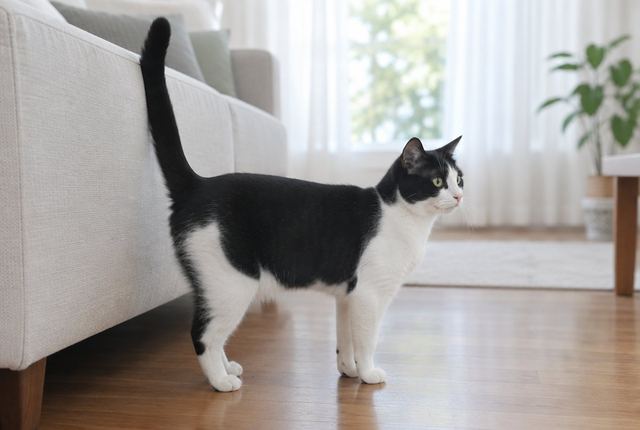
A puddle on the bed is usually peeing, because it is a flat surface. But the AAFP and ISFM guidelines say some cats squat and mark on flat surfaces too. Small amounts in the same spot, together with marks on walls or doors, point to spraying. Read cat spraying vs peeing to tell them apart.
How to clean the bed
Clean it soon, and clean it fully. Cornell says cleaning works best when it is done soon after an item is soiled. The smell must be neutralised, not only covered.
- Strip the bed as soon as you find it.
- Use an enzymatic cleaner on the mattress. The ASPCA recommends a cleaner made to neutralise pet odours.
- Wash the bedding with an enzyme-based (biological) laundry detergent. The AAFP and ISFM guidelines say it removes the protein in urine.
- Do not use ammonia. The ASPCA says ammonia can attract your cat back to the same spot.
- Do not use vinegar. Cornell says ammonia and vinegar both smell like urine to a cat.
How to help your cat stop
- Book a vet check. Tell the vet the cat pees on soft surfaces. Ask about a urine test. The AAFP and ISFM guidelines say a sample is best tested within 30 to 60 minutes of collection.
- Close the bedroom door for now, so the habit does not grow while you look for the cause.
- Check the boxes. The AAFP and ISFM guidelines advise 2 boxes in 2 places for one cat, and at least one more box than the number of cats in bigger homes. Boxes side by side count as one. Put at least one box on each level of the home.
- Keep the boxes clean. Remove waste at least once a day. Wash each box every 1 to 4 weeks with soap and hot water, the guidelines say.
- Put a box near the bedroom, in a quiet place your cat can reach without meeting other cats.
- Change what the bed means, once it is clean. Cornell says cats eat and toilet in separate places, and suggests food bowls or treats on a soiled spot. The ASPCA suggests foil or an upside-down carpet runner on a problem spot.
- Change one thing at a time. Wait 2 weeks before the next change. The guidelines say to keep a box in a new place for at least 2 weeks.
What not to do
- Do not punish your cat. The ASPCA says never rub its nose in it or scold it. Cornell says to never hit, kick or scream at a cat. The anxiety may make the problem worse.
- Do not carry your cat to the box, the ASPCA says.
- Do not shut your cat in a small room for weeks without treating the cause, the ASPCA says.
What to record
The AAFP and ISFM guidelines say the vet uses a timeline and a floor plan of the home. For 2 weeks, write down:
- Each accident: the date, the time, and where on the bed or in the room.
- The amount: a puddle or a small spot.
- Which cat, if you have more than one, and how sure you are.
- The box: how often your cat uses it, and any straining or crying.
- What happened that day: you were away, visitors, a new pet, a fight between cats.
- What changed in the 4 weeks before it started.
The Cat Litter Box Problem Diary has pages for each of these: the blocked-bladder signs on page 2, a timeline, a floor plan, an accident log, a cleaning log, a litter box audit, and a one-page history for your vet. It never names a medicine. Your vet sets the plan.
Read also why is my cat peeing outside the litter box but pooping in it.
Before the visit, our free vet visit summary puts your cat’s health notes and questions on one page.
Questions
Is my cat peeing on my bed out of revenge?
No. The Cornell Feline Health Center says it is common for owners to think this, but cats do not soil to take revenge. The AAFP and ISFM guidelines say a cat soils the house when a physical, social or medical need is not met. The bed is a clue to that need, not a message to you.
How do I stop my cat peeing on my bed?
Start with a vet check for bladder problems. Then clean the bedding fully, close the bedroom door for now, and fix the litter boxes: enough boxes, in quiet places, clean every day. Look for stress at home too. Change one thing at a time, so you know what helped.
Should I punish my cat for peeing on my bed?
No. The ASPCA says never rub your cat's nose in it or scold it. The AAFP and ISFM guidelines say punishment can cause fear-related aggression and harms your bond. Cornell says the anxiety it causes may make the house soiling worse.
What do I do right after my cat peed on the bed?
Strip the bed and clean it soon. Cornell says cleaning works best soon after an item is soiled, and the smell must be neutralised, not only covered. The ASPCA says to use an enzymatic cleaner. The AAFP and ISFM guidelines say enzyme-based (biological) laundry detergent removes the protein in urine. Avoid ammonia and vinegar.
Why does my cat pee on my bed when I am away?
The sources here do not study this question. They do say what helps you find out. Cornell advises keeping the routine, diet and feeding times the same, and stress can play a part in bladder problems. The AAFP and ISFM guidelines say some insecure cats feel safest on the owner's bed. Write down the dates you were away and each accident, and show your vet.
Can a cat pee on the bed because of a bladder infection?
Yes, it is one possible cause. The ASPCA says a cat with a urinary tract infection may go into the box often and make only small amounts. Cornell says a cat may link the box with pain and choose a soft surface instead. A cat that strains with little or no urine needs a vet now.
Sources
- Carney HC and others. AAFP and ISFM Guidelines for Diagnosing and Solving House-Soiling Behavior in Cats. Journal of Feline Medicine and Surgery 2014;16:579-598
- Cornell Feline Health Center: Feline behavior problems: house soiling
- Cornell Feline Health Center: Feline lower urinary tract disease
- ASPCA: Litter Box Problems
This article helps you organise care. It does not replace advice from your vet.