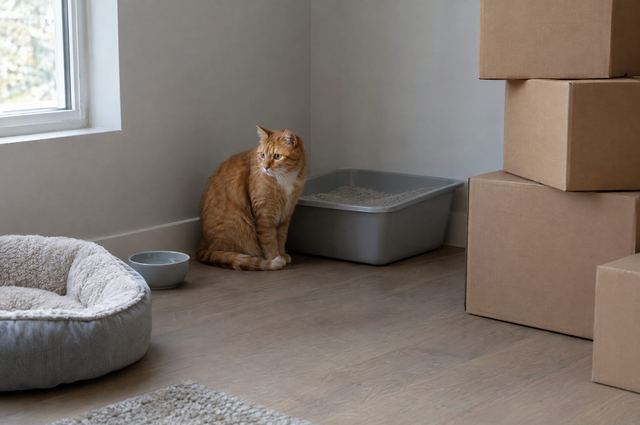
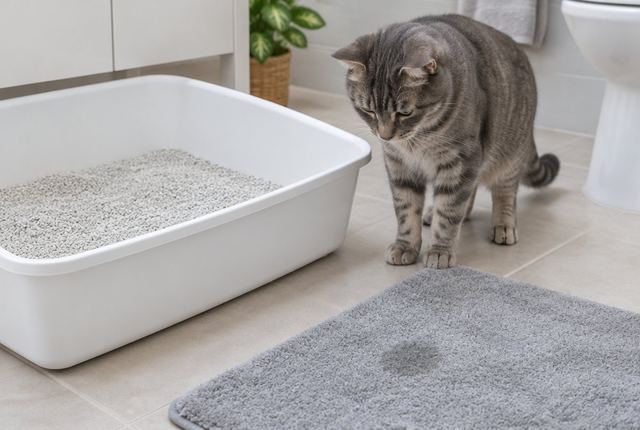
Why is my cat peeing outside the litter box? Causes and what to do
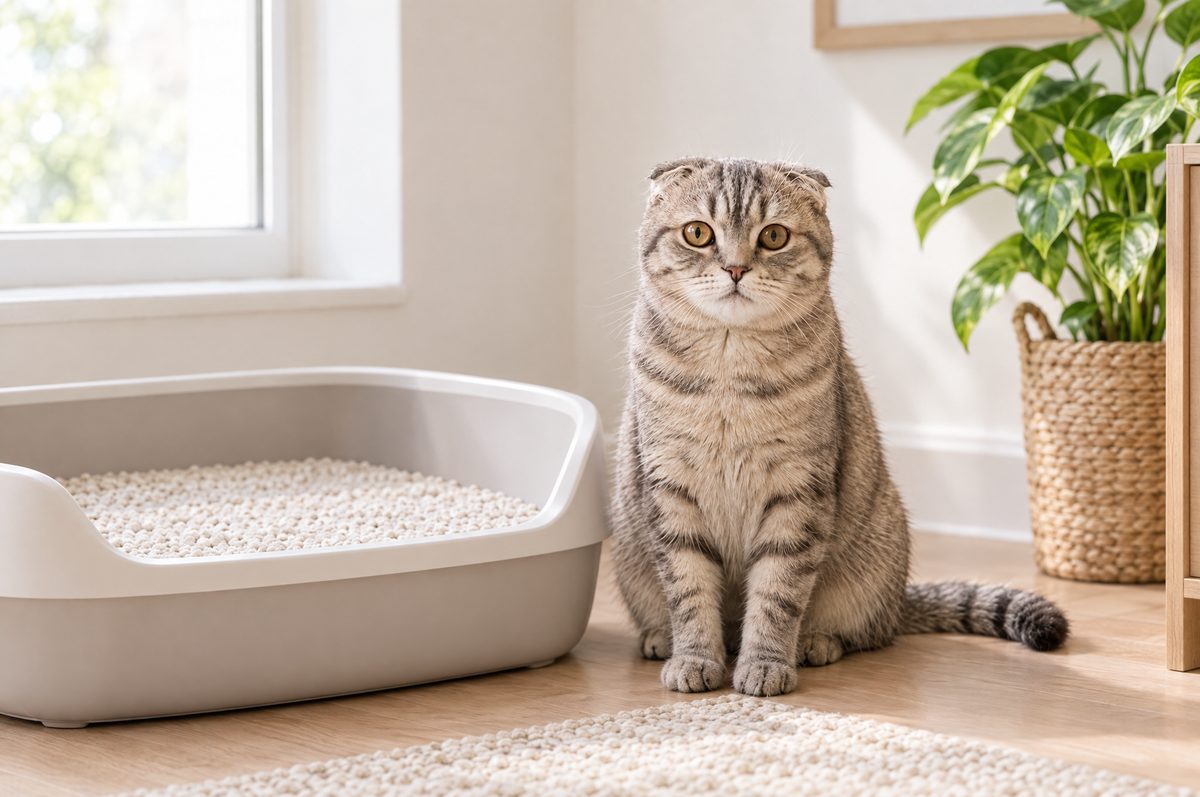
You find a wet patch on the bath mat, or on your bed. It is frustrating, and it is also a message. The Cornell Feline Health Center says that house soiling is the most common behaviour problem that cat owners report. The good news: once you find the cause, you can often fix it.
First: is it an emergency?
Watch your cat in the litter box. Call a vet now, day or night, if your cat:
- strains in the box, goes back again and again, and passes little or no urine
- cries out in pain while it tries to pee
- becomes more and more restless or distressed
Cornell says these can be signs of a blocked urethra. This is an absolute emergency. Male cats are at greater risk, because their urethra is longer and narrower. When a cat cannot pass urine, its body cannot remove toxins. Cornell warns that death can follow in less than 24 to 48 hours without treatment.
Medical causes come first
Cornell says that any medical problem that changes how a cat pees or poops can cause litter box trouble. Cats with these problems do not always act sick. Your vet may check for:
- Bladder inflammation (cystitis). It makes peeing painful and urgent. A cat may then link the box with pain. Stress seems to play a part.
- Bladder stones and urethral plugs. These irritate the bladder or block the urethra.
- Kidney disease, an overactive thyroid and diabetes. These make a cat drink more and pee more often.
- Arthritis and pain. The 2021 AAHA/AAFP guidelines say a stiff cat may find it hard to climb into a box.
- Problems with age. Cornell says that poor mobility or cognitive changes can stop an older cat from reaching the box in time.
Signs of lower urinary tract disease include painful or frequent peeing, crying out, blood in the urine, peeing outside the box, and licking the genital area often. Tell your vet about each one you see.
One cause can lead to another. Cornell explains that a cat with bladder pain may pee where it is, then keep using the new spot after the pain stops. So act early. The longer the habit lasts, the harder it is to change.
Check the litter box
When your vet finds no medical cause, look at the box from your cat’s point of view. The 2021 guidelines and Cornell suggest:
- Enough boxes. One for each cat, plus one more, in different places.
- Clean boxes. Scoop every day. Some cats will not use a box with any waste in it.
- Big boxes. The guidelines say a box should be at least one and a half times the cat’s length, from nose to tail tip. Most boxes sold are too small. A large storage box can work.
- Low sides for kittens and older cats.
- Open, not covered. Covers hold odours in. An open box also lets a cat see other pets coming.
- Unscented litter. Change brands slowly, mixing in a little of the new litter at a time.
- A quiet place with more than one way out, not boxed in on three sides.
Clues that your cat dislikes the box: it cries in the box, perches on the edge, does not bury its waste, or pees right next to the box.
Clean it the right way
Cats return to places that smell of urine. Cornell says to clean soon, and to neutralise the odour, not only cover it. Do not use cleaners with ammonia or vinegar. To a cat, they smell like urine.
You can also change what the spot means. Cornell suggests putting food bowls or toys where your cat soiled, because cats do not like to eat and toilet in the same place.
Never punish your cat
The 2021 guidelines say that you should never reprimand a cat for toileting in the wrong place, and never carry it to the box as a punishment. Fear adds stress, and stress can make bladder problems worse. If the problem goes on, ask your vet about a veterinary behaviourist.
Write down what you see
Your vet will ask: when did it start, how often, where, and what changed at home? A daily record answers these questions with facts.
The Cat Litter Box Problem Diary is made for this. Page 2 lists the blocked-bladder signs. It has a timeline, a floor plan with numbered accident places, an accident log, a “pee, poo or spray?” check, a litter box audit, a page to test one change at a time, and a one-page history for your vet. It holds up to 4 cats, so you can find out which cat it is.
If your cat also over-grooms or has bald patches, the Cat Allergy and Over-grooming Diary has a litter box and bladder record too. Bladder pain can cause both problems.
More on this topic: why is my cat peeing outside the litter box but pooping in it, cat spraying vs peeing and why is my cat peeing on my bed.
Before the visit, our free vet visit summary puts your cat’s meals, medicines and notes on one page.
If the problem started after a move, read cat won’t use the litter box after moving.
Questions
Is my cat peeing outside the box to get back at me?
No. The Cornell Feline Health Center says that owners often mistake frustration for revenge. A cat pees outside the box because of pain, illness, stress, or something it dislikes about the box. Never punish your cat. The 2021 AAHA/AAFP guidelines say this.
Why is my cat peeing on my bed?
Cornell says that a cat that dislikes its litter box often pees on soft surfaces, such as beds, carpets or clothes. Bladder pain can also start the habit. Ask your vet to check for a medical cause first, then look at the box.
How many litter boxes do I need?
One for each cat, plus one more. Both the 2021 AAHA/AAFP guidelines and Cornell give this rule. Put the boxes in different quiet places, and scoop them every day.
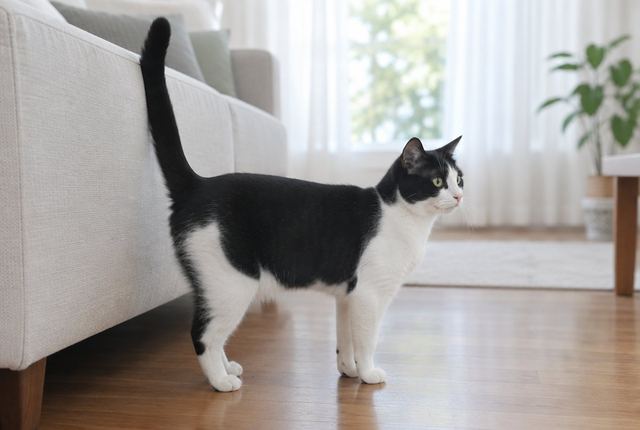
What is the difference between spraying and peeing outside the box?
Cornell says that a cat sprays standing up, on walls and other vertical surfaces, with small amounts of urine and a quivering tail. A cat that pees outside the box squats, usually on a flat surface. The causes and the fixes are different.
Sources
- Cornell Feline Health Center: Feline behavior problems: house soiling
- Cornell Feline Health Center: Feline lower urinary tract disease
- Quimby J, Gowland S, Carney HC, et al. 2021 AAHA/AAFP Feline Life Stage Guidelines. Journal of Feline Medicine and Surgery, 2021
This article helps you organise care. It does not replace advice from your vet.