Clocks go back: how to shift your pet's feeding and medicine times
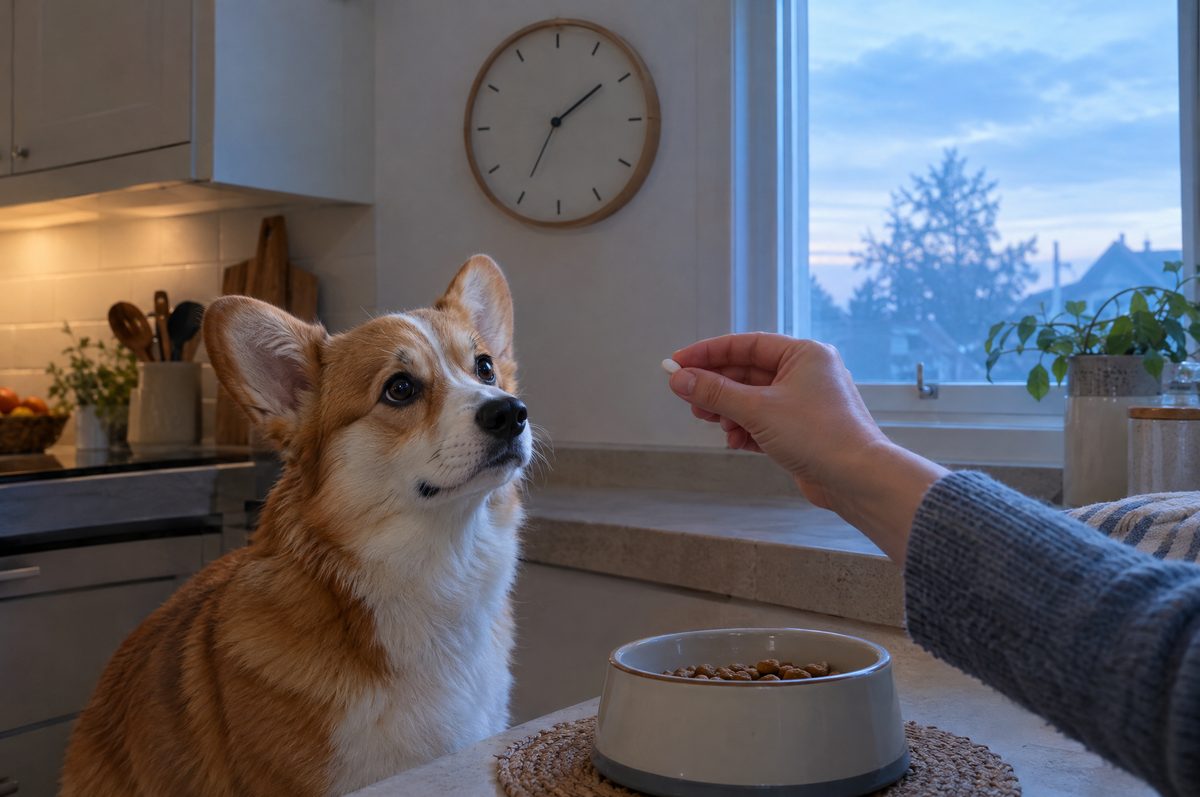
In most of the US and Canada, the clocks go back one hour on the first Sunday in November. For people, it is an extra hour of sleep. For a dog that needs breakfast at 7, or a cat on insulin at 8, it can mean confusion.
This guide shows how to shift meals, walks and medicine with the least fuss, what to ask your vet, and how to stop a missed or double dose.
This page gives general information. It is not veterinary advice. Never change the timing of a medicine without asking your vet or pharmacist.
The short answer
- Meals and walks: shift by about 15 minutes a day over four days. Or move the full hour at once if your pet copes well with change.
- Medicine every 12 hours, such as insulin: ask your vet before the change.
- Once-a-day medicine: usually give it at the same clock time, but check.
- Every reminder: update phone alarms, printed sheets and the sitter’s notes.
What changes when the clocks go back
Your pet’s body does not know about the clock. It runs on light and routine. When the clocks go back:
- A meal at 7:00 a.m. by the old time now falls at 6:00 a.m. by the new clock.
- If you keep feeding at 7:00 on the new clock, your pet waits one extra hour.
- Your pet may wake you early, cry at the door or pace.
The fix is to move slowly, so the body can adjust.
A 4-day plan for meals and walks
Start on the change day, Sunday. Use your pet’s usual new-clock time as the goal. Here is an example for a breakfast at 7:00 a.m.:
| Day | New clock time for breakfast |
|---|---|
| Sunday (change day) | 6:15 a.m. |
| Monday | 6:30 a.m. |
| Tuesday | 6:45 a.m. |
| Wednesday | 7:00 a.m. |
Do the same for the evening meal and the main walk. Some owners start the shift a few days before the change, in the other direction. Either way works for a healthy pet.
Medicine every 12 hours
Insulin, some heart medicines, some seizure medicines and some antibiotics are given about every 12 hours. For these, ask your vet before the change.
For diabetic cats, Cornell gives two useful facts:
- Insulin is given about every 12 hours.
- Ideally doses are 12 hours apart, but times can vary by 1 to 2 hours when needed.
Cornell also says many vets advise feeding at the time of the insulin injection, to avoid a dangerous drop in blood sugar.
So for many diabetic pets, a one-hour change is within what vets accept. But your vet knows your pet’s dose and its blood sugar curve. Ask:
- “Should I shift the insulin all at once, or 15 to 30 minutes a day?”
- “Should the meal move with the insulin?”
- “What signs of low blood sugar should I watch for?”
Cornell lists signs of low blood sugar in cats: weakness, low energy, vomiting, poor coordination, seizures and coma. If you see these, Cornell says to offer food at once, and if the cat will not eat, to give an oral sugar source and see a vet immediately. Never put anything in the mouth of a cat that is seizing.
Medicine once a day
For most once-a-day medicines, a one-hour shift does not matter much. Ask your vet or pharmacist which is best: keep the same clock time, or shift slowly. Ask especially about:
- Heart medicine.
- Seizure medicine.
- Thyroid medicine.
- Hormone medicine.
- Pain medicine given on a strict schedule.
Stop a missed or double dose
The biggest risk on change day is human error. One person gives the dose at the old time. Another gives it again at the new time.
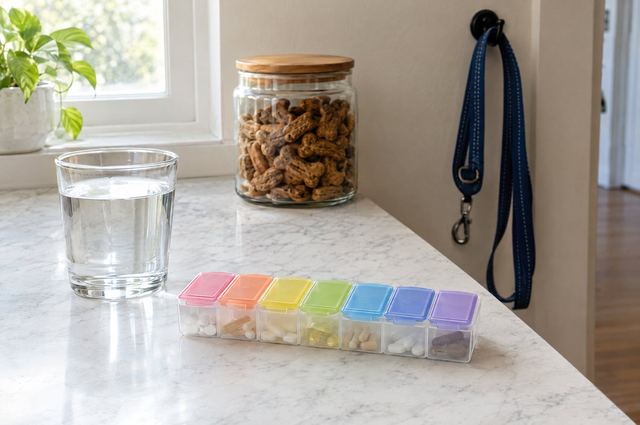
- Write each dose on a chart as you give it, with the time.
- Agree who gives each dose.
- Update all phone alarms the night before.
- Keep the medicine in one place, not two.
If you are not sure whether a dose was given, call your vet. Do not give a second dose to “be safe”.
Dogs: toilet breaks
A dog used to going out at 6:30 a.m. will need to go at what is now 5:30 a.m. on the clock. Move the first toilet break slowly, like meals. Older dogs and dogs on medicines that make them drink more may not be able to wait. Let them out when they ask.
Cats: early waking
Cats often wake owners an hour early after the change. Shift breakfast slowly. Do not get up to feed at the new early time, or the cat learns that crying works. A timed feeder can help some cats.
Giving the medicine itself
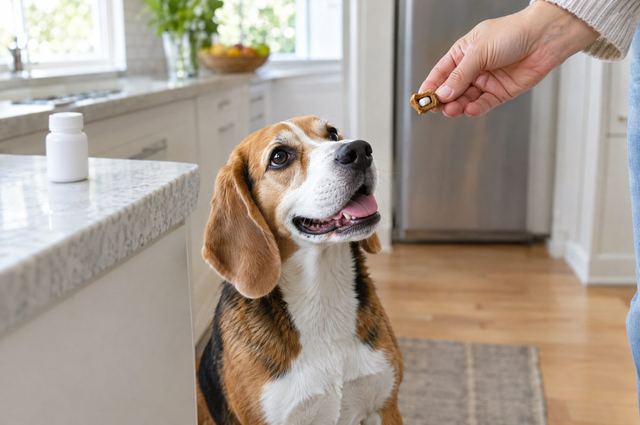
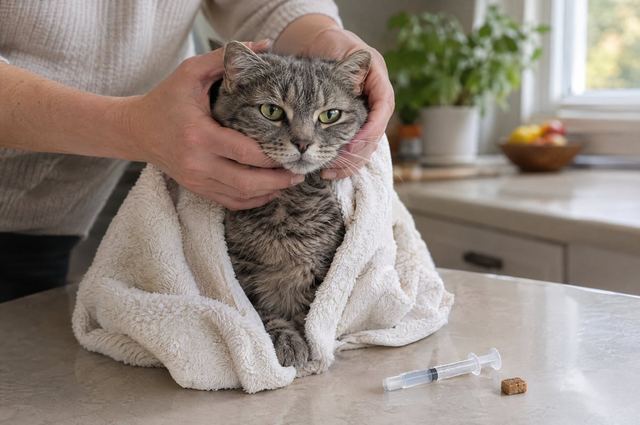
If your pet resists tablets, Cornell’s pharmacy guides explain how. For dogs, Cornell suggests wrapping a tablet in a small piece of tasty food, but says to check first, because not all medicines can go with cheese. For cats, see our guide on how to give a cat a pill. For dogs, read dog won’t take pills.
Tell your sitter
AAHA says pet sitter instructions should list when medicines are given and how. If someone else gives medicine, write the new times down. Read our guide on what to leave your pet sitter.
Plan the whole day
Our guide to a pet medication schedule shows how to fit several medicines into one day. If you feed a cat and a dog at the same time, read feeding cats and dogs together.
Set the new times once
Our free medicine reminders tool makes a reminder schedule you can update in a minute. The Medical and Dosing Tracker lets you write each dose as the label says, with the time. Write the new time on the tracker on change day, so nobody guesses.
Questions
Do pets feel the time change?
Pets go by routine and light, not the clock. When the clocks go back, your pet's body still expects breakfast at the old time, which is now an hour earlier by the clock. That is why cats and dogs often wake you early for a few days.
Should I change feeding time all at once?
For most healthy pets, a one-hour jump is fine. A slow shift of about 15 minutes a day is gentler and causes less early waking. Pets with diabetes or on timed medicine need a plan from your vet.
What about insulin?
Ask your vet before the change. Cornell says a diabetic cat's insulin is given about every 12 hours, and that times can vary by 1 to 2 hours when needed. Many vets advise feeding at injection time. Your vet will say how to shift your pet.
Why is my cat waking me earlier?
After the clocks go back, your cat's usual breakfast time now falls one hour earlier on the clock. The cat has not changed. Shift breakfast slowly, and do not reward the 5 a.m. alarm with food, or it may stick.
What if I give a medicine once a day?
For most once-a-day medicines, giving it at the same clock time from the change day is fine, but check with your vet or pharmacist. Ask especially about heart, seizure, thyroid and hormone medicines.
What about my pet sitter?
If a sitter or a family member gives medicine, tell them the new times in writing. Update any phone alarms and printed sheets. A missed or double dose is the biggest risk on change day.
Sources
- Cornell Feline Health Center: Feline diabetes (updated 2024)
- Cornell University Hospital for Animals pharmacy: Giving your dog oral medications
- Cornell University Hospital for Animals pharmacy: Giving your cat oral medications
- AAHA: Preparing for the unexpected, essential pet sitter instructions (24 April 2025)
This article helps you organise care. It does not replace advice from your vet.