How to give a cat a pill: step by step, and why water after it matters
The vet hands you a small bottle of pills and says “twice a day for two weeks”. At home, your cat sees the bottle and hides under the bed. Giving a cat a pill is a skill. A calm plan and the right steps make it easier.
This guide is one step in our complete guide on how to take a cat to the vet, before, during and after.
Before you start: ask your vet or pharmacist
Ask these questions when you pick up the medicine:
- Can this pill be given with food or hidden in a treat?
- Can I split it or crush it?
- Is there another form, such as a liquid, a chew or a smaller pill?
- What should I do if my cat spits it out or I miss a dose?
Two expert guides agree on the first point. Cats Protection says to hide a pill in food only if your vet says it is safe. Langford Vets says to always check with a vet before you crush a tablet.
Method 1: Hide the pill in food
This is the easiest way when your vet agrees:
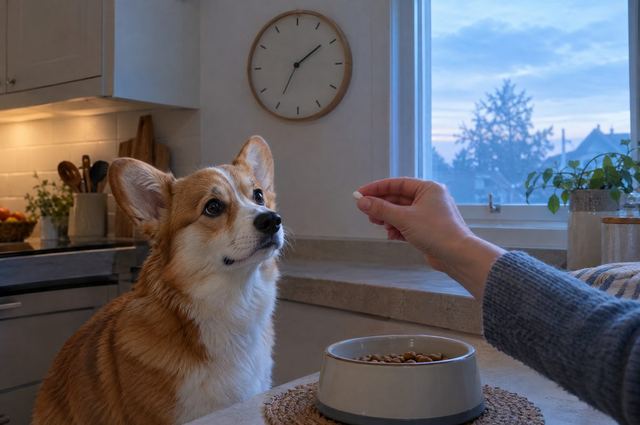
- Use a small, strong-smelling treat: a pill pocket, pill putty, a little wet food or plain cooked chicken.
- Give one plain treat first, with no pill.
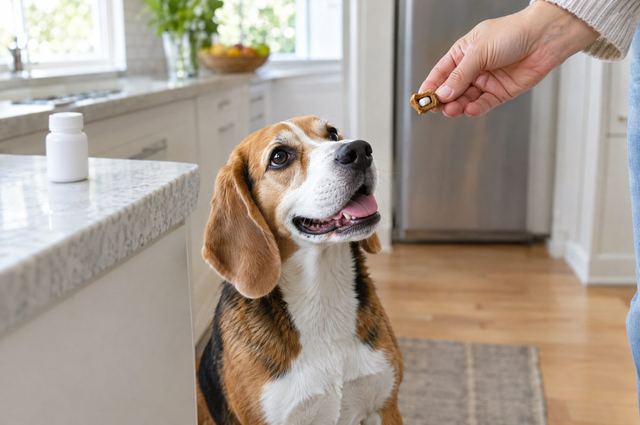
- Give the treat with the pill, buried so the pill does not show.
- Give a second plain treat straight after. Langford Vets says a follow-up treat helps make sure the pill went down.
Use a small amount of food, not a full meal. Cats Protection says the cat must eat all of it to get the full dose. Watch your cat until it is gone.
Method 2: Give the pill by hand
Get everything ready before you get your cat. Cornell’s veterinary pharmacy says to stay relaxed and calm, because your cat reads your mood. A helper makes the first few times easier.
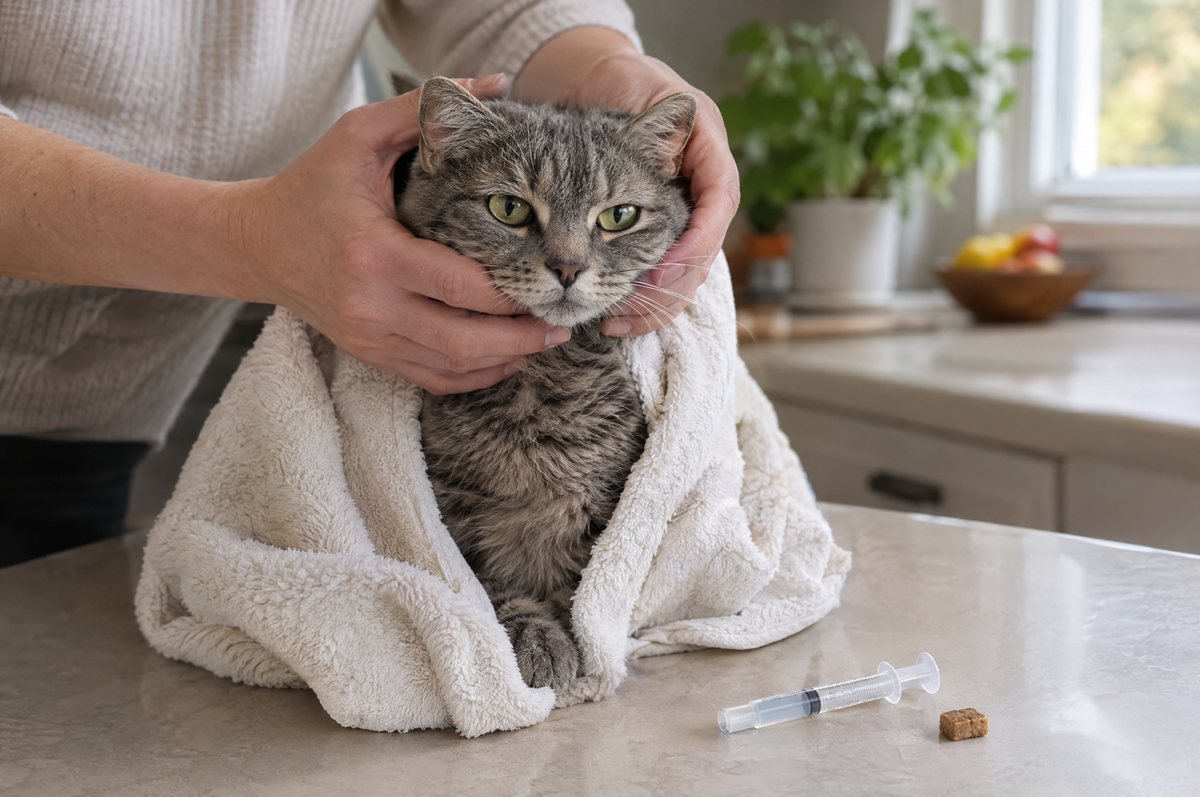
- Set up. Put your cat on a smooth table or counter, so it cannot grip with its claws. Cats Protection says not to pick your cat up to give a pill. Keep your cat’s bottom against your body or a wall, so it cannot back away.
- Wrap if needed. Cornell and Langford Vets suggest wrapping your cat loosely in a towel or blanket to hold its legs.
- Hold the head. Approach from behind or above. Gently hold the top of the head with one hand.
- Tilt the chin up. Cornell says to tilt the head back so the chin points up.
- Open the mouth. Hold the pill between your thumb and index finger. Use your middle finger to press down gently on the front of the lower jaw.
- Place the pill. Put it quickly as far back on the tongue as you can. Keep clear of the sharp canine teeth.
- Close and stroke. Close the mouth gently. Stroke the throat downwards. Cats Protection says lip licking is usually a sign of success.
- Give water. See the next section. Do not skip it.
- Reward. Give a treat or a fuss, if your cat stays near you.
Cornell says that if you are not sure your cat swallowed, gently blow on its face or rub its throat. This helps it swallow.
Why water after the pill matters
This step is often missed. Cornell’s veterinary pharmacy says to follow every tablet or capsule at once with water. Give about a teaspoon (5 to 6 ml). This lowers the chance that the pill lodges in the oesophagus. That is the tube from the mouth to the stomach.
How to do it:
- Fill a small oral syringe or dropper with water before you start.
- Put the tip in the side of the mouth, behind the canine tooth.
- Give the water slowly, so your cat can swallow.
Langford Vets gives the same advice: follow the pill with water from a syringe, or with a couple of treats. Cornell says you can use a little milk or another tasty liquid instead of water if your cat accepts it. Check with your pharmacist first that the liquid is safe with the medicine.
If your cat fights: a pill popper and other tips
Langford Vets describes a pill popper (pill giver). It is a plastic tube with a plunger. You load the pill in the tip, place the tip at the back of the mouth, and push the plunger. It keeps your fingers away from the teeth.
Other tips from these guides:
- Work slowly and calmly. Langford Vets says to give your cat a break for a few minutes if it shows signs of stress.
- Spray a calming pheromone on the towel about 15 minutes before, as Langford Vets suggests, so the smell can fade.
- Tell your vet if you cannot give the medicine. Langford Vets says there may be other forms that work better.
If your cat struggles hard, stop. Try again later, or call your vet for help.
Liquid medicine is different
Cornell gives different steps for liquids. Do not tilt the head up. Put the syringe tip just past the lower teeth, at the side. Give a little at a time and pause so your cat can swallow.
Keep a record of every dose
Two weeks of pills is 28 doses. It is easy to forget whether you gave the evening pill, or how many were refused. The record also helps your vet judge if the treatment works.
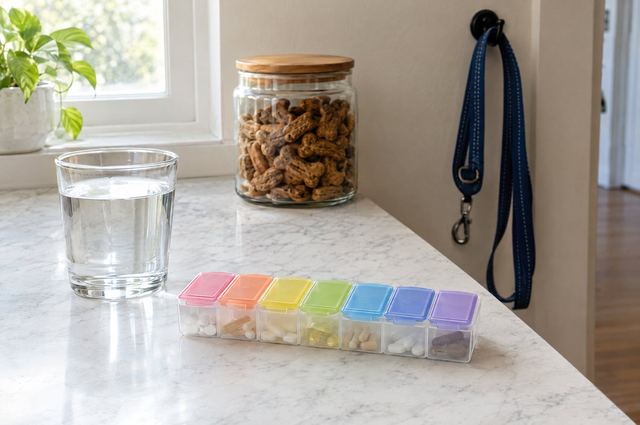
The Medical and Dosing Tracker has a page to write how to give each medicine, weekly dose grids by time slot, and a page for missed or refused doses. It records what your vet prescribes and never suggests a dose.
Our free medicine reminders tool adds each dose time to your phone calendar, so you do not miss one.
Before a vet trip, some vets suggest a calming medicine. Read gabapentin for cats before a vet visit.
For dogs, read dog won’t take pills. When the clocks change, read how to shift your pet’s medicine times.
Questions
Can I crush my cat's pill and mix it in food?
Only if your vet or pharmacist says it is safe for that medicine. Langford Vets says to always check with a vet before you crush a tablet. Some medicines must not be crushed. Cats Protection adds that the cat must eat the whole portion.
Why should I give water after a pill?
Cornell's veterinary pharmacy says to follow every tablet or capsule at once with about a teaspoon (5 to 6 ml) of water. This lowers the chance that the pill sticks in the oesophagus, the tube to the stomach. Use an oral syringe or a dropper.
My cat drools after a pill. Is that normal?
Cornell says some cats drool a lot after a medicine, and that this is normal and not harmful. If your cat also vomits, cannot swallow, or seems unwell, call your vet.
What if my cat spits the pill out or I miss a dose?
Do not give an extra pill to make up for it unless your vet says so. Call your vet or pharmacist and ask what to do. Write down the missed or refused dose and the time.
Is there an easier form than a pill?
Ask your vet. Langford Vets says there may be other forms of the medicine that work better for your cat. Tell your vet if giving the medicine is a problem, so you can find a plan that works.
Sources
- Cornell University College of Veterinary Medicine, pharmacy: Giving your cat oral medications
- Cats Protection: Giving your cat a tablet
- Langford Vets (University of Bristol): Medicating your cat
This article helps you organise care. It does not replace advice from your vet.