Gabapentin for cats before a vet visit: what to ask your vet first
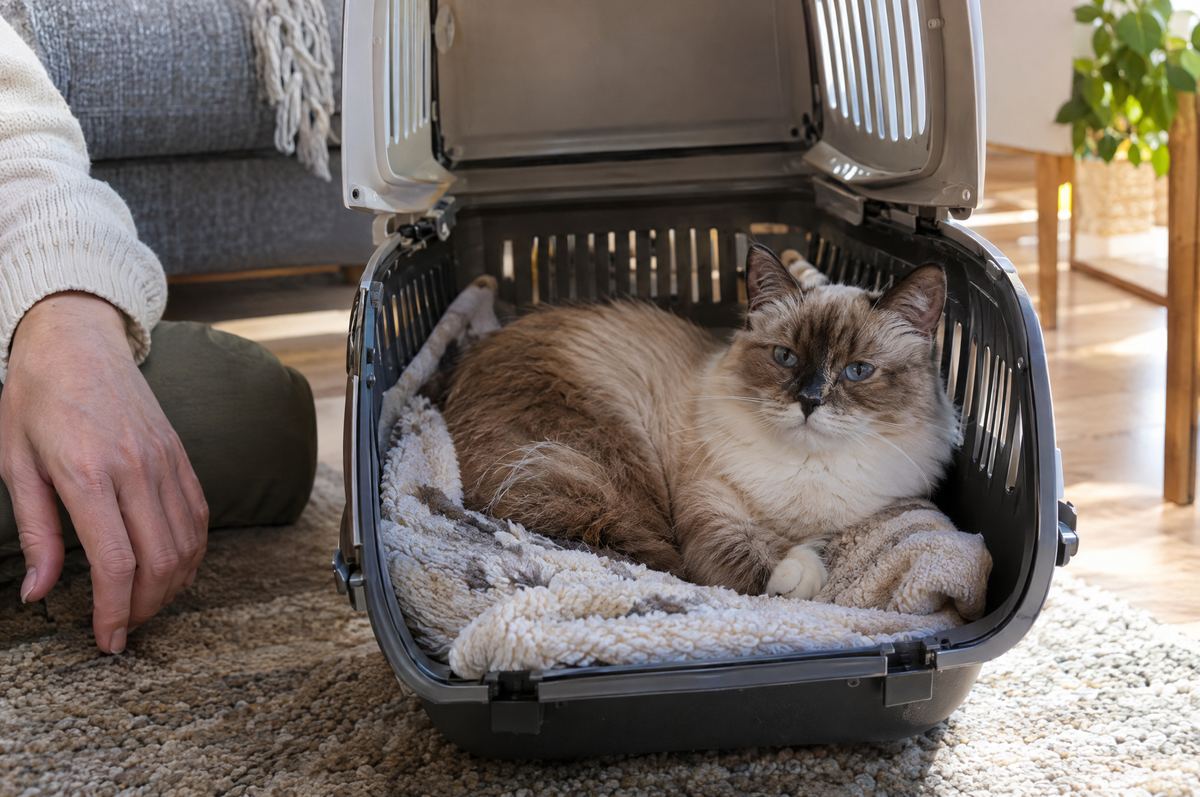
Your cat hates the carrier. It cries in the car. At the clinic it hisses and the team cannot examine it. Your vet may say, “We can try a medicine before the next visit.” Many owners then search for gabapentin. This guide explains what is known, and what to ask your vet.
This guide is one step in our complete guide on how to take a cat to the vet, before, during and after.
This page gives general information. It is not medical advice. It gives no doses. Only your vet can say if a medicine suits your cat.
What vets use it for
Gabapentin is a prescription medicine. Vets use it for several things, including pain. VCA lists it among medicines a vet may prescribe for a cat with severe stress at vet visits. The others on VCA’s list are buprenorphine, trazodone and alprazolam.
VCA says only a vet prescribes these. It also says sedatives are for healthy animals only. It says to check your cat’s health before you give one, even if your vet prescribed it for past visits.
What the study found
The main study is from 2017 in the Journal of the American Veterinary Medical Association. The authors are van Haaften and colleagues.
- It was a randomised, blinded, crossover trial.
- It used 20 healthy pet cats. All had a history of fear or stress at vet visits.
- Each cat got gabapentin before one visit and a placebo before another. The visits were a week apart.
- Owners and vets did not know which was which.
- Owner scores of stress, during the trip and the exam, were lower with gabapentin.
- Vet scores of the cats’ co-operation were also better with gabapentin.
The authors said gabapentin was safe and effective for reducing stress and aggression and for helping the cat accept transport and examination.
There are limits. The cats were healthy, and there were only 20. Clinician’s Brief notes that the study did not run extra tests, such as urine tests, so stable illness may have been missed. A cat with kidney disease or other illness may need a different plan.
What side effects did the cats have?
Clinician’s Brief summarises the study:
- Owners of 15 cats gave follow-up. In 12 of them (80%), owners saw sedation.
- In 6 of the 15 (40%), owners saw wobbliness (ataxia) with the sedation.
- Six cats had other effects: vomiting in 2, drooling in 1, muscle twitching in 2 and uneven pupil size in 1.
- All effects were over within 8 hours.
Clinician’s Brief says owners should be warned about wobbliness. It advises keeping cats indoors until the effects pass. It gives a guide of at least 6 to 8 hours after the dose. It also says kidney disease, and possibly liver disease, may mean a lower dose. Tell your vet about any illness.
Why the advice on timing differs
You will see different times on different sites. There are reasons.
- In the study, owners gave the capsule 90 minutes before putting the cat in the carrier.
- Clinician’s Brief says the authors recommended giving it about 2 to 3 hours before transport. Owners felt the peak effect about 2 to 3 hours after the dose.
- Some websites repeat only one of these. Some add a dose the night before. We found no source that backs a single time for every cat.
So do not copy a time from a website. Ask your vet. Your vet knows your cat, the length of your trip and your cat’s health.
Questions to ask your vet
Take this list to the call or visit:
- Is gabapentin right for my cat? Does my cat’s health, age or kidney function change that?
- What dose, and what time before we leave?
- Should I do a trial run at home? iCatCare suggests a trial before the real appointment, to check the medicine works and causes no problem.
- What do I do if my cat is very sleepy or wobbly?
- When do I call you?
- Do I tell the clinic team what I gave, and at what time?
- What else will help, such as a carrier cover, a calm room and a quiet car?
- If my cat takes other medicine, is there any problem?
- If my cat will not take a pill, is there another form? Our guide on how to give a cat a pill covers the steps.
On the day
These steps come from the sources we read. Follow your vet’s own instructions first.
- Give the medicine exactly as your vet told you. Write down the time.
- VCA says to keep your cat as calm as you can. Keep the home quiet.
- Use the carrier tips from iCatCare. Put a familiar, warm blanket in it. Cover it with a towel. Hold the carrier from underneath to keep it level. Fix it in the footwell of the car.
- Tell the front desk what you gave and when.
- Keep your cat indoors after the visit until the effects are gone.
Our guides to getting a cat into a carrier and taking a cat in the car have the steps.
Safety points
- Use only what your vet prescribed for this cat. Do not use pills made for another pet or for a person.
- VCA says never give a sedative if you worry about your cat’s health. Call your vet first.
- Natural and over-the-counter calming products are not always harmless. VCA says evidence for most of them is largely stories, not trials, and that products from vets can take several weeks to work.
- If your cat is sick, hurt or in pain, call your vet now. Do not wait for a calm day.
Medicine is only part of the plan
VCA says medicine is not a replacement for training. A cat that learns that the carrier is safe, and that car trips are short and calm, will need less help each time.
Write down what happened: the time you gave the medicine, how your cat behaved in the car, and how the exam went. Your vet can then change the plan. Our free vet visit summary tool helps you keep these notes.
If your cat hides after a visit, read cat hiding after the vet. For the whole picture, see my cat hates going to the vet.
A step-by-step plan for every part
Vet Days Without the Fight, Cat Edition is a 51-page fillable PDF. It covers the carrier, the car, the exam and medicine. It has a picture for each step, logs, a 30-day plan and a handling card for your vet team. It uses rewards only, and it never names a medicine or a dose. That is for you and your vet to decide.
Questions
How long before the vet do I give gabapentin?
Ask your vet. In the 2017 study, owners gave it 90 minutes before the trip. The study authors recommended 2 to 3 hours before transport, and owners felt the peak effect at 2 to 3 hours. Your vet will set the time for your cat.
What dose of gabapentin should I give my cat?
This page gives no doses. Your vet sets the dose for your cat's size, age and health. Kidney disease may need a lower dose, according to Clinician's Brief. Never use a dose from a website or another pet's pills.
What are the side effects of gabapentin in cats?
Sedation was the most common effect in the 2017 study. Owners of 12 of 15 cats saw sedation, and 6 saw wobbliness. Vomiting, drooling and muscle twitching also occurred. All effects passed within 8 hours. Keep your cat indoors until then.
Should I try gabapentin at home first?
iCatCare suggests a trial of the medicine before the actual appointment, to check it works and has no side effects. Ask your vet if a trial run is right for your cat, and when to do it.
Does gabapentin replace carrier training?
No. VCA says a sedative is for healthy animals and does not replace training. Keep training the carrier and car trips. Medicine may make a hard trip easier, but training changes how your cat feels about the trip.
Are there other medicines vets use?
VCA names buprenorphine, gabapentin, trazodone and alprazolam as medicines a vet may prescribe for a stressed cat. Only a vet can decide if a medicine suits your cat. VCA also warns not to give a sedative if you worry about your cat's health.
Sources
- van Haaften et al., JAVMA 2017;251(10):1175-1181: Effects of a single preappointment dose of gabapentin on signs of stress in cats during transportation and veterinary examination (PubMed)
- Clinician's Brief: Short-term anxiolysis for feline visits, Glenn Olah, DVM, PhD, DABVP (Feline), 2018
- VCA Animal Hospitals: Medication to reduce the stress of veterinary visits for cats (updated August 2025)
- International Cat Care: Cat Carer Guide, Visiting your vet (PDF)
This article helps you organise care. It does not replace advice from your vet.