Cat hiding after the vet: how long it lasts and what to do
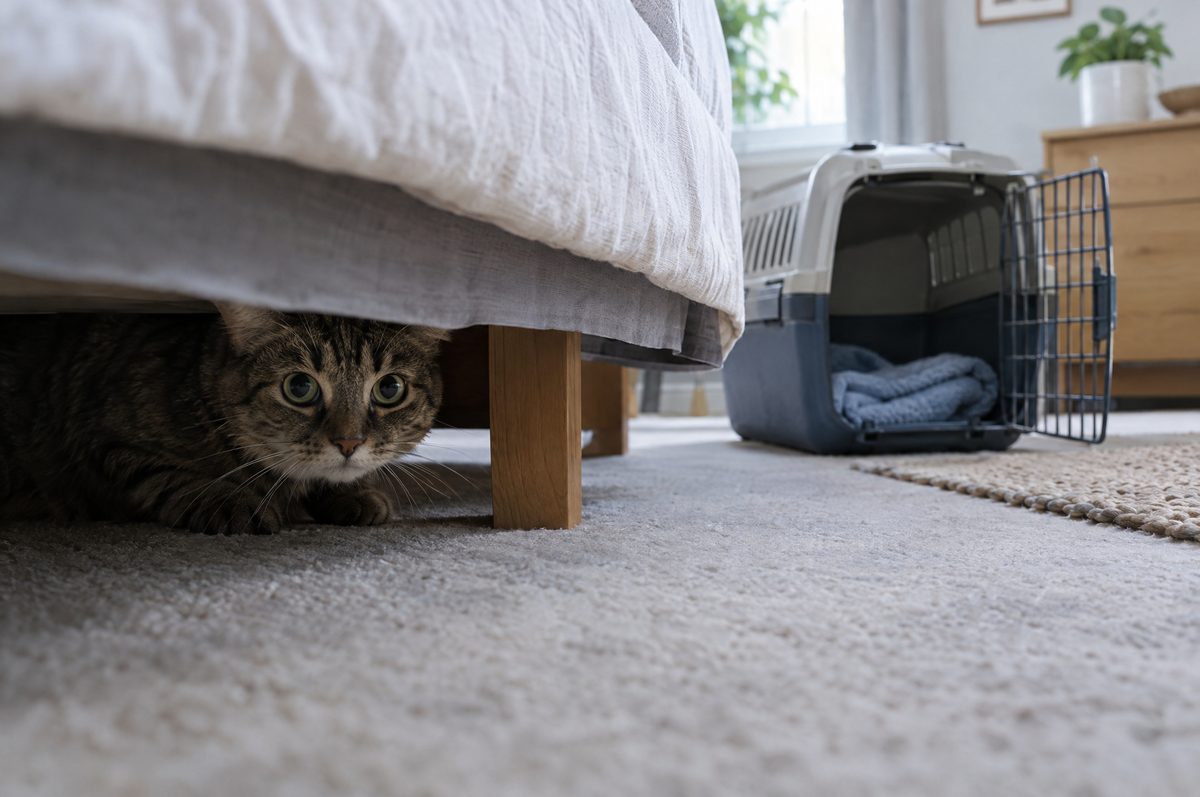
You got home from the vet. Your cat shot out of the carrier and vanished under the bed. It has not come out since. Is that normal? Often, yes. This guide explains why it happens, what to do, and which signs mean a call to the vet.
This guide is one step in our complete guide on how to take a cat to the vet, before, during and after.
This page gives general information. It is not veterinary advice. If your cat seems ill, call your vet.
Call the vet if
Hiding alone is not an emergency. But VCA lists signs that need urgent care. Call your vet now if your cat:
- has eaten nothing for more than 24 hours,
- passes little or no urine, or strains in the litter tray,
- has trouble breathing, or
- suddenly cannot use its back legs.
VCA says little or no urination is a life-threatening emergency. Also call if your cat had surgery, and now seems weak, in pain or very sleepy.
Why cats hide after a visit
International Cat Care (iCatCare) says hiding is one sign of chronic stress. Cats are solitary animals. When a cat feels threatened, its best chance is to run, hide and stay quiet.
A vet trip gives a cat many threats in a short time:
- The carrier, the car and the clinic smells.
- Strange people, other animals and being held.
- A smell on its own fur that is new.
VCA adds a second reason. Cats evolved to hide illness and pain. A quiet, withdrawn cat can be a sick cat. So you must look at the whole cat, not only the hiding.
What to do in the first hours
Follow the iCatCare advice for a returning cat:
- Do not overwhelm the cat. Keep fuss, noise and visitors low.
- Give a quiet room. Put in food, water, a litter tray and a comfy bed. iCatCare says this is best, particularly after an operation, when the cat may still feel the effects of anaesthetic.
- Let the cat come out by itself. Edmonton Humane Society says not to pull a cat out of its carrier and not to push or force a cat. It says forcing can cause long-term fear.
- Keep the litter tray away from the food and water. iCatCare says to give each resource its own place.
- Sit quietly in the room. iCatCare says to let the cat start any contact, so it feels in control.
- Stay calm yourself. Your cat watches you.
Do not shout. Do not chase.
How long is normal?
No source I read gives a set time. It varies by cat and by visit. A cat that is eating, drinking and using the litter tray, and then comes out for a meal or a cuddle, is probably coping with stress.
Use these checks:
- Eating. Has your cat eaten in the last 24 hours?
- Litter tray. Is it passing urine and stool?
- Breathing. Is it normal and quiet?
- Behaviour. Does it come out at night, or when the house is quiet?
- Change. Is it getting better each day, or worse?
If hiding lasts longer than a day or two, or you see any warning sign, call your clinic. Tell them what has happened.
Hissing at your other cat
This is common. iCatCare says a returning cat smells very different from the other cats. It may also look different if it has a bandage or clipped fur. Cats that got along may hiss, swipe or avoid each other.
iCatCare advises:
- Keep the returning cat in a separate room.
- Put bedding from the places the other cats rest into that room. This helps restore the home smell.
- The returning cat will begin to smell familiar again as it grooms and moves around.
- After a few hours, or perhaps a day after a long hospital stay, allow supervised contact.
- Watch their response. If there is aggression or running away, separate them again.
For a fight, iCatCare says to separate the cats for 24 to 48 hours. Treat them as strangers meeting for the first time, and bring them together slowly. If your cat hides, seems listless or limps after a fight, call your vet. A bite wound can turn into an abscess.
Make your home feel safe
iCatCare lists ways to lower stress in the home:
- Give one of each resource per cat, plus one extra, in different places. This covers food and water bowls, litter trays, beds, scratching posts and perches.
- Provide hiding places and high places.
- Keep routines steady.
- Let your cat start contact.
A box with a blanket on its side is a good hiding place. Leave it out.
Make the next visit easier
Most cats hide after vet trips because the trip is hard. You can make each part easier:
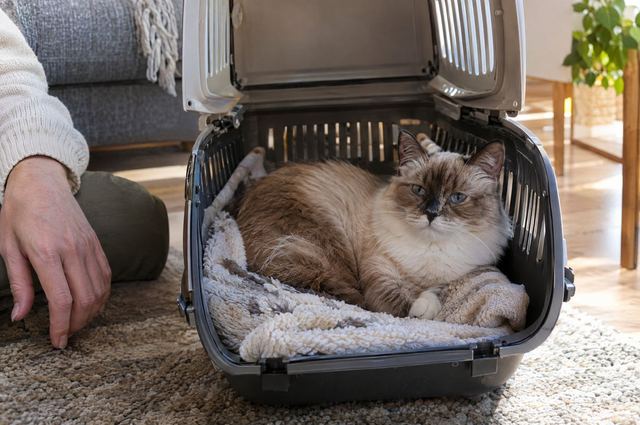
- The carrier. iCatCare says to make it a resting place at home, with a familiar blanket. Edmonton Humane Society breaks the training into 8 small steps. Do not store the carrier and bring it out only for the vet.
- The trip. iCatCare suggests covering the carrier with a towel, fixing it in the car footwell and supporting it from underneath when you carry it.
- Your vet. Ask your vet team for help. If a cat is very distressed, iCatCare says to talk to your vet about suitable medicine.
Read our guides to getting a cat into a carrier, taking a cat in the car and what to do when your cat hates the vet.
Write down what you see
Keep a few notes for the vet: when your cat last ate, when it used the tray, and when it came out. Our free vet visit summary tool helps you keep these in one place.
A plan for every part of the trip
Vet Days Without the Fight, Cat Edition is a 51-page fillable PDF. It covers the carrier, the car, the exam, medicine and the return home. It uses pictures, logs and a 30-day plan, and it includes a handling card for your vet team.
Hiding can also mean pain. See signs of pain in cats.
Questions
How long will my cat hide after the vet?
No source gives a set time. International Cat Care says hiding is a sign of stress and that cats hide when they feel threatened. Offer a calm room and watch your cat. Call your vet if hiding comes with no eating, no litter use or other signs of illness.
Should I pull my cat out from under the bed?
No. Edmonton Humane Society says not to push or force a cat, and not to pull a cat out of its carrier. Forcing a cat can cause long-term fear. Give it time and space. Keep food, water and a litter tray near its hiding place.
My cat hisses at my other cat after the vet. Why?
International Cat Care says a returning cat smells very different from the other cats at home. Cats that got on well may hiss or swipe. Keep the returning cat in a separate room, then allow supervised contact after a few hours.
When is hiding a sign of illness?
VCA says cats have evolved to hide illness and pain. Hiding with no food for more than 24 hours, little or no urine, hard breathing or sudden weakness needs a vet at once. Ask your clinic if you are unsure.
Is it normal for a cat not to eat after the vet?
A short dip can happen after stress. VCA says no food for more than 24 hours needs immediate veterinary care, because cats that stop eating risk fatty liver disease. Try a quiet room, then call your vet.
How can I make the next visit easier?
Train the carrier and car trips at home, and ask your vet about a plan for a fearful cat. International Cat Care suggests keeping the carrier out as a resting place and covering it with a familiar blanket.
Sources
- International Cat Care: Stress in cats
- International Cat Care: Cat Carer Guide, Visiting your vet (PDF)
- International Cat Care: Conflict between cats
- VCA Animal Hospitals: Recognizing the signs of illness in cats (updated May 2024)
- Edmonton Humane Society: Cat Behaviour Guide, Cat Carrier Training (2024)
This article helps you organise care. It does not replace advice from your vet.