Signs of pain in cats: what to look for, and how to score your cat's face
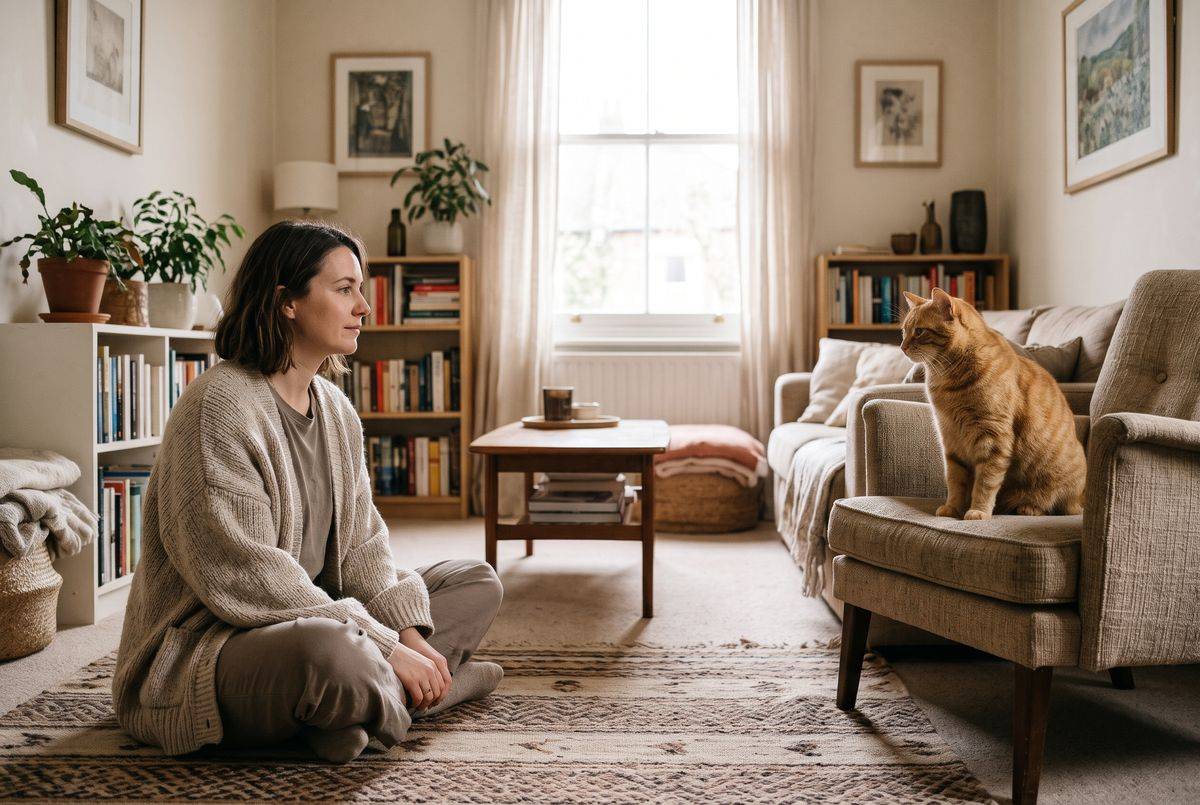
Cats do not cry out when they hurt. They go quiet, hide and change small habits. This guide lists the signs, in the order a calm owner can check them. It also shows how to score your cat’s face, with the same tool vets use.
This page gives general information. It is not veterinary advice. Your vet knows your cat. If your cat is in pain, call your vet.
The short answer
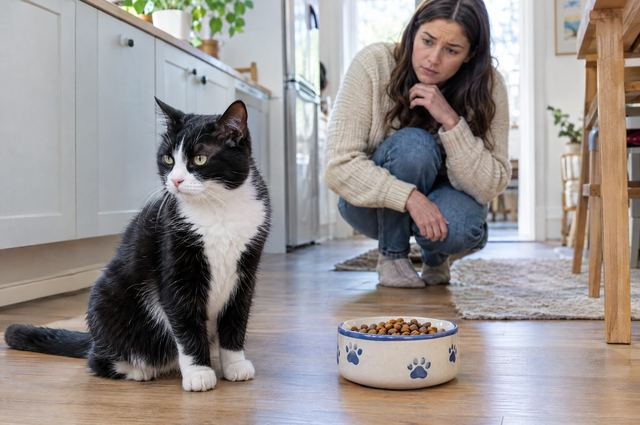
Cats hide pain. VCA Animal Hospitals says cats have an instinct to hide or mask pain, which makes it hard to diagnose. So the first sign is often a small change in what your cat normally does.
International Cat Care says to contact your vet for a health assessment as soon as possible if you think your cat is in pain, or if you are not sure. You do not need to be certain before you call.
For a sudden problem, read when to take a cat to the emergency vet first.
Why cats hide pain
International Cat Care says cats hide pain to protect themselves, to save energy and to reduce the risk of more pain. They may choose unusual, partly or fully hidden places.
Cornell’s Feline Health Center gives the same reason. It says cats may hide discomfort because showing weakness can attract predators.
So a quiet cat is not always a calm cat. The people in the home are the best judges. They know what is normal.
Signs of pain in cats
VCA, International Cat Care and Cornell each give signs. Here they are by group.
Behaviour and mood
- Withdrawal and hiding. Less contact with people or other pets (International Cat Care).
- Growling or hissing when a person or pet comes close (VCA and International Cat Care).
- Swiping or biting when touched (International Cat Care).
- Pacing, or getting up and lying down again and again (VCA).
- More or less sleep than normal (VCA).
- Meowing more than normal, or purring at odd times (VCA).
Movement
- Less play, less hunting, less climbing and less jumping (VCA and International Cat Care).
- Hesitation before furniture or stairs. A stiff walk. Limping. Avoiding slick floors (VCA and International Cat Care).
- Difficulty getting in and out of the litter tray (Cornell and International Cat Care).
- Overgrown claws. International Cat Care says this can happen when scratching stops, and it is common with joint pain.
Posture
VCA lists three:
- Standing with the front legs tucked back under the chest, to ease painful hips or back legs.
- Tucking the legs under the body when lying down.
- Avoiding stretching or scratching.
Grooming
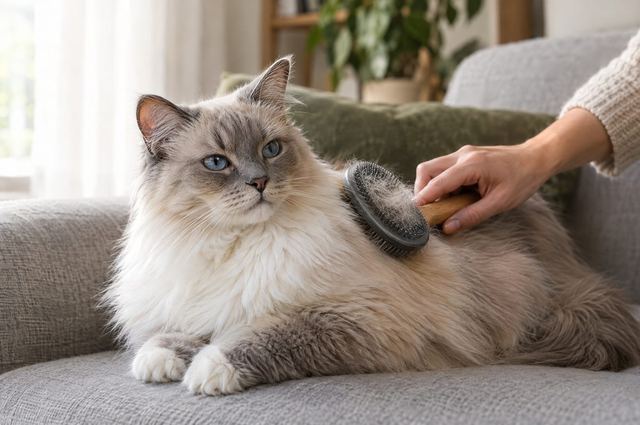
- Grooming less, so the coat looks matted. International Cat Care says cats with joint pain may not be able to reach to groom (VCA and International Cat Care).
- Grooming too much, which can harm the skin and cause bald or sore patches (VCA). See cat overgrooming and bald patches.
Eating and drinking
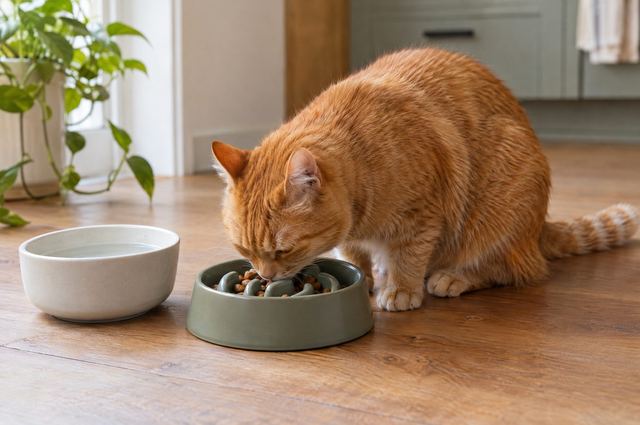
- Eating or drinking less, or not at all (VCA and International Cat Care).
- Signs of mouth pain. International Cat Care lists eating on one side, a taste for soft food, dropping food, drooling and pawing at the mouth.
Litter tray
- Urine or faeces outside the tray (VCA and International Cat Care).
- Urine over the edge of the tray, because squatting hurts (VCA).
- Avoiding a tray that the cat links with pain (International Cat Care).
- Constipation. Cornell says a cat with joint pain may not be able to take the right position to pass a stool.
Our guides cover the most common cases: cat peeing outside the litter box, cat hiding after a vet visit and older cat not jumping anymore.
Face
VCA lists a grimace, a vacant stare, squinting or looking half asleep, and whiskers held straight out and slightly forward. The next section shows a way to score this.
How to score your cat’s face: the Feline Grimace Scale
The Feline Grimace Scale is a face-scoring tool for acute pain, such as pain after an injury or an operation. International Cat Care calls it a validated tool, scored out of 10. The scale’s own website gives the rules:
- It scores five features: ears, eyes, muzzle, whiskers and head position.
- Each feature scores 0 (not present), 1 (present a little, or you are not sure) or 2 (clearly present).
- The top score is 10.
- Watch your cat undisturbed for 30 seconds. If your cat is grooming, eating or calling, wait before you score. If it is asleep, wait until it wakes.
- A score of 4 or more is the cut-off. The website says that if you are a cat owner and the score is 4 or more, you should contact your vet.
Is a home score reliable? A 2021 study tested this. Five owners, five vets, five vet students and five nurses scored 100 cat images with the scale. Agreement between raters was good. Owner scores agreed very well with vet scores. The muzzle and whiskers were the least consistent features.
Note the limits. The study used pictures, not live cats. The scale is built for acute pain. It will not catch every cat with slow, long-term pain, such as stiff joints. For that, look at movement, grooming and the litter tray.
Take a short video of your cat’s face and movement. Show it to your vet. A film often shows what a vet cannot see in a clinic, where cats are scared and may hide their signs.
Slow, long-term pain: joints and age
Cornell’s Feline Health Center says a cat with joint pain may seem tired and may rest in warm, sunny spots. It lists trouble jumping into the litter tray, avoiding stairs, constipation and poor grooming. It says osteoarthritis is the most common cause, and that extra weight raises the risk.
It also says not to assume less activity is only normal aging. A vet can check for joint pain. Diagnosis usually includes a history, a physical and orthopaedic exam and X-rays of the joints. Cornell says vets most often advise pain medicine and careful home care to keep a cat comfortable.
International Cat Care advises owners of cats with long-term pain to fill in its Mobility Checklist before the vet visit. Our guide older cat not jumping anymore lists simple home changes.
What to do today
- Call your vet if you see signs. International Cat Care says to do this as soon as possible.
- Do not give painkillers. The Feline Grimace Scale site says not to give any painkillers without your vet’s guidance. Never use a human medicine.
- Keep your cat warm, quiet and close to food, water and a tray. Do not force handling. A cat that bites or hisses is telling you it hurts.
- Write down what you see. Note what changed, when it began, and how often. Our free vet summary puts it on one page.
- Film short clips of any limp, stiff jump or odd posture.
- Take your cat to the vet. Read how to take a cat to the vet if the trip is hard.
If your cat’s pain is part of a longer illness, other guides may help. See signs of kidney disease in cats, and how to know when to put your cat down if you face the hardest choice. For dogs, read how to tell if a dog is in pain.
Keep a record
Pain signs come and go. A written record shows a pattern, and your vet can use it. The Medical and Dosing Tracker is a fillable PDF. You can record medicine doses as the label says, lab results and vet visits over time, so each visit starts with the facts.
Questions
How do I know if my cat is in pain?
Look for changes from normal. VCA Animal Hospitals lists hiding, less play, less jumping, grooming less, eating or drinking less, litter tray accidents, more or less sleep and a tense face. Cats hide pain, so small changes matter. If you see any, tell your vet. International Cat Care says to ask for an assessment as soon as possible.
What is the Feline Grimace Scale?
It is a face-scoring tool for acute pain in cats. It scores five features from 0 to 2: ears, eyes, muzzle, whiskers and head position. The top score is 10. The scale's website says to watch an undisturbed cat for 30 seconds. A score of 4 or more means you should contact your vet.
Can owners use the Feline Grimace Scale?
Yes, with care. A 2021 study had owners, vets, vet students and nurses score 100 cat images. Agreement among groups was good, and owner scores agreed well with vet scores. The muzzle and whiskers were the least reliable features. The study used pictures, so use the scale to support a vet visit, not to replace one.
Why do cats hide pain?
International Cat Care says cats hide to protect themselves, to save energy and to lower the risk of more pain. VCA says cats have an instinct to hide or mask pain, which makes it hard to diagnose. Cornell's Feline Health Center says showing weakness could attract predators.
Is my cat slowing down just because of age?
Do not assume so. Cornell's Feline Health Center says to have your vet check a cat that is less active, because joint pain is a likely cause. Osteoarthritis is the most common cause. It says extra weight raises the risk. Pain can be treated, so it is worth asking your vet.
Can I give my cat a human painkiller?
No. The Feline Grimace Scale site says not to give any painkillers to your cat without your vet's guidance. Many medicines that are safe for people are not safe for cats. Call your vet. Your vet can choose a medicine that suits your cat's health and any other medicine it takes.
Sources
- VCA Animal Hospitals: Signs of Pain in Cats (updated 14 Nov 2025)
- International Cat Care: How to spot signs of pain in cats, Pain Awareness Month 2026
- Feline Grimace Scale: guide for cat owners and vets
- Cornell University College of Veterinary Medicine, Cornell Feline Health Center: Is your cat slowing down?
- Agreement and reliability of the Feline Grimace Scale among cat owners, veterinarians, veterinary students and nurses (2021). PubMed
This article helps you organise care. It does not replace advice from your vet.