Cat not eating but acting normal? How long to wait and what to write down
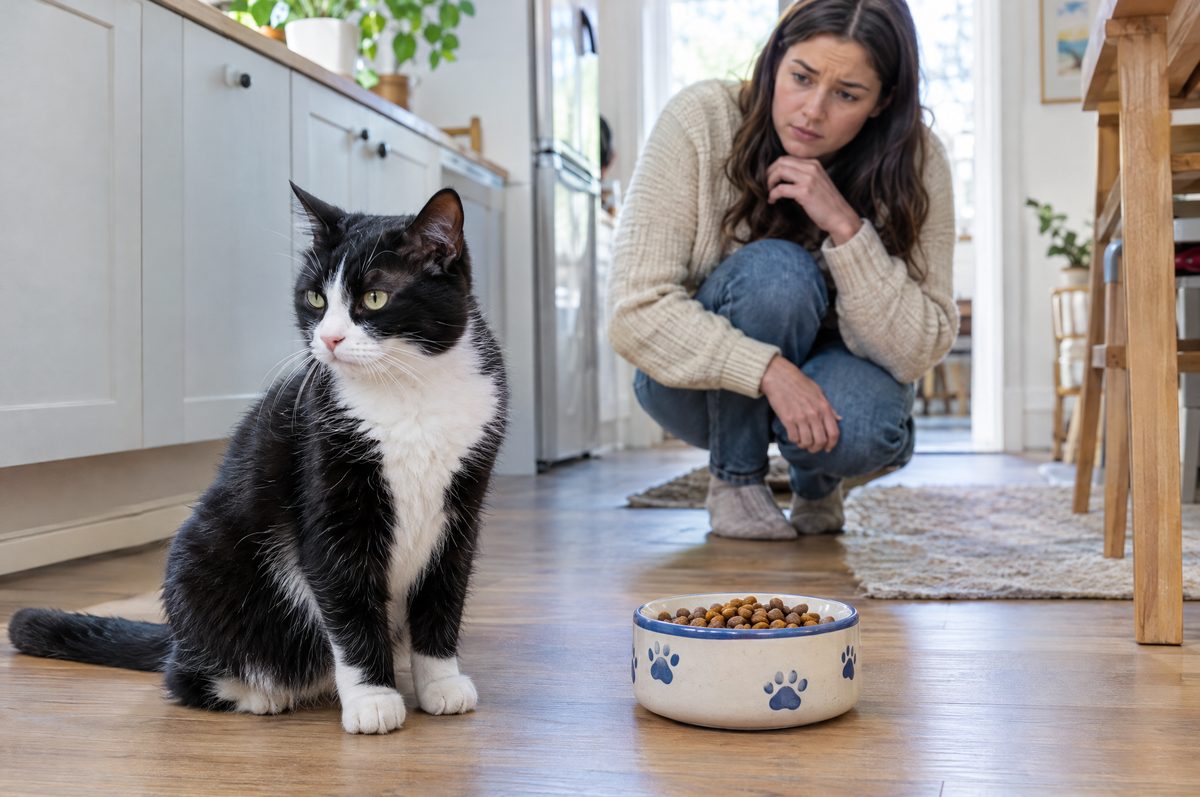
Your cat walked past the bowl this morning. Tonight the food is still there. But your cat purrs, plays and sits in the window as usual. Is it a fussy day, or something more?
With cats, “acting normal” is not good evidence. Cats hide illness well. And a cat that stops eating for a few days can get a serious liver problem. This guide shows how long is too long, why, what to try, and what to write down for your vet.
This page gives general information. It is not veterinary advice. When in doubt, call your vet.
Call the vet today if
Do not wait if your cat:
- Has eaten almost nothing for 24 hours and is a kitten, an older cat or overweight.
- Has a known illness, such as kidney disease, diabetes or an overactive thyroid.
- Also vomits, has diarrhoea, or hides.
- Drools, paws at the mouth, or drops food.
- Has yellow gums, skin or the whites of the eyes.
- Strains in the litter tray. A male cat that strains and passes no urine is an emergency.
VCA’s rule for every cat: if your cat has refused food for more than two days, call your vet at once. Many vets prefer you call sooner. A phone call costs nothing.
Why “acting normal” is not proof
Cats evolved to hide weakness. A cat with mouth pain, nausea or an early illness may still greet you and play. The first sign may be food left in the bowl.
VCA lists many causes of a poor appetite in cats:
- Stress: a change in routine or surroundings, or food the cat does not like.
- Mouth problems: gum disease, loose teeth, sore mouth or throat, jaw pain.
- Illness: infections, kidney disease, diabetes, cancer, a gut blockage, ulcers or nausea.
- Pain: anywhere in the body, even back pain that makes it hard to reach the bowl.
- Medicine side effects.
- Other: poisoning, loss of smell (for example with a cold) and high heat.
VCA also describes pseudo-anorexia. The cat wants to eat but cannot pick up, chew or swallow the food. It may go to the bowl, sniff, and walk away. Mouth pain is a common reason.
The fatty liver risk
This is why vets take a cat that will not eat seriously.
VCA explains: when a cat stops eating, its body breaks down fat for energy. A cat’s liver cannot handle large amounts of fat, and it develops hepatic lipidosis, also called fatty liver.
University of Illinois vets say overweight or obese cats are at greater risk. They say the most important sign to watch for is a cat not eating for several days. Other signs are yellow skin, low energy, weakness, vomiting and behaviour changes.
The standard treatment, Illinois says, is feeding through a tube placed in the food pipe. It may stay in for several weeks. Many cats recover if the cause can be treated. But it is far better to act before it starts.
What you can try today
Only try these if your cat is otherwise well and has missed a meal or two:
- Warm wet food to body temperature. Smell drives a cat’s appetite. VCA lists warming canned food among the ways to make food more appealing.
- Small, fresh portions. Offer small meals often. Remove old food.
- A quiet place away from other pets, dogs and noise.
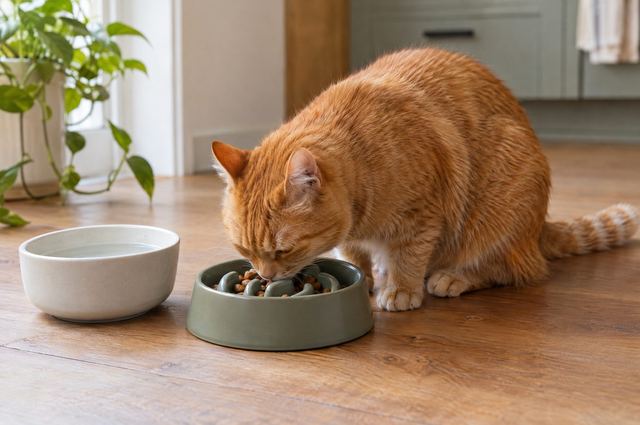
- A clean, wide bowl. Some cats dislike deep bowls.
- Hand feeding a little from your finger, if your cat likes it. VCA lists hand feeding as one option.
- Check the change. Did you switch food, bowl, place or routine? Change it back.
Do not:
- Force-feed. VCA says force-feeding is counterproductive. Food can go into the airway and cause pneumonia, and the cat may come to dislike food even more.
- Give human medicine or appetite remedies. Ask your vet.
- Wait day after day for it to pass.
If your cat still will not eat by the next meal, call your vet.
Not eating but drinking
A cat that drinks but does not eat is still not eating. And a cat that drinks more than usual may have an illness. Cornell lists more thirst and urination among the common signs of an overactive thyroid. Kidney disease, common in older cats, also causes thirst. See our guide to why a cat drinks so much water and the signs of kidney disease in cats.
What to write down for the call
Your vet will ask these questions. Have the answers ready:
- When did your cat last eat a normal meal?
- What did it eat since then, if anything? Treats count.
- Has it vomited? When, how often, and what did it look like?
- Is it drinking? More, less or the same?
- When did it last pass urine and stool? Normal?
- Any change at home: food, people, pets, a move?
- Any medicine or supplement given?
- Your cat’s weight, if you know it.
Weigh your cat on a kitchen or baby scale if you can. A small drop over weeks is easy to miss by eye. If your cat has lost weight slowly while eating, read cat losing weight but still eating.
What the vet may do
VCA says your vet will first find out whether the cat does not want to eat or cannot eat. Then an exam, including the mouth. Tests may include blood tests, X-rays and ultrasound.
Treatment depends on the cause. VCA lists fluids, anti-nausea medicine, short-term appetite medicine, ways to make food tempting, and in some cases a temporary feeding tube.
If vomiting is part of it
A cat that vomits and stops eating needs a call the same day. Read our guides to cat vomiting yellow foam and a cat throwing up after eating.
Keep a record
Our free vet summary tool turns your notes into one page for the call. The Cat Vomiting & Hairball Diary has a daily log and a month grid for appetite and vomiting, and a one-page summary for your vet. For older cats with kidney disease, the Cat Kidney (CKD) Care Log tracks appetite and drinking each day.
Questions
How long can a cat go without eating?
Not long. VCA says to consult your vet at once if your cat has refused food for more than two days. University of Illinois vets say a cat that goes without food for a few days in a row is at risk of fatty liver. Call sooner if your cat is overweight, young, old or ill.
Can stress stop a cat eating?
Yes. VCA lists stress and changes in routine or surroundings among the causes. A move, a new pet, visitors or a new food can do it. But stress does not rule out illness. If appetite does not return quickly, call your vet.
Should I force-feed my cat?
No. VCA says force-feeding is counterproductive. Food can go into the airway and cause pneumonia, and the cat may come to dislike food more. Ask your vet about safe ways to help.
My cat is not eating but still drinking. Is that OK?
Drinking is good, but it does not replace food. A cat that drinks more than usual may have kidney disease, diabetes or an overactive thyroid. Note how much your cat drinks and tell your vet.
When is a cat not eating an emergency?
Go now if your cat also vomits again and again, strains in the litter tray with no urine, breathes hard, is very weak, or has yellow gums, skin or eyes. Illinois vets list yellowing as a sign of fatty liver.
Why does my cat eat treats but not its food?
It may want to eat but find its food hard to chew. VCA calls this pseudo-anorexia. Mouth pain from gum disease or loose teeth is a common reason. Tell your vet, who will check the mouth.
Sources
- VCA Animal Hospitals: Anorexia in cats, Hunter, Llera and Downing (updated 13 September 2023)
- University of Illinois College of Veterinary Medicine: Hepatic lipidosis, a serious problem when cats stop eating, Crystal Munguia (3 March 2023)
- Cornell Feline Health Center: Hyperthyroidism in cats (updated 30 April 2026)
- Cornell Feline Health Center: Chronic kidney disease
This article helps you organise care. It does not replace advice from your vet.