Why is my cat drinking so much water? Causes and what to do
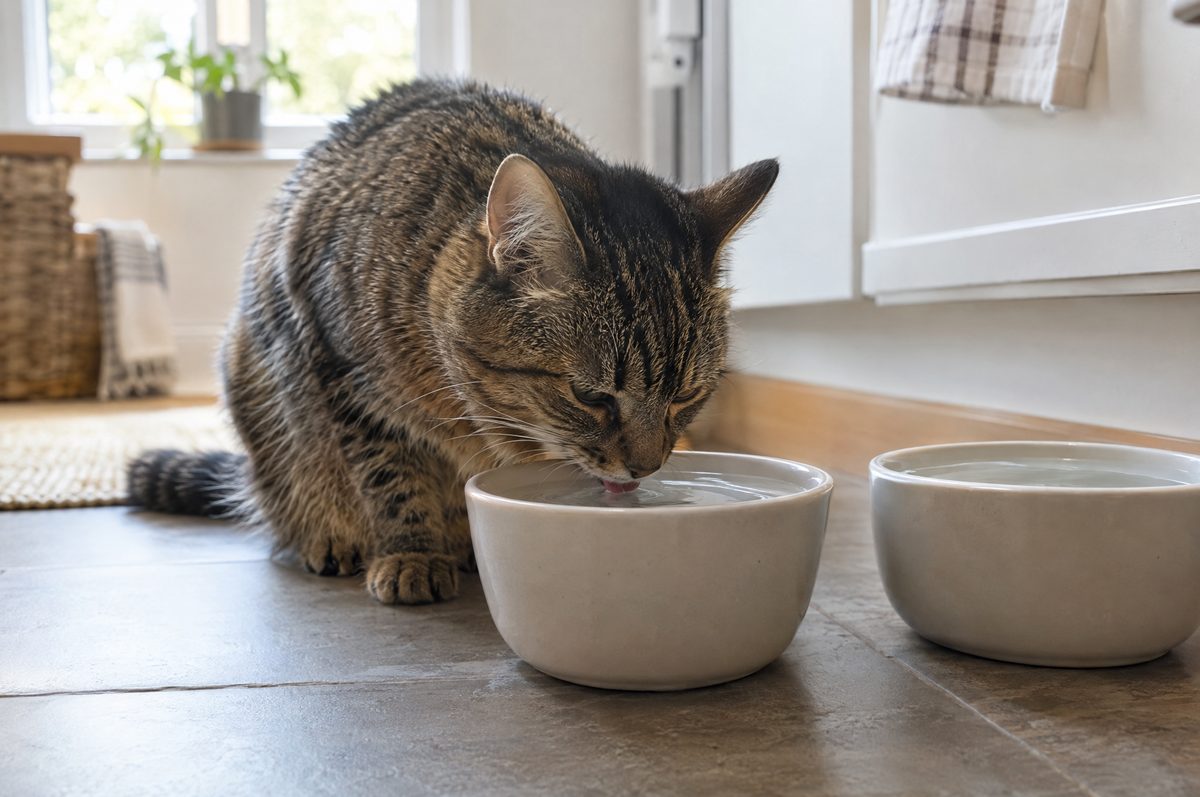
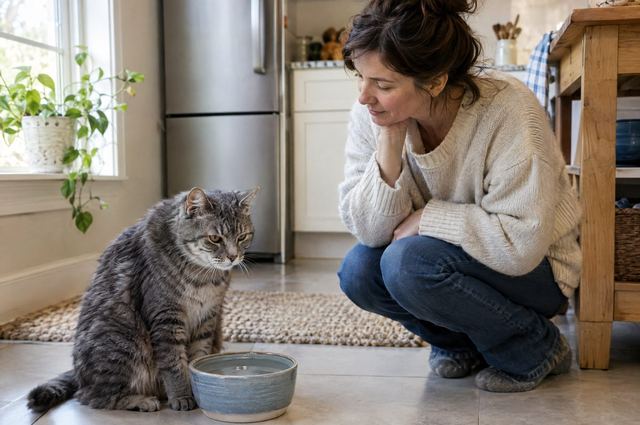
The water bowl is empty again. Your cat drinks from the tap, or the sink, or a flower vase. You wonder if it is normal. When a cat drinks much more than before, it is worth a vet visit. This guide shows the common causes, what to write down, and when to call.
This page gives general information. It is not medical advice. Only a vet can find the cause.
Three common causes
The Cornell Feline Health Center lists more thirst and more urine as signs of three common illnesses in older cats.
Kidney disease. Cornell lists increased water intake and increased urine volume among the signs of chronic kidney disease (CKD). CKD affects up to 40% of cats over 10, and 80% of cats over 15. Early on, a cat may look well. Our guide to the signs of kidney disease in cats lists the others.
Diabetes. Cornell says the two signs owners most often see at home are weight loss despite a good appetite, and more thirst and urine. A vet finds diabetes by showing persistently high glucose in the blood and urine.
An overactive thyroid (hyperthyroidism). Cornell lists weight loss, increased appetite, and increased thirst and urine as the most common signs. Vomiting, diarrhea, restlessness and a greasy coat can also occur. It mostly affects middle-aged and older cats.
These three can look alike. A cat may even have more than one. That is why you do not guess. A vet runs tests to tell them apart.
Other things to tell your vet
Tell your vet about any recent illness, a food change, a new medicine or hot weather. Your vet decides whether it explains the thirst. If the change lasts, grows or comes with other signs, call your vet.
What to write down
A good record helps your vet more than any guess. Write:
- What you see. A bowl that empties faster. Drinking from new places. Drinking at night.
- Urine. Bigger or more frequent clumps. Accidents outside the tray.
- Appetite. Eats more, less or the same. Eats fast, or leaves food.
- Weight. Weigh your cat on the same scale and write the number.
- Energy and coat. More sleep. Less play. A rough coat.
- Anything new. A food change, a new medicine, hot weather, a stressful week.
The 2026 iCatCare guidelines on CKD say a home diary and home weight checks help caregivers feel informed, and help you and the clinic talk. The same idea works for any change in thirst.
About measuring water
Some websites give a number for how much a cat should drink. Sources differ, and wet food gives a cat more water (the 2026 iCatCare guidelines note this), so a number can mislead you. Ask your vet whether to measure at home and how. Measuring can also upset some cats, so do not push.
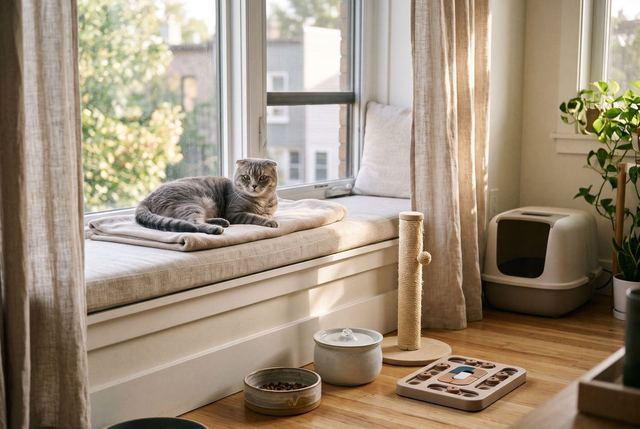
Do not limit water. Keep fresh water in more than one place. The 2026 guidelines mention several water points, fountains, wide bowls, and raised bowls for stiff joints as ways to help a cat drink. Your vet decides the rest.
What a vet will do
Your vet starts with an exam and your notes. Tests often include:
- Blood tests. For kidney disease, Cornell lists BUN, creatinine and SDMA.
- A urine test. This shows how concentrated the urine is, and its protein.
- A blood pressure check.
- Other tests if the first ones point to diabetes or the thyroid.
Cornell advises at least two blood and urine samples within two weeks when kidney disease is suspected, taken when the cat is stable and well hydrated.
When to call a vet now
Go now, or call an emergency clinic, if your cat:
- Strains in the litter tray and passes little or no urine. Cornell calls a blocked urethra “an absolute emergency.”
- Cannot keep water down, or vomits again and again.
- Is very weak, collapses, or cannot stand.
- Has not eaten for a day or more.
Do not wait to fill in a diary. Call first.
Keep one record for your vet
Our free vet visit summary helps you write down what you have seen before the visit.
If your vet finds kidney disease, the Cat Kidney (CKD) Care Log gives you a place for the daily notes, the weight, the medicines given and the test results. It records only, and it gives no diet, fluid amount or dose. See every page of the Cat Kidney (CKD) Care Log.
Does your dog drink a lot at night? Read dog drinking a lot of water at night.
Questions
Why is my cat suddenly drinking so much water?
Common causes are kidney disease, diabetes and an overactive thyroid. Cornell lists more thirst and more urine as signs of each. Your vet decides if a recent illness, food change or hot weather matters. A sudden or lasting change needs a vet exam and blood and urine tests.
Is a cat drinking a lot of water a sign of kidney disease?
It can be. Cornell lists increased water intake and increased urine as signs of chronic kidney disease. But diabetes and an overactive thyroid also cause both. Only tests can tell which one it is, so do not guess.
How much water should a cat drink?
Sources differ, and the 2026 iCatCare guidelines note that wet food gives a cat more water. So a number from a website may mislead you. Write what you see: a bowl that empties faster, or a new habit such as drinking from the tap. Ask your vet whether to measure and how.
Should I stop my cat drinking so much?
No. Never limit water unless your vet tells you to. A cat that drinks more is often replacing water it loses. Keep fresh water in more than one place, and let your vet find the cause.
What tests will my vet run?
Usually blood tests and a urine test. For kidney disease, Cornell lists BUN, creatinine and SDMA in the blood, and the urine concentration and protein. A vet also checks blood pressure. Bring your notes on drinking, urine, appetite and weight.
When is a cat drinking a lot of water an emergency?
Go now if your cat strains in the tray and passes little or no urine, cannot keep water down, is very weak or collapses. Cornell calls a blocked urethra an absolute emergency. If you are not sure, call your vet or an emergency clinic.
Sources
- Cornell Feline Health Center: Chronic Kidney Disease, updated January 2025
- Cornell Feline Health Center: Hyperthyroidism in cats, updated April 2026
- Cornell Feline Health Center: Feline diabetes
- Taylor and others: 2026 iCatCare consensus guidelines on the diagnosis and management of chronic kidney disease in cats, J Feline Med Surg 2026
- Cornell Feline Health Center: Feline lower urinary tract disease
This article helps you organise care. It does not replace advice from your vet.