Signs of kidney disease in cats: what to watch for at home
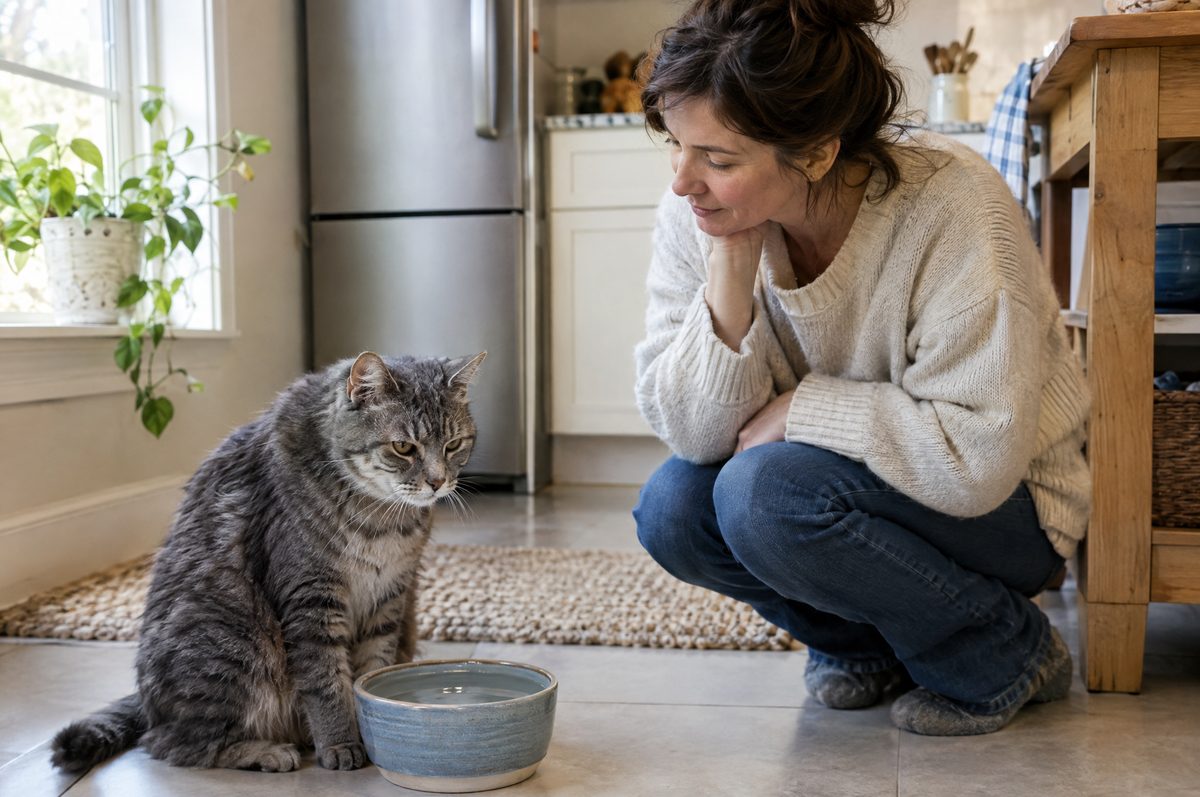
Your cat is a little thinner. She drinks more, or the litter tray is heavier than it used to be. You wonder if it is just age. It might be. It might be her kidneys. This guide shows what to look for, why the early signs are easy to miss, and what to write down for your vet.
This page gives general information. It is not medical advice. Only a vet can tell you what is wrong with your cat.
What chronic kidney disease is
The Cornell Feline Health Center describes chronic kidney disease (CKD) as the persistent loss of kidney function over time. The kidneys filter the blood, make urine and help control blood pressure.
CKD is common in older cats. Cornell says it affects up to 40% of cats over 10 years old, and 80% of cats over 15. Age is the only risk factor Cornell names. The 2026 iCatCare guidelines, written by an expert panel, advise screening cats aged 7 and older.
Why the early signs are easy to miss
Early on, a cat with CKD may look well. Cornell says the body compensates for a time. The 2026 iCatCare guidelines say the same: cats may show minimal or no signs in the early stages, so the diagnosis often comes late.
That is why small, slow changes matter. You see your cat every day, so slow change is hard to see. A written record shows what memory hides.
Signs to watch for at home
Cornell lists these signs of CKD:
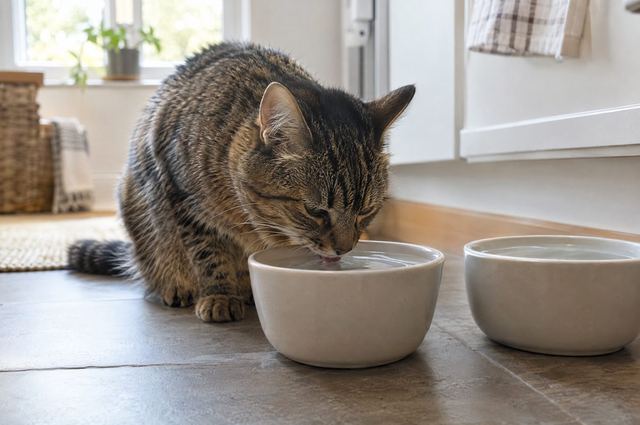
- More water drunk. The bowl empties faster, or your cat drinks from the tap or a tub.
- More urine. The litter clumps are bigger or more frequent.
- Less appetite. Your cat leaves food, or loses interest in the usual meal.
- Weight loss. Ribs, spine or hips feel bonier.
- Low energy. More sleep, less play, fewer jumps.
- An unkempt coat. Your cat grooms less.
In later disease, Cornell also lists sudden changes in sight, confusion, weakness, heart problems and pale gums from anaemia. These need a vet at once.
These signs are not only kidney signs. Other illnesses can look the same. Our guide to why a cat drinks so much water lists three of them. Only blood and urine tests can tell them apart.
Weight: the sign most owners miss
The 2026 iCatCare guidelines give a number worth knowing. In a study of over 500 cats, the median weight loss was 8.9% of body weight in the 12 months before CKD was found. The loss had started 3 years earlier, and it sped up after the diagnosis.
The guidelines add that weight loss can go unnoticed by caregivers, or be put down to age. They say unintended weight loss, or a fall in body or muscle condition, should be reported to your vet.
So weigh your cat. Use the same scale and the same time of day. Write every number. Ask your vet how to weigh a cat at home and how often. Our guide to a cat losing weight while still eating shows what else to write down.
How a vet finds kidney disease
Your vet starts with an exam and your history. Then come tests. Cornell lists:
- Blood tests: BUN, creatinine and SDMA. Cornell says SDMA rises when about 40% of kidney function is lost. Creatinine rises when about 75% is lost.
- A urine test: including urine concentration and the protein-to-creatinine ratio.
- A blood pressure check.
- Sometimes imaging, such as ultrasound or X-rays.
Cornell advises at least two blood and urine samples, taken within two weeks of each other, when the cat is stable and well hydrated. One odd result is not a diagnosis.
What you can do at home
Your vet leads the care. At home, you are the eyes. Three jobs help:
- Keep a diary. The 2026 guidelines say a home diary and home weight checks help caregivers feel informed, and help you and the clinic communicate.
- Weigh your cat. Write each number with the date.
- Bring the record to each visit. A short summary helps your vet see the trend in one minute. Our free vet visit summary helps you write it.
Do not change your cat’s food, give a supplement or start any medicine unless your vet says so. A kidney diet is a vet decision, and it needs a plan.
When to call a vet now
Call a vet or an emergency clinic now if your cat:
- Strains in the litter tray and passes little or no urine. The Cornell Feline Health Center calls a blocked urethra “an absolute emergency.”
- Cannot keep water down, or vomits again and again.
- Is very weak, collapses, or cannot stand.
- Has not eaten for a day or more.
If you are not sure, call. Do not wait to fill in a diary first.
What a care record looks like
The guidelines treat the diary as a way to talk with your clinic. The Cat Kidney (CKD) Care Log is a 40-page fillable PDF with a daily log for appetite, drinking, litter box and energy, a weekly cat check, a home weight log, a month grid for medicines given, space for test results and your vet’s stage, and a one-page summary for your vet.
It records only. It gives no diagnosis, diet, fluid amount, medicine or dose. See every page of the Cat Kidney (CKD) Care Log.
If your cat is very ill and you need to think about quality of life, read how to know when to put your cat down.
Kidney disease can play a part in night crying. Read old cat yowling at night. If your cat stops eating, read cat not eating but acting normal. For the end of life, read cat euthanasia: what to expect.
Questions
What are the first signs of kidney disease in cats?
Often there are none you can see. Cornell says early on the body compensates, so a cat may look well. When signs come, the most common are more water drunk, more urine, less appetite, weight loss, low energy and an unkempt coat. Only blood and urine tests show the disease early.
How common is kidney disease in older cats?
Common. The Cornell Feline Health Center says chronic kidney disease affects up to 40% of cats over 10 years old and 80% of cats over 15. Age is the only risk factor Cornell names. The 2026 iCatCare guidelines advise screening cats aged 7 and older.
Can a vet reverse kidney disease in a cat?
No. Cornell says chronic kidney disease is progressive and has no definitive treatment that reverses it. Care aims to slow it down and keep quality of life as good as possible. Your vet picks the plan for your cat, and checks again over time.
How do vets test for kidney disease in cats?
With blood tests (BUN, creatinine and SDMA), a urine test, and often a blood pressure check. Cornell says SDMA rises when about 40% of kidney function is lost, and creatinine when about 75% is lost. Vets advise at least two blood and urine samples within two weeks, taken when the cat is stable.
Is weight loss in an older cat just old age?
Not always. The 2026 iCatCare guidelines say weight loss can go unnoticed or be put down to age. In a study of over 500 cats, the median loss was 8.9% of body weight in the year before kidney disease was found. Tell your vet about any unintended weight loss.
What should I write down for my vet?
Write the date and what you see: appetite, drinking, litter box, vomiting, energy and weight. Weigh your cat on the same scale. The 2026 guidelines say a home diary and weight checks help you and the clinic talk to each other. A one-page summary is easy for a vet to read.
Sources
- Cornell Feline Health Center: Chronic Kidney Disease, updated January 2025
- Taylor and others: 2026 iCatCare consensus guidelines on the diagnosis and management of chronic kidney disease in cats, J Feline Med Surg 2026
- Cornell Feline Health Center: Feline lower urinary tract disease
This article helps you organise care. It does not replace advice from your vet.