Old cat yowling at night: dementia or something a vet can fix?
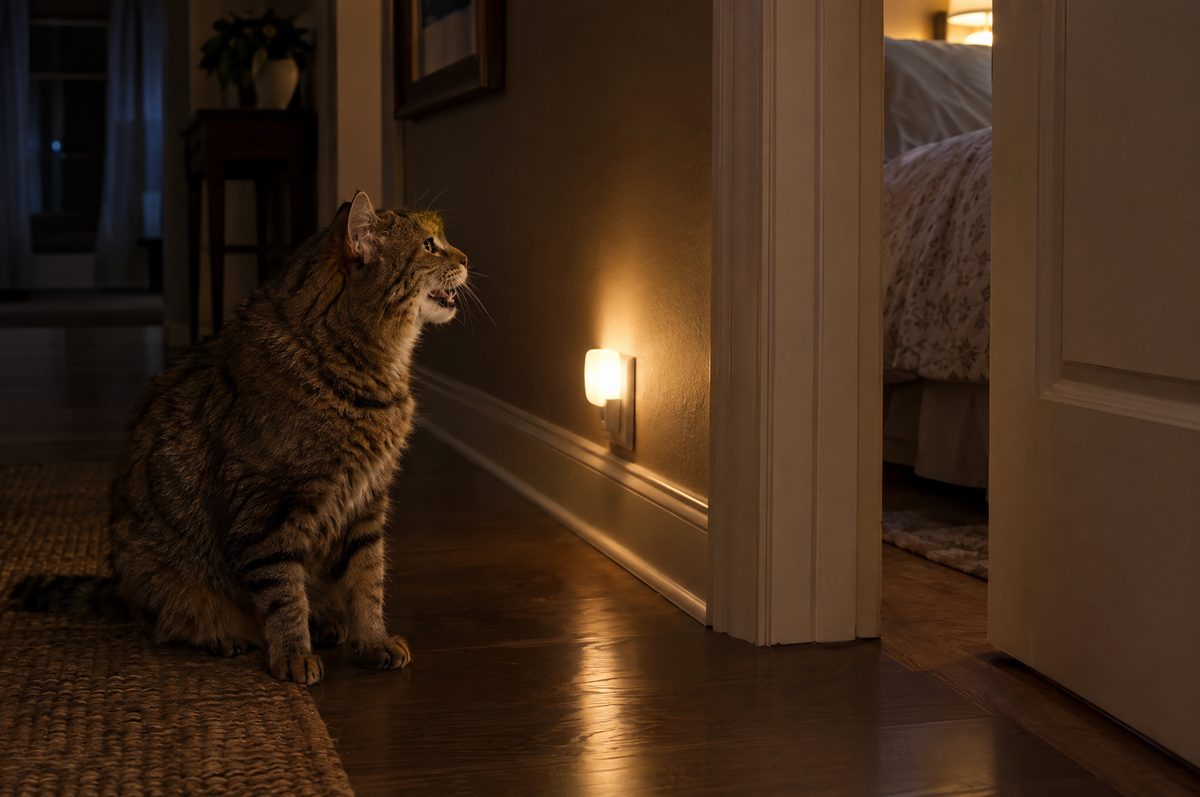
Your cat is 14. For years the nights were quiet. Now, at 3 a.m., a loud, long yowl comes from the hall. Then another. You get up. The cat looks at you, then yowls again.
Many owners think “dementia” and stop there. But Cornell says other diseases cause the same sound, and some of them can be treated. This guide explains the six main causes, what your vet will check, and what helps at home.
This page gives general information. It is not veterinary advice. See your vet.
Call the vet soon if
Book a visit in the next few days if the yowling is new. Call the same day if your cat also:
- Seems blind, bumps into things or has wide pupils in light.
- Stops eating, or eats much more and loses weight.
- Drinks or urinates much more.
- Strains in the litter tray, or passes no urine. A male cat that strains and passes nothing is an emergency.
- Walks in circles, stares at walls or seems lost.
- Cries when picked up or touched.
Why the vet visit comes first
Cornell’s page on cognitive dysfunction says this clearly. Night-time vocalizing is relatively common in cats with an overactive thyroid or with high blood pressure. Cornell says a vet will rule out conditions such as an overactive thyroid and kidney disease before treating for dementia.
So dementia is what is left when other causes are gone. Here are the main ones.
Cause 1: an overactive thyroid
Cornell says hyperthyroidism mostly affects middle-aged and older cats. The most common signs are:
- Weight loss.
- A big appetite.
- More drinking and urinating.
- Hyperactivity, vomiting and diarrhoea.
Cornell says the vet checks the neck for an enlarged thyroid and tests the blood, usually for the hormone T4. The good news: hyperthyroidism can be treated.
Cause 2: high blood pressure
Cornell says high blood pressure is a possible problem in cats with an overactive thyroid. It can damage the eyes, kidneys, heart and brain. Cornell says it can detach the retina and cause blindness, and that this can lead to anxiety and confusion.
A cat that suddenly cannot see well may cry at night. Ask your vet to measure blood pressure. It is a quick test with a cuff, like in people.
Cause 3: kidney disease
Cornell’s older-cat guide says kidney function often gets worse in older cats. Cornell’s dementia page says kidney failure can cause more urination and soiling of the tray. A cat that is thirsty, or that needs the tray more at night, may call out. See our guide to the signs of kidney disease in cats and why a cat drinks so much water.
Cause 4: pain
Cornell says the pain of arthritis can get worse over the years and slow a cat down. Arthritis can also make it hard to get into the litter tray in time. Cornell adds that painful gum disease can stop a cat going to its food bowl with the same interest.
Cats hide pain well. Signs include sleeping more, not jumping up, grooming less and being cross when touched.
Cause 5: poor sight or hearing
Cornell’s older-cat guide says night lights help older cats with poor vision find their way at night. It also says to approach a deaf cat from the front, so you do not startle it. A cat that cannot hear itself may yowl louder. A cat that cannot see in the dark may call for help.
Cause 6: dementia (cognitive dysfunction)
Cornell says the signs tend to become clear in cats aged 10 years or older. They include:
- Getting lost, even at home.
- Less interest in play.
- Sleeping much more, and a changed sleep and wake cycle.
- Long periods of staring at walls or into space.
- Less interest in food and water.
- Urinating or passing stool outside the tray.
- Loud vocalizing, often in the middle of the night, with no clear reason.
Cornell compares the condition to Alzheimer’s disease in people. It gets slowly worse. For the dog version, see our guide to dog dementia stages.
What your vet may check
Ask your vet about each of these:
- A full exam, including teeth, joints, eyes and weight.
- Blood pressure.
- Blood tests, including thyroid hormone and kidney values.
- A urine test.
- An eye exam for the retina.
Cornell says if signs suggest a brain problem, a vet may suggest an MRI and a spinal fluid test. Most cats will not need these.
A two-week night log
Write down each night:
- The time the yowling started and stopped.
- Where the cat was.
- What happened after: did the cat eat, use the tray, settle with you?
- Any change in eating, drinking or the tray that day.
- Any new stress: a visitor, a new pet, a move.
Record a short video of one episode. Bring the log and the video to the visit.
What can help at home
Cornell lists these steps for older cats:
- Put litter trays on every floor, and use trays with low sides.
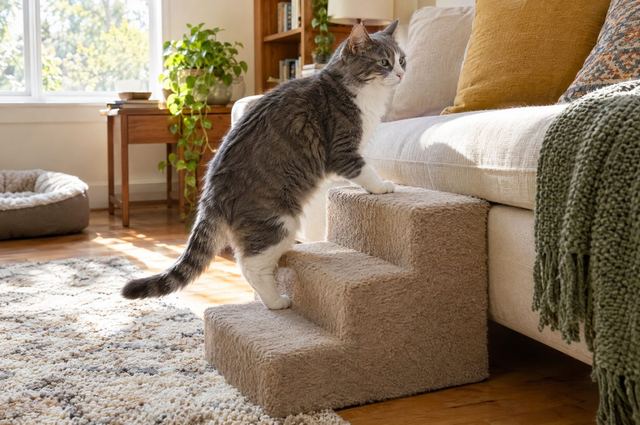
- Add ramps or steps if your cat struggles with stairs or furniture.
- Use night lights for a cat with poor sight.
- Keep the home as stable as you can. Do not move furniture around for a blind cat.
- Avoid bringing a new animal into the home if it would stress your older cat.
- Take your cat for regular check-ups. A vet in Cornell’s guide says six-month check-ups are great for geriatric cats.
Also try a set evening routine: play, a meal, then quiet. Leave water and a warm bed near where the cat yowls. Do not punish the cat. A confused cat cannot learn from it.
Cornell says a vet may prescribe medicine for anxiety after other causes are ruled out. Do not give your cat any human medicine.
See also
Read our guide to when a cat is a senior. If your dog is the one up at night, read old dog pacing at night.
Keep the results in one place
An older cat soon has many test results: blood pressure, thyroid, kidney values and weight. Our free vet summary tool puts your night notes on one page. The Medical and Dosing Tracker keeps lab results and vet visits over time, so you and your vet can see a trend. If your cat has kidney disease, the Cat Kidney (CKD) Care Log tracks appetite, drinking and the tray each day.
Pain can cause night calling. See signs of pain in cats.
Questions
Is yowling at night a sign of dementia in cats?
It can be. Cornell lists loud vocalizing, often in the middle of the night, as a sign of cognitive dysfunction in cats aged 10 or more. But Cornell also says night yowling is common in cats with an overactive thyroid or high blood pressure. A vet should check for those first.
Can high blood pressure make a cat cry at night?
Yes. Cornell says night-time vocalizing is relatively common in cats with high blood pressure. High blood pressure can also detach the retina and cause blindness, which can make a cat anxious and confused. Ask your vet to measure your cat's blood pressure.
Should I ignore my cat's crying at night?
Do not ignore a new habit in an older cat. Get a vet check first. Once your vet finds no medical cause, a calm night routine helps. Avoid rewarding the yowl with food at 3 a.m., as that can make it a habit.
Is there treatment for cat dementia?
Dementia cannot be reversed. Cornell says a vet may prescribe medicine for anxiety once other diseases are ruled out. Cornell also lists home steps: low-sided litter trays that are easy to reach, ramps, fewer changes in the home and regular check-ups.
At what age do cats get dementia?
Cornell says the signs tend to become clear in cats aged 10 years or older. Cats can now live to 20 or 21 years, Cornell says, so many owners will see some of these changes.
How often should an older cat see the vet?
In Cornell's older cat guide, a vet says six-month check-ups are great for geriatric cats. Ask your vet what schedule suits your cat's health.
Sources
- Cornell Feline Health Center: Cognitive dysfunction (reviewed 2024)
- Cornell Feline Health Center: Hyperthyroidism in cats (updated 30 April 2026)
- Cornell Feline Health Center: Loving care for older cats
- Cornell Feline Health Center: Chronic kidney disease
This article helps you organise care. It does not replace advice from your vet.