Dog panting at night when it is not hot: causes and when to call the vet
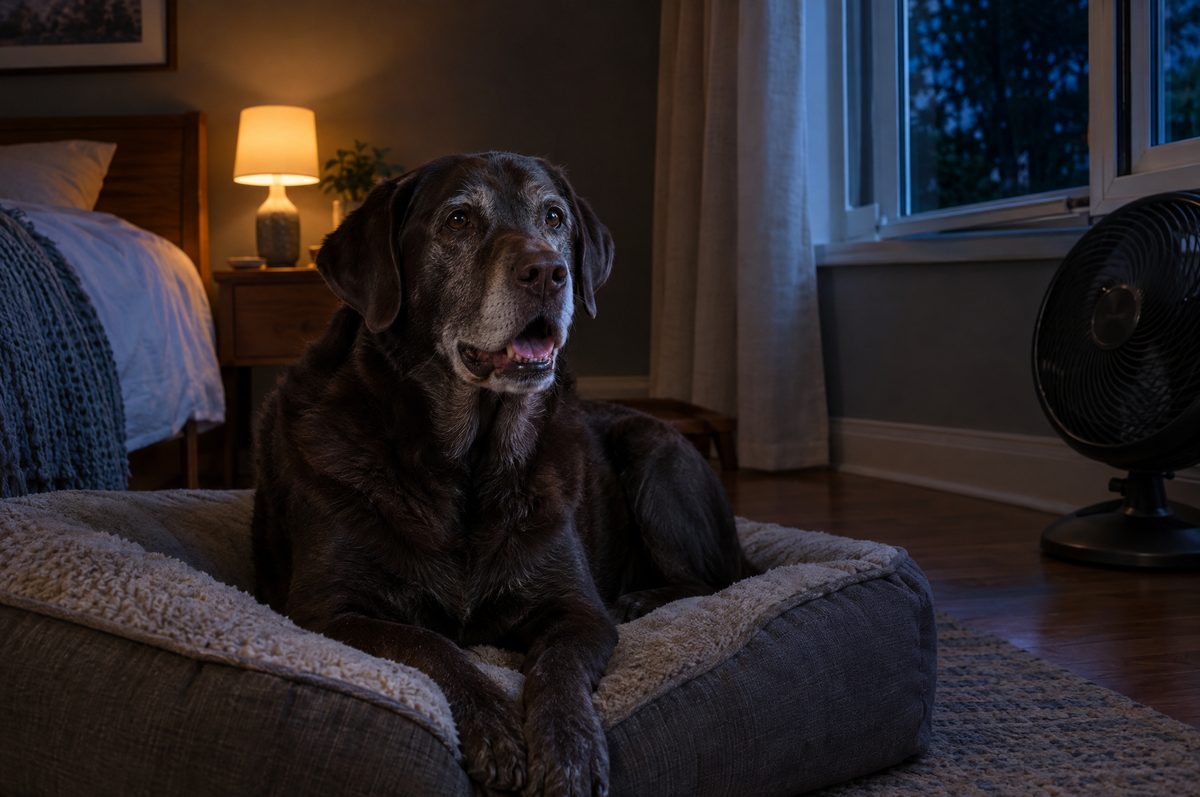
It is 2 a.m. The house is cool. Your dog is on the bed, mouth open, panting as if after a long run. Your dog has not moved all evening. Why?
Panting at night in a cool room is a sign, not a habit. It can come from pain, from a hormone disease, from the heart or lungs, from anxiety or from dementia. This guide shows when to go now, the main causes with their sources, and a 7-night log for your vet.
This page gives general information. It is not veterinary advice. Your vet knows your dog.
Go to a vet now if
Cornell lists these as emergency signs in dogs:
- Trouble breathing, or blue or grey gums or tongue.
- Sudden collapse or marked weakness.
- A swollen belly with dry heaving.
- Heatstroke.
- Severe pain.
Also go now if the gums are very pale, if the panting is with coughing at rest, or if your dog cannot settle at all. Call the nearest 24-hour clinic on the way.
First, check the simple things
Rule these out tonight:
- The bed and the room. Is the bed by a heater or in the sun at sunset? Is your dog under a heavy blanket? Thick-coated breeds feel warm sooner than you do.
- Exercise. A late walk or play can cause panting for a short time. It should stop within minutes.
- Noise. Fireworks, storms or a party next door can cause fear panting.
If the panting stops when these change, watch for a few nights. If it does not stop, read on.
Cause 1: pain
Pain is common in older dogs, and it gets worse at night when the house is quiet.
Cornell lists these pain signs:
- Panting, even at rest.
- Restlessness: pacing or not able to settle.
- Altered sleep: sleeping more, or not able to get comfortable.
- Stiffness or limping, and trouble getting up.
- Licking or chewing one area.
- A change in face: flat ears or a glazed look.
Dogs do not have to cry to be in pain. Cornell says that fear at the clinic can hide pain signs, so notes from home help your vet. Our guide on how to tell if your dog is in pain has a full checklist.
Do not give your dog human pain medicine. Many are dangerous for dogs. Ask your vet.
Cause 2: Cushing syndrome
Cushing syndrome is a hormone disease. The body makes too much of a stress hormone, cortisol.
The Merck Veterinary Manual says it occurs in middle-aged to older animals. It lists the most common signs in dogs:
- Drinking more and urinating more.
- Eating more.
- A pot belly.
- Panting.
- Muscle loss.
- Skin changes: hair loss, thin skin and skin infections.
Merck also says many affected dogs have high blood pressure. If your dog pants at night and drinks more, tell your vet both. Our guide to a dog drinking a lot of water at night shows how to measure water intake. Cornell’s page on drinking and urinating more lists other causes too.
Cause 3: heart or lung disease
A dog with heart or lung disease may breathe faster at rest and when asleep. Some cough at night, or prefer to sit up rather than lie down. Any change in breathing at rest is a reason to call your vet soon. Blue or grey gums are an emergency.
One simple check: count breaths when your dog is fast asleep. Watch the chest rise and fall for 30 seconds and double it. Write down the number and the time. Ask your vet what number is normal for your dog.
Cause 4: anxiety
Fear and stress cause panting. Night triggers include noise, a new home, a family member away, or being shut out of the bedroom. A dog that also follows you, whines or cannot settle when alone may have an anxiety problem. Our guide to a dog barking when left alone covers separation stress.
Cause 5: dementia
Canine cognitive dysfunction is a form of dementia in older dogs.
Cornell’s dementia page says changes in sleep and wake times are often the first signs families notice. The dog may be up and walking around in the middle of the night. It may whine, bark or howl. Cornell says the pacing can keep the whole house on edge.
Cornell advises a vet visit first to rule out other causes, such as bladder infection. Dementia is not the first answer. Read our guides on old dog pacing at night and dog dementia stages.
Cause 6: medicine
Some medicines can cause panting or restlessness. Make a list of every medicine and supplement your dog takes. Ask your vet or pharmacist if any of them can cause panting. Do not stop a medicine on your own.
A 7-night log for your vet
Vets see your dog for a few minutes in the day. Night signs are hard to judge from that. A log gives your vet facts.
Each night, write down:
- The time the panting started and stopped.
- The room temperature, if you have a thermometer.
- What your dog did first: a walk, a meal, medicine, a noise.
- Breaths per 30 seconds while fast asleep, doubled.
- Pacing, whining, licking, or trouble lying down.
- Water drunk that day, if you measure it.
- Gum colour, if you can see it in good light.
Film one episode on your phone. A 30-second video can show your vet more than a description.
What the vet may check
Your vet will examine your dog and listen to the heart and lungs. Tests may include:
- Blood and urine tests.
- Blood pressure.
- Tests for Cushing syndrome.
- Chest X-rays.
- A pain and joint exam.
Ask your vet which tests matter most first, and what each one costs.
What helps at home while you wait
- Move the bed to a cool spot, away from heaters.
- Offer a thinner bed cover, and leave water nearby.
- Keep a dim night light on for an older dog.
- Keep the evening calm: a short walk, then quiet.
- Do not give any medicine your vet has not prescribed.
Bring the facts to the visit
Our free vet summary tool turns your notes into one page for the vet. The Senior Dog Comfort & Cognition Journal has a night and sleep log, a daily comfort check and weekly movement and mind scores, so you can see change over weeks, not just one bad night.
This guide is one step in our complete guide on how to care for a senior dog: vet visits, weight, joints, mind and nights, in order.
Questions
Is panting at night normal for old dogs?
Not when the room is cool and the dog has not been active. Cornell lists panting even at rest as a sign of pain. The Merck Veterinary Manual lists panting among the common signs of Cushing syndrome, which affects middle-aged and older dogs. Tell your vet.
Why does my dog pant and pace at night?
Pain, anxiety and dementia can all cause both. Cornell lists restlessness, pacing and trouble settling as pain signs. Cornell's dementia page says night waking and pacing are often the first signs families notice. A vet exam helps tell them apart.
Could the panting be pain?
Yes. Cornell's pain list includes panting at rest, restlessness, trouble getting comfortable to sleep, stiffness and a reluctance to move. Dogs often do not cry out. Fear at the clinic can hide these signs, so your notes from home help the vet.
Can medicine cause panting?
Some medicines can. Ask your vet or pharmacist whether any medicine your dog takes lists panting or restlessness as a side effect. Do not stop or change a medicine on your own. Bring the labels to the visit.
My dog pants at night and drinks a lot. What does that mean?
The Merck Veterinary Manual lists more drinking and urinating, a big appetite, a pot belly and panting as common signs of Cushing syndrome. Other diseases also cause thirst. Measure the water your dog drinks and tell your vet.
When is panting an emergency?
Go now if your dog has blue, grey or very pale gums, struggles to breathe, collapses, has a swollen belly with dry heaving, or pants hard after heat. These are emergency signs. Call the nearest 24-hour clinic on the way.
Sources
- Cornell Riney Canine Health Center: Recognizing pain in dogs (updated 21 October 2025)
- Merck Veterinary Manual: Cushing syndrome (hyperadrenocorticism) in animals, Van Vertloo L (July 2024)
- Cornell Riney Canine Health Center: Senior dog dementia
- Cornell Riney Canine Health Center: When to go to the ER, Dr. Aly Cohen (June 2025)
- Cornell Riney Canine Health Center: Polyuria and polydipsia (April 2024)
This article helps you organise care. It does not replace advice from your vet.