Dog barking when left alone: why it happens and how to stop it kindly
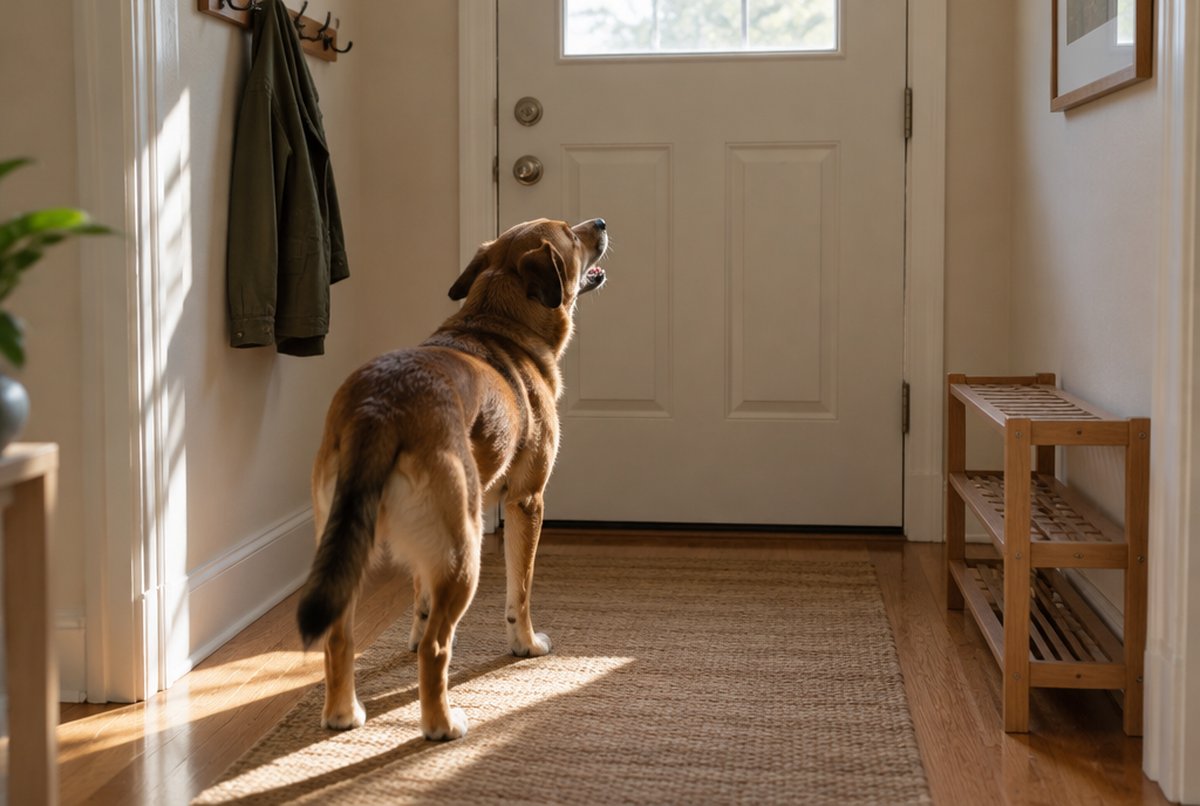
You close the door, and the barking starts. A neighbour tells you it goes on all morning. Or you come home and your dog is hoarse. Barking when left alone is one of the most common problems dog owners have. It is also one of the most misunderstood.
This guide explains why it happens, how to find the real cause, and how to stop it without punishment.
First: is your dog safe?
Some dogs do more than bark. The ASPCA says escape attempts can be extreme and can cause self-injury, such as broken teeth and scraped paws. Check your dog for injuries when you come home. If your dog has hurt itself, or tries to break out of a crate or a room, call your vet soon. Do not leave it alone for long periods until you have help.
Why dogs bark when left alone
Vocalising is the most common sign of separation problems. A study of 762 dogs with separation-related problems found barking and howling were more common than destruction or toileting (de Assis and others, 2020).
There are a few main causes. Each needs a different fix.
1. Separation distress
The dog is upset because it is alone. The ASPCA says this barking or howling is persistent and seems triggered by nothing except being left alone. It often starts within minutes. The RSPCA says signs usually start before you leave or within a few minutes to 30 minutes after.
Other signs often come with it (RSPCA, ASPCA):
- Pacing, panting or trembling.
- Scratching or chewing at doors and windows.
- Toileting indoors.
- Drooling, or a wet bed when you come back.
- Not eating a food toy or treats while you are out.
- A very excited greeting when you come home.
2. Barking at sights and sounds
Some dogs bark at people, dogs and noises outside. The ASPCA says this barking happens whether or not the guardian is home. If your dog barks at the window when you are in the next room, this may be the cause.
3. Boredom
The ASPCA says bored dogs usually do not seem anxious. A video shows the difference. A bored dog plays, chews or sleeps between bursts of noise. A distressed dog cannot settle.
4. A change in routine
The ASPCA lists common triggers: a new home, a new family, a sudden change of schedule, or a person in the family who leaves or dies. A dog that was with you all day, then is suddenly alone for six hours or more, is at risk.
Film your dog to find out
You cannot fix what you cannot see. The RSPCA says about half of dogs who find being alone hard show no obvious signs. It suggests a camera to check.
Set up a phone or a pet camera before you go out. Point it at the door and your dog’s bed. Then leave for a short time, for example 10 minutes. Watch the whole video, and write down:
- The minute the barking starts.
- What your dog does before it barks: does it wait at the door, pace or whine?
- Whether your dog eats the food toy you left.
- Whether it settles and sleeps, and when.
The RSPCA says a dog that ignores a food toy when you are out may be worried. Check that your dog eats the same toy when you are home.
How to stop the barking
Do not punish
The ASPCA says: “Do not scold or punish your dog.” Separation barking is a distress response, not disobedience. The RSPCA says a dog that is told off becomes more anxious about the next departure. This includes shouting through the door, spray bottles and bark collars.
The RSPCA also says not to let your dog “cry it out”. Stress hormones can take days to drop, and some dogs stop calling but still suffer in silence.
Do not leave your dog longer than it can cope with
While you train, every long, hard absence can undo your work. The ASPCA says not to leave a dog with separation anxiety alone outside training sessions. Ask a family member or a friend, or use a sitter or day care. The RSPCA says not to leave an adult dog alone for more than four hours, and much less for a puppy.
The ASPCA warns that a car is only an option in mild weather. Dogs can get heatstroke at 70 °F (21 °C) and above, even in a few minutes.
Teach your dog that alone is safe, one step at a time
This method is called desensitisation and counterconditioning. The ASPCA plan, in short:
- Departure cues. Some dogs start to worry when you pick up your keys or put on your coat. Practise these cues many times a day, then stay home.
- Short absences behind an inside door. Start with 1 to 2 seconds behind the bathroom door. Then 5 to 10 seconds.
- A food toy just before you step out. Give it only for alone time.
- Wait between absences. Wait a few minutes, until your dog is relaxed, before the next one.
- Watch for stress. Panting, yawning, drooling, trembling, pacing or a wild greeting mean the step was too big. Make the next absence shorter.
- Build up slowly. Move to the back door, then the front door. Add a few seconds at a time, then minutes.
The ASPCA says many owners go too fast, which makes the anxiety worse. For moderate or severe cases, it recommends help from a veterinary behaviourist or a certified applied animal behaviourist.
Make alone time easier
- Exercise first. The ASPCA suggests at least 30 minutes of aerobic activity a day, best right before you leave.
- Calm goodbyes and hellos. A short pat, then go. On return, greet your dog calmly, after it relaxes.
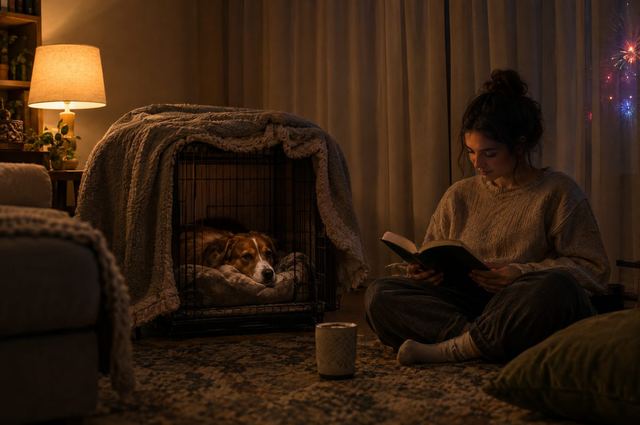
- A quiet room. The RSPCA suggests closed curtains, a quiet room and a radio to cover noises outside.
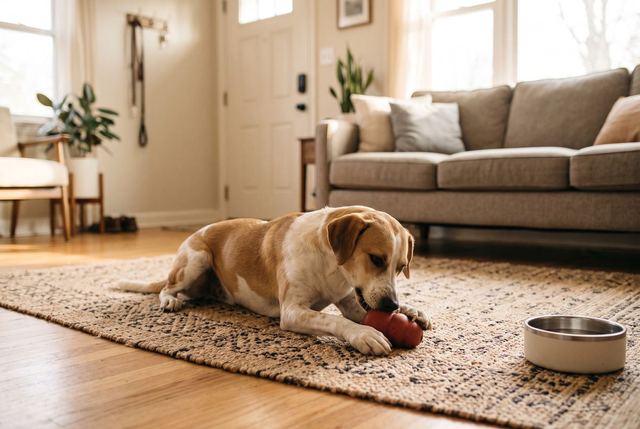
- A special toy. A stuffed food toy that takes 20 to 30 minutes to finish (ASPCA). Put it away when you come home.
See your vet
Pain and illness can add to anxiety. The RSPCA says health problems can cause or worsen separation problems, and your vet can refer you to a clinical animal behaviourist. The ASPCA says medicine can help some severe cases, but only with your vet, and most dogs also need behaviour training. Ask your vet; do not give any medicine or supplement on your own.
Bring your videos and notes. A vet visit is short, and your dog behaves differently in the clinic. A record of what happens at home helps the vet see the real problem.
What to record
Write one line each time your dog is alone:
- Date and minutes away.
- Where your dog was: room, crate or gated area.
- Food toy: all, half or not touched.
- The minute of the first bark or worried sign on the video.
- The worst moment, on a simple 0 to 4 scale.
Over a few weeks, the lines show if the barking starts later, and if your dog stays calm for longer. That is the progress you cannot feel from day to day.
Our Dog Separation Anxiety Log has these pages ready: an alone-time log built for your videos, a step ladder, a cover plan for who stays with your dog, and a summary for your vet. If you leave your dog with a sitter, the free sitter sheet holds the routine and the contacts.
Related: why your dog destroys the house when you leave, and how to help a dog with separation anxiety.
How long is too long? Read how long can a dog be left alone.
Questions
Why does my dog bark continuously when left alone?
Continuous barking that starts soon after you leave is a common sign of separation distress. The ASPCA says this barking is persistent and seems triggered by nothing except being left alone. The Merck Veterinary Manual calls separation anxiety a panic when the dog is left alone. A dog that barks only at noises outside has a different problem.
How long will a dog bark from separation anxiety?
It can go on for the whole absence. The RSPCA says signs usually start before you leave or within a few minutes to 30 minutes after. The Merck Veterinary Manual says signs are often worst in the first 15 to 30 minutes. Some dogs then stop barking but still pant, pace or tremble. A video shows you which.
Should I go back in when my dog barks?
The better plan is to stop the barking from starting. The ASPCA says to keep absences so short that your dog stays relaxed, and to shorten them after any sign of stress. If your dog barks in a training absence, the step was too big. Next time, go out for less time and build up more slowly.
Do bark collars or spraying water stop separation barking?
Do not use them. The ASPCA says not to scold or punish a dog with separation anxiety, because its behaviour is a distress response. The RSPCA says punishment can scare your dog and make the problem worse. A device that punishes the bark does not remove the fear of being alone.
My neighbours complain about the barking. What can I do now?
Stop leaving your dog alone longer than it can cope with while you train. The ASPCA suggests a family member, a friend, a sitter or day care. The RSPCA suggests a dog sitter or walker. Tell your neighbours you have a plan, and see your vet for a referral to a behaviour professional.
Will a radio or TV stop my dog barking when I leave?
It can help some dogs, but it does not treat fear. The RSPCA suggests a radio to muffle noise outside, closed curtains and a quiet room. These steps help most when the barking is a reaction to sounds or things your dog sees. For separation distress, you also need a step-by-step plan.
Sources
- ASPCA: Separation Anxiety
- RSPCA: Separation anxiety in dogs (signs, prevention and treatment)
- RSPCA: Training your dog to be left alone
- Merck Veterinary Manual, pet owner version: Behavior Problems in Dogs (Gary M. Landsberg, DACVB)
- de Assis LS and others: Developing Diagnostic Frameworks in Veterinary Behavioral Medicine: Disambiguating Separation Related Problems in Dogs. Frontiers in Veterinary Science, 2020
This article helps you organise care. It does not replace advice from your vet.