How to help a dog with separation anxiety: a step-by-step plan
You love your dog, and you cannot leave the house. Even five minutes alone means barking, scratching at the door, or a puddle. Separation anxiety is hard on you and on your dog. There is a clear method that vets and welfare charities recommend. It is slow, and it needs a plan.
The Merck Veterinary Manual describes separation anxiety as a syndrome in which a dog panics when it is left alone. The RSPCA says 8 out of 10 dogs find it hard to cope when left alone, and about half show no obvious signs.
Step 1: Check your dog’s health
See your vet first. The RSPCA says health problems can cause or worsen separation problems. The ASPCA says toileting indoors can be a medical problem, such as a urinary tract infection, bladder stones, diabetes or kidney disease. Some medicines also make dogs pee more often.
Bring a video of your dog alone. A vet sees your dog for a few minutes in a strange place. The video shows what happens at home.
Ask your vet about a referral. For moderate or severe cases, the ASPCA recommends a board-certified veterinary behaviourist (Dip ACVB) or a certified applied animal behaviourist (CAAB). A trainer can help too, if they have experience with fear and use rewards only.
Step 2: Make sure it is separation anxiety
The ASPCA lists problems that look the same:
- Incomplete house training.
- Urine marking.
- Peeing when excited or when greeted.
- Young-dog chewing.
- Boredom. Bored dogs usually do not seem anxious.
- Barking at sights and sounds outside.
The key question: does it happen only when your dog is alone? The ASPCA says that if the behaviour also happens when you are home, separation anxiety is less likely.
Step 3: Film your dog
Set up a camera and leave for a short time. The RSPCA says signs usually start before you leave or within a few minutes to 30 minutes after. The Merck Veterinary Manual says they are often worst in the first 15 to 30 minutes.
Look for the signs the RSPCA lists: barking, howling, whining, scratching at doors, toileting, pacing, trembling, panting, drooling and not eating food toys. Write the minute of the first sign. This is your starting point.
Step 4: Stop the long, hard absences
This step matters as much as the training. The ASPCA says not to leave your dog alone except in training sessions while you work on the problem. Each long absence teaches your dog again that alone is scary.
Make a cover plan for each day of the week:
- Work from home, or take your dog to work if you can.
- Ask family, friends or neighbours.
- Use a dog sitter, a walker or day care.
The RSPCA says no adult dog should be left alone for more than four hours. The ASPCA warns that a car is not safe in warm weather: dogs can get heatstroke at 70 °F (21 °C) and above, even in a few minutes.
Step 5: Change what your departure cues mean
Many dogs start to worry when they see you get ready. Cornell University’s Dr Katherine Houpt says dogs with separation anxiety become stressed when their owner prepares to go out.
The ASPCA suggests practising the cues without leaving. Pick up your keys, then sit down and watch TV. Put on your coat, then make a coffee. Do this many times a day for weeks. Skip this step if your dog does not react to the cues.
Step 6: Build alone time in tiny steps
This is desensitisation and counterconditioning. The ASPCA plan:
- Start behind an inside door, such as the bathroom. Stay out of sight for 1 to 2 seconds, then come back.
- Build to 5 to 10 seconds. Give a food toy just before you step out.
- Wait a few minutes between absences, until your dog is relaxed.
- Move to the bedroom door, then the back door, then the front door.
- Add a few seconds at a time, up to 40 minutes.
- Then add 5 minutes at a time, later 15 minutes at a time.
- At 90 minutes, the ASPCA says your dog can probably cope with four hours. Try four hours, then work up to eight over a few days.
The RSPCA plan uses the same idea. Your dog stays on its bed while you move away, then you go to the door, then you close it. Vary the time you are out. It says to go back a stage if your dog becomes anxious.
Watch for stress. The ASPCA lists dilated pupils, panting, yawning, drooling, trembling, pacing and an over-excited greeting. If you see them, make the next absence shorter and go more slowly. The RSPCA says: “Never leave your dog so long that they start to become distressed.”
Do not rush. The ASPCA says the plan can take weeks with daily sessions, and that many owners progress too fast. Slow steps get you there sooner than a big setback.
Step 7: Make every absence easier
- Exercise. At least 30 minutes of aerobic activity a day, best right before you leave (ASPCA).
- Walk, then wait. The RSPCA suggests a walk, then home about 30 minutes before you go, a toilet break and a small meal.
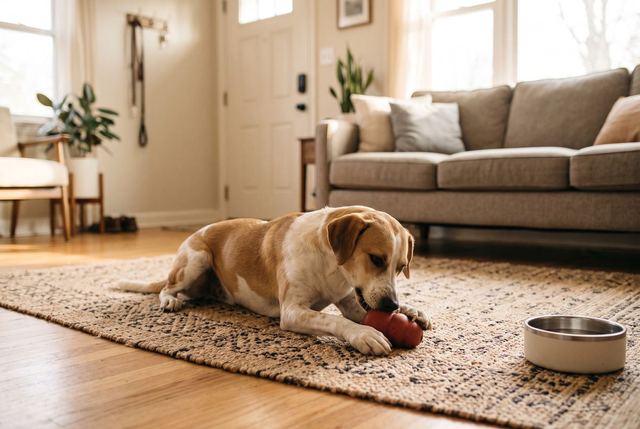
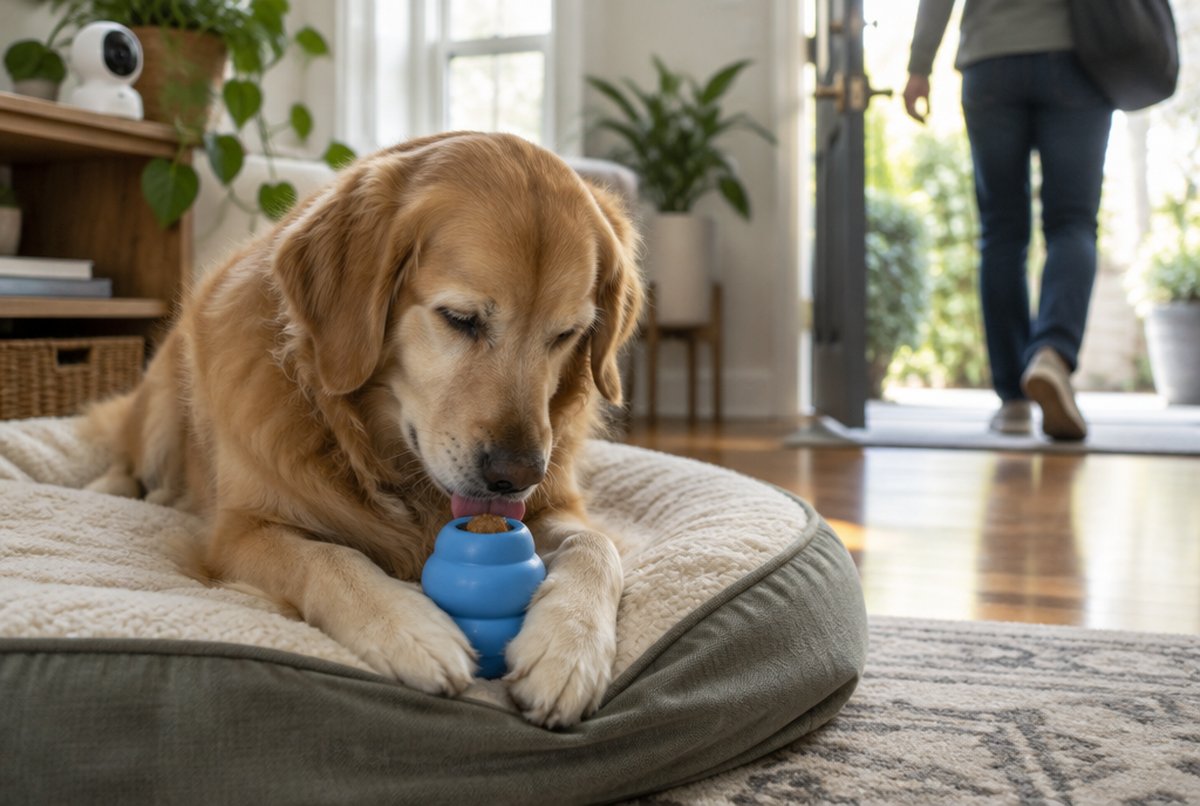
- A special food toy. One that takes 20 to 30 minutes, only for alone time, put away when you return (ASPCA). The RSPCA says to check that your dog eats it when you are home too.
- A quiet room. Curtains closed and a radio on, to block outside noise (RSPCA).
- Calm goodbyes and hellos. A short pat, then go. Greet your dog calmly when it is relaxed (ASPCA).
- Routine. Dr Houpt says predictability works best: regular meals, walks, play and rest.
What not to do
- Do not punish. The ASPCA says: “Do not scold or punish your dog.” The RSPCA says punishment makes your dog more anxious about the next departure.
- Do not let your dog cry it out. The RSPCA says stress hormones can take days to drop, and some dogs stop calling but still suffer.
- Do not look for a quick fix. Dr Houpt says to avoid any trainer who promises one, and any harsh methods.
- Do not give medicine on your own. The ASPCA says medicine can help severe cases, but only through your vet, and most dogs also need behaviour work.
Track the progress
Progress is slow, and bad days stay in your memory. Write one line after each absence: minutes away, the minute of the first sign, whether the food toy was eaten, and how your dog was. Each week, write the longest absence where your dog stayed relaxed. Over 12 weeks, that number shows the trend.
Our Dog Separation Anxiety Log has every page for this plan: signs and look-alikes, a film-your-dog page, an alone-time log, a cover plan, a step ladder from seconds to hours, session logs, a progress chart and a summary for your vet. Before a visit, the free vet visit summary puts the key facts on one page.
Related: dog barking when left alone, and why your dog destroys the house when you leave.
How long is too long? Read how long can a dog be left alone.
Questions
Does separation anxiety in dogs ever go away?
It can improve a lot with the right plan, but it rarely goes away on its own. The ASPCA plan takes many weeks of daily practice. In one Mumsnet thread (2019), owners reported 6 to 18 months of work. A record of the longest calm absence each week shows real progress, even when a bad day makes you feel stuck.
What not to do with dog separation anxiety?
Do not punish your dog, before or after you leave: the ASPCA and the RSPCA both say it makes the fear worse. Do not let your dog cry it out (RSPCA). Do not leave it alone longer than it can cope with while you train. Do not rush the steps; the ASPCA says many owners go too fast.
What can I give my dog to calm separation anxiety?
Ask your vet. The ASPCA says medicine can help severe cases tolerate some time alone and speed up training, but only with a vet or a veterinary behaviourist. Most dogs need it together with behaviour work. Do not give any medicine, supplement or human product on your own.
Should I make a fuss of my dog before I leave?
No. The ASPCA says to keep goodbyes brief: a pat on the head, then go. When you come back, greet your dog calmly, and wait until it is relaxed. Calm departures and returns make your coming and going less of an event. A fixed routine before you leave helps too.
Is crate training good for separation anxiety?
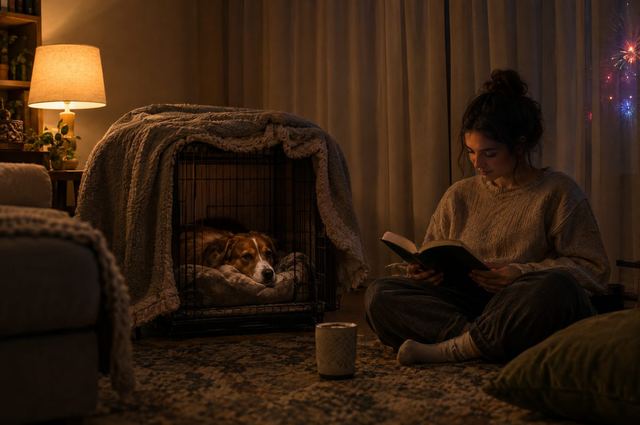
It depends on the dog. The ASPCA says crates help some dogs but stress others. Watch a video of your dog in the crate. Heavy panting, drooling, escape attempts and barking are signs of distress. If you see them, try a room with a baby gate instead.
How long can I leave a dog with separation anxiety?
Only as long as it stays relaxed. The RSPCA says never leave your dog so long that it becomes distressed, and no adult dog should be alone for more than four hours. The ASPCA says that once a dog copes with 90 minutes, it can probably manage four hours, then work up to eight.
Sources
- ASPCA: Separation Anxiety
- RSPCA: Separation anxiety in dogs (signs, prevention and treatment)
- RSPCA: Training your dog to be left alone
- Merck Veterinary Manual, pet owner version: Behavior Problems in Dogs (Gary M. Landsberg, DACVB)
- Cornell University College of Veterinary Medicine, Riney Canine Health Center: Anxious behavior (Dr Katherine Houpt)
This article helps you organise care. It does not replace advice from your vet.