Dog hates baths? How to make bath time calm, one step at a time
Your dog hears the bath running and hides under the bed. In the tub, the dog shakes, scrambles or tries to jump out. Bath time leaves both of you wet and upset.
Most dogs fear a few specific things about the bath. Fix those, teach the bath in small steps, and most baths get much easier. This guide shows you how. It gives general information. It does not replace your vet.
When to ask your vet first
- Skin problems. If your dog has red, sore, flaky or smelly skin, ask your vet before you bathe. Your vet may prescribe a medicated shampoo. Washington State University (WSU) says to follow your vet’s instructions for medicated shampoos.
- Pain. A dog with sore joints may find it hard to stand in a tub or to be lifted. Read our guide on how to tell if your dog is in pain.
- Sudden fear. The Edmonton Humane Society says a dog that suddenly dislikes touch may have a health issue causing pain. See your vet.
Why dogs hate baths
- A slippery tub. Wet enamel has no grip. A dog that slides feels unsafe.
- The noise. Running water and a drain are loud in a small room.
- Water in the face. Water or shampoo in the eyes and ears is unpleasant.
- Being held still. The Edmonton Humane Society says forcing a dog to accept handling can lead to snapping or biting and can make the fear worse.
- A past bad bath. The Edmonton Humane Society says unpleasant experiences can teach a dog to expect discomfort. The next bath feels worse before it starts.
How often does your dog really need a bath?
Less often than you may think. WSU’s veterinary hospital says a weekly bath with a veterinary shampoo is generally safe, but bathing too often can strip the coat’s protective oils. Elanco says to bathe when your dog starts to smell or looks dirty, or after a swim in a lake. It says baths can be as often as monthly or as rarely as a few times a year. The ASPCA suggests at least once every three months, or more often for outdoor dogs.
Ask your vet what suits your dog. Fewer, calmer baths are better than many stressful ones.
Set up the bath before your dog comes in
Preparation does a lot of the work.
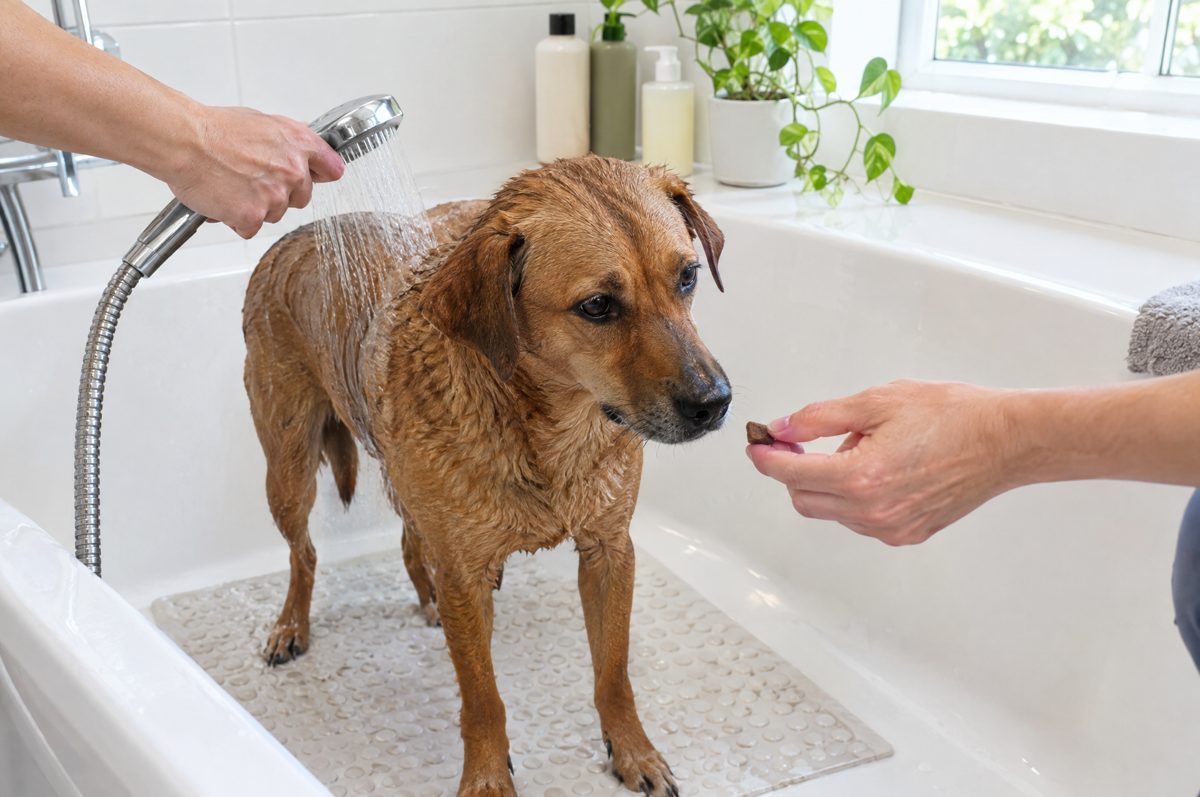
- A rubber non-slip mat in the tub, so your dog can stand firm.
- Dog shampoo. WSU says dish soap and human shampoo can strip natural oils from the fur and may irritate the skin.
- Lukewarm water. Elanco says to make sure the water is not too hot.
- Fill the tub first. Elanco suggests filling the tub before your dog comes in, to reduce stress. A quiet tub is less scary than a running tap.
- Towels and a comb within reach.
- Treats, and a lick mat with a dog-safe spread if your dog likes one.
- Comb a long coat first. WSU says wet fur mats more than dry fur, so comb the coat before the bath.
The plan: teach the bath in steps
Do these steps on days when you do not need to wash your dog. Each step should be easy. The Cornell Riney Canine Health Center says to let your dog investigate the bathtub at their own pace and to keep sessions short and positive.
Step 1: the bathroom is a treat room
Walk into the bathroom with your dog. Give treats. Walk out. No water. Repeat for a few days.
Step 2: the empty tub
Put treats on the rubber mat in the dry tub. Let your dog step in to eat them, or lift a small dog in gently. Let your dog step out.
Step 3: stand in the tub
Your dog stands in the dry tub while you give treats one by one. Build to a minute.
Step 4: the water sound
With your dog in the tub, run the tap on low for two seconds. Treat. Turn it off. Build up slowly.
Step 5: wet paws
Add a few centimetres of lukewarm water. Treats while your dog stands in it. Then out.
Step 6: wet the body
Pour a cup of water on the shoulders. Treat. Then the back. Keep water away from the face.
Step 7: a short real bath
Wash, rinse, towel, done. Keep it short. Give a big treat and a game after.
Move up, stay or go back
The Cornell Riney Canine Health Center lists stress signs: lip licking, yawning when not tired, freezing, pulling away and showing the whites of the eyes. If you see one, go back a step. If your dog growls, stop calmly. The Edmonton Humane Society says punishing warning signs can raise the bite risk.
How to wash: neck to tail, face last
Elanco gives these steps:
- Brush first to remove loose hair and tangles.
- Wet the coat with lukewarm water.
- Work the shampoo in from the neck down to the tail. Give extra care to the underside and the feet.
- Keep shampoo and water out of the eyes and ears. Cup your hand over the eyes when you rinse near the head.
- Rinse well. Elanco says to remove all soap, because left-over soap can cause flaking.
For the face, use a damp cloth. The ASPCA suggests putting cotton balls in the ears during the bath. Take them out after.
Drying without fear
Elanco says to towel dry your dog. It also says to avoid a blow dryer unless it is made for pets, because hot air can burn or irritate the skin.
Many dogs fear the dryer more than the water. If you need a dryer, teach it like the bath: the dryer off, then on in another room, then on at low speed, far away, with treats. Never point it at the face.
Simple ways to wash between baths
- Wipe dirty paws with a damp cloth after walks.
- Spot-clean a muddy belly with a cup of water.
- Brush often. A brushed coat stays cleaner. Read dog hates being brushed if brushing is a problem too.
When to get help
If your dog panics, bites, or cannot stand in the tub after a few weeks of small steps, ask for help. The Cornell Riney Canine Health Center recommends your vet, a veterinary behaviourist, or a qualified humane trainer when grooming has become stressful. A Fear Free certified groomer can also help.
Keep a record
Write the date, the step and how your dog felt. Progress in bath training is slow at first, then quick.
Our program Yes, Paws has a bath and drying module with an 8-step ladder and a photo for each step, an “if my dog…” page and a log. The same calm method covers nails, teeth, ears, brushing, the harness and vet visits.
Related guides
Questions
Why does my dog hate baths?
Most dogs dislike the slippery tub, the sound of the water, water in the face, and being held still. A past bad bath can also do it. The Edmonton Humane Society says unpleasant handling can teach a dog to expect discomfort, so the next bath feels worse.
How often should I bathe my dog?
It depends on the dog. Washington State University's veterinary hospital says a weekly bath with a veterinary shampoo is generally safe, but bathing too often can strip the coat's protective oils. Elanco says to bathe when your dog smells or looks dirty, and to ask your vet otherwise.
Can I use human shampoo or dish soap on my dog?
No. Washington State University says dish soap and human shampoo can strip natural oils from the fur and may irritate the skin. Use a shampoo made for dogs, or the medicated shampoo your vet prescribes.
What water temperature is best for a dog bath?
Lukewarm. Elanco says to use lukewarm water and to make sure it is not too hot.
Can I use a hair dryer on my dog?
Elanco says to towel dry your dog and to avoid a blow dryer unless it is made for pets, because hot air can burn or irritate the skin. Teach the dryer sound slowly, at a distance, before you use it.
My dog panics in the bath. What can I do today?
Keep it short. Wash only what is dirty, with a cloth or a cup of water. Use a non-slip mat and keep water out of the face. Then start the step-by-step plan for the next bath. If your dog bites or panics every time, ask your vet or a reward-based trainer for help.
Sources
- Washington State University Veterinary Teaching Hospital: Bathing your dog, November 2021
- Elanco, Your Pet & You: How to bathe a dog
- ASPCA: Dog Grooming Tips
- Cornell Richard P. Riney Canine Health Center (Dr Aly Cohen): Grooming - Cooperative Care, February 2026
- Edmonton Humane Society: Dog Behaviour Guide, Touch Sensitivity
This article helps you organise care. It does not replace advice from your vet.