Dog scared of the harness? Why it happens and how to fix it
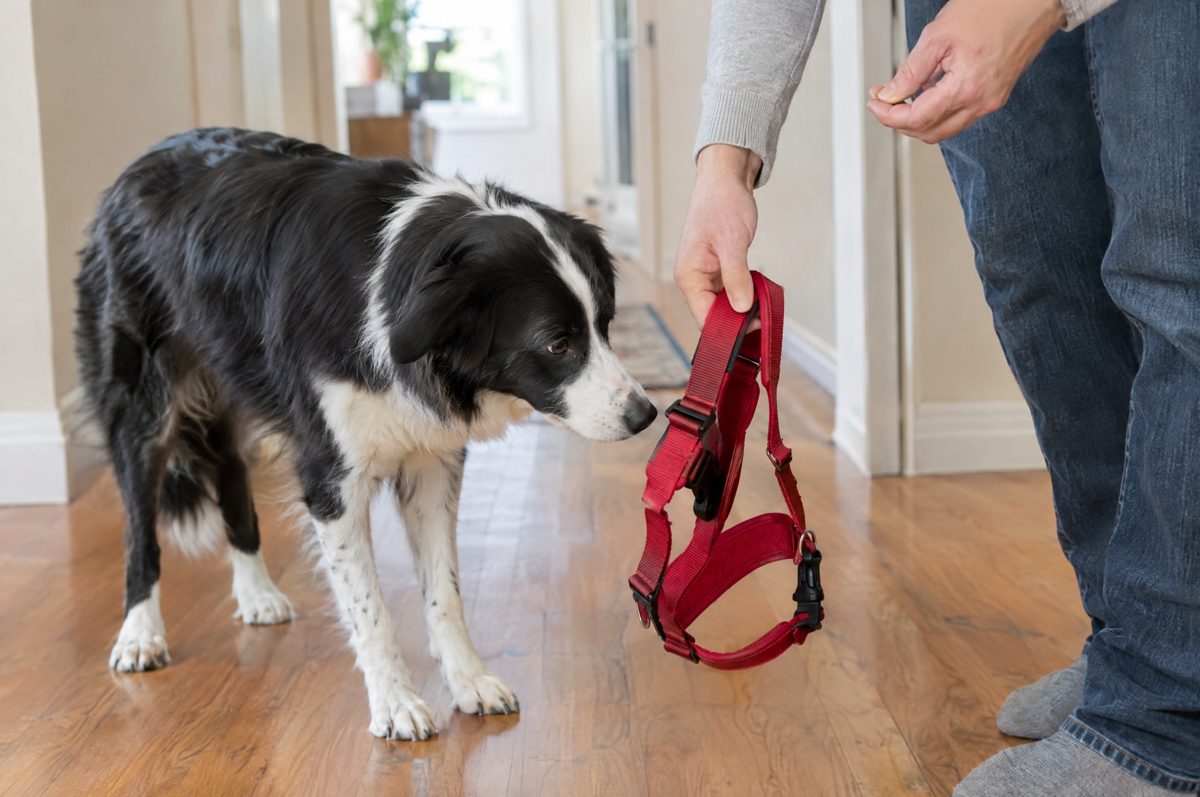
Your dog loves walks. But when the harness comes out, the dog runs, hides, freezes or snaps. It seems strange: the harness means a walk. Yet harness fear is common, and it has clear causes.
This guide explains why it happens and gives a step-by-step plan. It gives general information. It does not replace your vet.
Check for pain first
A harness presses on the neck, the chest, the shoulders and behind the front legs. If one of these places hurts, the harness hurts.
The Edmonton Humane Society says a dog that liked touch before and now suddenly does not should see a vet. Pain from illness or injury can cause it.
See your vet if your dog:
- Limps, or is stiff after rest.
- Yelps when you touch the neck, the shoulders or the chest.
- Has a sore, a rub mark or hair loss where the straps sit.
- Will not lower the head or turn the neck.
Read our guide on how to tell if your dog is in pain.
Why dogs fear the harness
A pinch from the buckle
The Peninsula Humane Society & SPCA (PHS) says accidental pinches often happen when an excited dog jumps and wiggles while the owner works the straps. One pinch can be enough to make the harness scary.
The head goes through a loop
PHS says many dogs do not like putting their head through something. It also says they do not like a person looming over them. Most harnesses need both.
The click
The buckle makes a sharp click right next to the dog’s body. PHS notes that some dogs flinch at the click.
Being held still
The Edmonton Humane Society says forcing a dog to accept handling can lead to snapping or biting, and can make the fear worse. A dog that gets cornered and held for the harness learns to run when it appears.
What to stop doing
- Stop chasing your dog with the harness. It turns the harness into a threat.
- Stop forcing the head through. Let your dog put the head in by choice.
- Stop punishing a growl or a snap. The Edmonton Humane Society says punishing warning signs may teach your dog to stop warning, which raises the bite risk.
The American Veterinary Society of Animal Behavior (AVSAB) says reward-based methods should be used for all dog training.
The plan: make the harness mean good things
PHS gives a clear order for these steps. Do short sessions, a couple of times a day. PHS says not to rush and not to skip steps, because that can set your dog back.
Step 1: the harness appears, treats appear
Show the harness. Toss a few high-value treats. Put the harness away. PHS says to repeat this until your dog gets excited when the harness comes out.
Step 2: the harness comes closer
Hold the harness a little closer each time. Give treats. PHS says to check that your dog is “still happy, and not just tolerant.” Tolerant is not enough to move on.
Step 3: nose through the loop
Hold the head loop open, low and still. Put a treat on the other side. Let your dog push the nose through to get it. PHS describes this step for a puppy that avoids its gear.
Step 4: head through, then off
When the nose goes through happily, let the head go through. Give treats. Take the harness off. PHS says to slip it on, give treats, and take it off, in several short sessions.
Step 5: the buckle click
Clip the buckle away from your dog first. Treat after the click. Then clip it on your dog. PHS says to clip, treat, and repeat until the sound does not matter any more.
Step 6: harness on, then a walk
Put the harness on, give a treat, and go for a short, fun walk. Now the harness predicts the best part of the day.
Step 7: your dog offers it
PHS says that when your dog is comfortable, you can ask for a sit and then add a cue for the dog to put the head through by itself. Now your dog chooses to put the harness on.
Move up, stay or go back
The Cornell Riney Canine Health Center lists the stress signs: lip licking, yawning when not tired, freezing, pulling away and showing the whites of the eyes. If you see one, go back a step.
Fit and comfort
- Two fingers under the buckle. PHS says to always keep two fingers between the buckle and the skin, so a pinch lands on your finger.
- Two fingers under each strap. A strap that is too tight rubs. A strap that is too loose lets a scared dog slip out.
- Check for rubbing behind the front legs after walks.
- Do not lean over your dog. Kneel to the side. PHS says many dogs dislike a person looming over them.
- Try a different design. A step-in harness has no loop over the head. It can help a dog that hates things over the face.
Teach your dog to stand for gearing up
PHS says to teach the dog to sit or stand calmly for harnessing. Excited wriggling is how pinches happen. Practise standing still for a treat with no harness at all. Then add the harness.
When to get help
Get help from a qualified reward-based trainer or a veterinary behaviourist if your dog has bitten, or if the fear gets worse after a few weeks. PHS also offers behaviour consultations and a helpline. The Cornell Riney Canine Health Center recommends your vet, a veterinary behaviourist or a qualified humane trainer when handling has become stressful.
Keep a record
Write the date, the step and how your dog felt. It shows you what works and when to slow down.
Our program Yes, Paws has a harness and collar module with an 8-step ladder and a photo for each step, an “if my dog…” page and a log. The same calm method covers nails, teeth, ears, brushing, baths and vet visits.
Related guides
Questions
Why is my dog scared of the harness?
The Peninsula Humane Society & SPCA names two common reasons. A pinch from the buckle, often when an excited dog wriggles. And many dogs do not like putting their head through something while a person leans over them.
My dog suddenly started to fear the harness. Why?
Think back to a pinch, a fall, or a scary moment on a walk. Also think of pain: a sore neck, shoulder or leg can make the harness hurt. The Edmonton Humane Society says a sudden dislike of touch needs a vet visit.
How do I stop the buckle pinching my dog?
The Peninsula Humane Society & SPCA says to keep two fingers between the buckle and the dog's skin when you clip it. If anything gets pinched, it is your finger.
How long does it take to fix harness fear?
Go at your dog's pace. The Peninsula Humane Society & SPCA says short sessions a couple of times a day, and not to rush or skip steps, because that can set your dog back. Some dogs take days, some take weeks.
My dog bites when I put the harness on. What should I do?
Stop, and do not punish the bite. The Edmonton Humane Society says punishing warning signs can make a dog stop warning, which raises the bite risk. Go back to the first steps, and ask a reward-based trainer or a behaviourist for help.
Is a step-in harness better?
It can help a dog that hates things over the head, because there is no loop over the face. The same training steps apply: make the harness mean treats first, then add each part slowly.
Sources
- Peninsula Humane Society & SPCA: Overcoming fear of the harness
- Peninsula Humane Society & SPCA: Harness resistance
- Edmonton Humane Society: Dog Behaviour Guide, Touch Sensitivity
- Cornell Richard P. Riney Canine Health Center (Dr Aly Cohen): Grooming - Cooperative Care, February 2026
- American Veterinary Society of Animal Behavior (AVSAB): Humane Dog Training Position Statement, 2021
This article helps you organise care. It does not replace advice from your vet.