Dog scared of the vet? What causes it and how to make visits easier
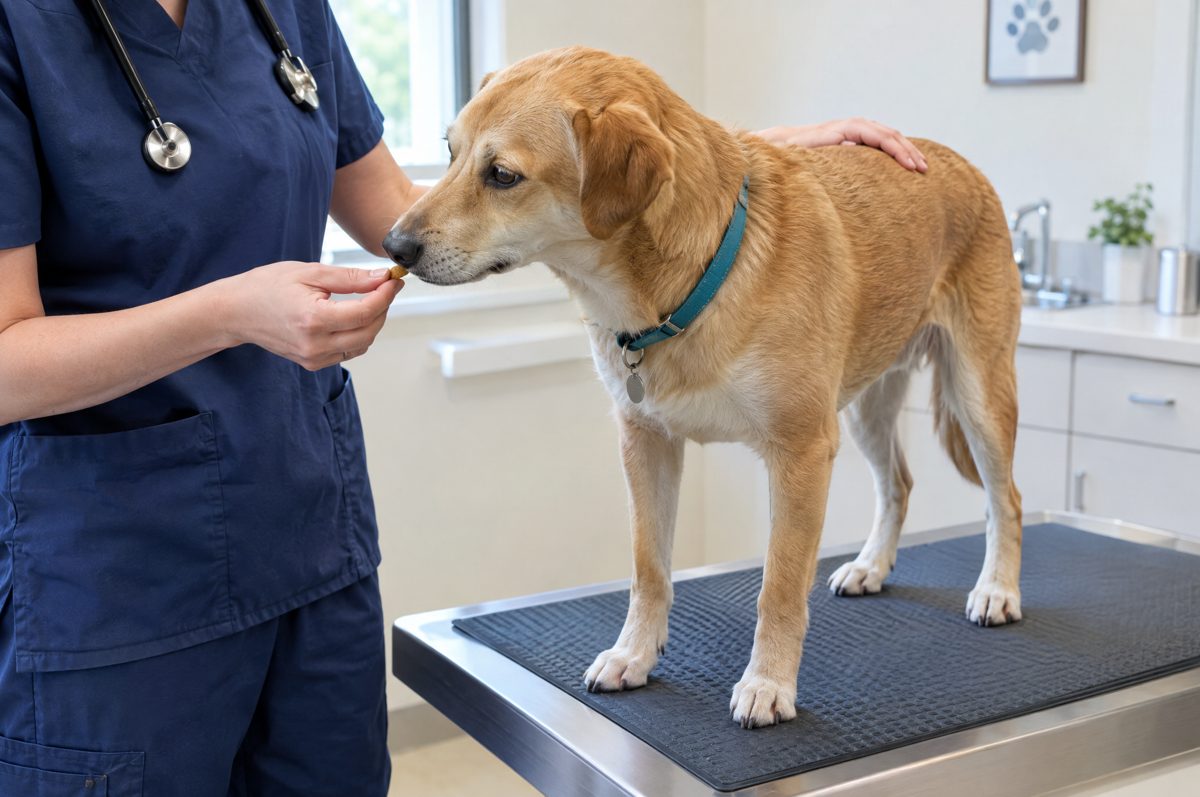
Your dog pulls back at the clinic door. In the waiting room, the dog shakes and pants. On the table, the dog freezes, or growls when the vet reaches for a paw. You leave stressed, and you dread the next visit.
You are far from alone. A 2021 review by Riemer and others, in the journal Animals, says a high proportion of dogs and cats are fearful during vet visits. In some cases, the fear turns into aggression.
This guide explains why it happens and what helps. It gives general information. It does not replace your vet.
Signs your dog is afraid at the vet
VCA’s veterinary behaviourists, Dr Debra Horwitz and Dr Gary Landsberg, list these signs of fear:
- Panting and drooling.
- Avoidance: pulling back, hiding behind you, trying to leave.
- Submissive urination.
- Growling, snapping or biting.
The Cornell Riney Canine Health Center adds the earlier, quieter signs: lip licking, yawning when not tired, freezing, pulling away and showing the whites of the eyes.
Why dogs fear the vet
VCA describes the visit as overwhelming and lists triggers such as:
- A vet’s white coat.
- The smell of disinfectant.
- Other anxious animals in the waiting room.
- Memories of injections.
Being handled by strangers matters too. The Edmonton Humane Society says unpleasant handling can teach a dog to expect discomfort when an area is touched. A dog that had ear medicine may fear any touch near the ears.
Growling is fear, not “dominance”
VCA says most dogs that are aggressive at the vet show fear-related aggression. The dog is trying to make the scary thing stop. VCA says not to punish or scold a dog that growls or reacts. The Edmonton Humane Society adds that punishing warning signs can teach a dog to stop warning, which raises the bite risk.
What the research says helps
In a 2019 study, Stellato and others tested a four-week program for dogs that already feared the vet. Owners did exam-style handling at home and took the dog to the clinic each week. The authors found the program “mildly effective” at reducing veterinary fear. 86.7% of the owners reported that their dog’s fear went down.
The 2021 review by Riemer and others recommends desensitisation and counterconditioning, both to prevent fear and to treat it. It also supports high-value food or toys during the visit, minimal restraint when possible, and not leaning over or cornering the animal.
Desensitisation means small, easy steps toward the scary thing. Counterconditioning means pairing each step with something your dog loves, such as a special treat.
Practise the exam at home
VCA describes practice at home in small steps. Start with the easiest trigger and add others one at a time.
Step 1: short holds
Rest your hand on your dog’s back for one second. Treat. Then a gentle arm around the chest, as a vet nurse does. Let go. Treat.
Step 2: touch like a vet
Look in the ears. Lift a lip to see the teeth. Touch each paw. Run a hand along the belly. One part at a time, with a treat after each.
Step 3: the table
VCA suggests practising with your dog on a table or a raised surface. Put a non-slip mat on it. Treats only, no handling at first.
Step 4: the “white coat”
VCA suggests that family members wear a white coat while they handle and play with the dog.
Step 5: new places
When your dog is relaxed at home, VCA suggests practising in new places, such as a friend’s house or a trainer’s space.
VCA says to repeat each step until your dog relaxes, to keep sessions short, and to start each session a few steps below where the last one ended.
The Cornell Riney Canine Health Center says many dogs can learn to offer a chin rest, or to stand calmly for a brief hold, by choice. A chin rest gives your dog a clear way to say “go on” or “stop”.
Happy visits
VCA describes happy visits as food rewards, fun, games, and nothing else. Call your clinic and ask when a quiet time suits them. Walk in, get treats from the team, walk out. Step on the scale for a treat. Leave before your dog gets worried.
On the day of the visit
- Bring the best treats. VCA suggests small, pea-sized pieces of a soft, special treat, and rewarding calm behaviour.
- Food before the visit. VCA suggests holding back food on the day of the visit so treats matter more. Ask your vet first, because some tests need fasting.
- Stay calm yourself. VCA says any anxiety the owner feels is transmitted to the dog.
- Ask about the coat. VCA suggests asking whether the vet can skip the white coat.
- Cues and treats from you. VCA says all cues and most treats should come from the owner, not the staff.
- Tell the team early. Say that your dog is fearful when you book. Ask if you can wait in the car or in a quiet room.
Muzzles keep everyone safe
If your dog may bite, a muzzle your dog likes protects the team and your dog. VCA recommends a basket-style muzzle rather than a standard mesh muzzle. Teach it at home, with treats, long before the visit. A muzzle put on for the first time at the clinic adds fear.
Ask your vet about a plan
The 2021 review by Riemer and others says anxiety medicine or sedation should be used whenever there is a risk of traumatising an animal, or for safety reasons. This is a normal part of fear-reducing care. Ask your vet if it suits your dog. This guide does not name medicines or doses.
What to write down for the vet
Before the visit, note:
- What scares your dog most: the waiting room, the table, a body part, a procedure.
- How your dog says stop: the first signs you see.
- The treats your dog loves.
- What helped at past visits.
Our free vet visit summary puts your dog’s health notes and questions on one page.
Our program Yes, Paws has a vet exam practice module with an 8-step ladder and a photo for each step, a muzzle comfort module, and a handling card to give your vet. The handling card lists what your dog can do, what scares your dog, how your dog says stop, and the best treats.
Related guides
- Dog scared of the harness
- Dog won’t let you cut his nails
- How to brush your dog’s teeth when they refuse
- How to tell if your dog is in pain
Choose a calm clinic. See how to find a good vet.
Questions
Why is my dog scared of the vet?
VCA's veterinary behaviourists Dr Debra Horwitz and Dr Gary Landsberg list triggers such as the white coat, the smell of disinfectant, other anxious animals and memories of injections. Being held still adds to it. Each frightening visit can make the next one worse.
My dog growls at the vet. Is he aggressive?
Usually he is afraid. VCA says most dogs that are aggressive at the veterinary office show fear-related aggression. Do not punish the growl. Tell the team, slow down, and ask your vet about a plan for fearful dogs.
Does training at home really help?
It can. In a 2019 study by Stellato and others, owners did exam-style handling at home and visited the clinic weekly for four weeks. The authors found the program mildly effective at reducing veterinary fear, and 86.7% of owners reported less fear.
What is a happy visit?
A short trip to the clinic with no procedures. VCA describes happy visits as food rewards, fun and games, and nothing else. Ask your clinic when a quiet time would suit them.
Should my dog eat before a vet visit?
Ask your vet first, because some tests need an empty stomach. VCA suggests holding back food on the day of the visit so your dog is more interested in the special treats you bring, if your vet agrees.
Can my vet give my dog something for the fear?
Yes. A 2021 review by Riemer and others says anxiety medicine or sedation should be used whenever there is a risk of traumatising an animal, or for safety. Ask your vet. This guide does not name medicines or doses.
Sources
- VCA Animal Hospitals (Debra Horwitz, DVM, DACVB, and Gary Landsberg, DVM, DACVB): Reducing Fear of Veterinary Visits for Dogs
- Stellato A, Jajou S, Dewey CE, Widowski TM, Niel L. Effect of a Standardized Four-Week Desensitization and Counter-Conditioning Training Program on Pre-Existing Veterinary Fear in Companion Dogs. Animals, 2019
- Riemer S and others. A Review on Mitigating Fear and Aggression in Dogs and Cats in a Veterinary Setting. Animals, 2021
- Cornell Richard P. Riney Canine Health Center (Dr Aly Cohen): Grooming - Cooperative Care, February 2026
- Edmonton Humane Society: Dog Behaviour Guide, Touch Sensitivity
This article helps you organise care. It does not replace advice from your vet.