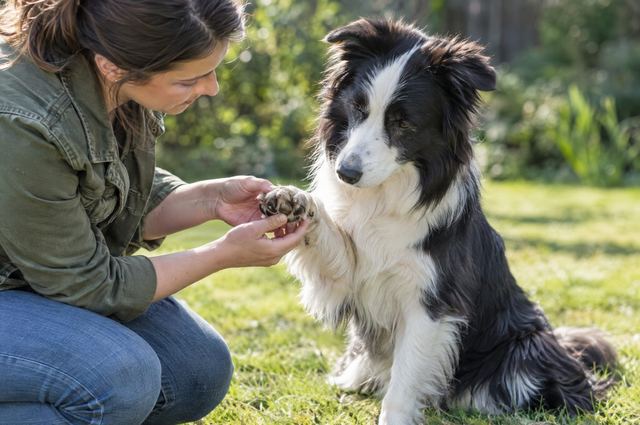
How to brush your dog's teeth when they refuse: a slow, step-by-step plan
You bought the toothbrush and the paste. Your dog clamps the mouth shut, turns the head away, or chews the brush. Many owners give up here. You do not need to. Most dogs can learn to accept brushing if you start with much smaller steps.
Brushing matters. The University of Illinois College of Veterinary Medicine quotes Dr Mallory Kanwal: “Periodontal disease is the most common disease in dogs and cats over 3 years old.” It starts as gum inflammation, and regular brushing can help prevent it.
This guide gives general information. It does not replace your vet.
See your vet before you start
The University of Illinois says to ask your vet before you start, mainly with an older dog. Sore gums make brushing unpleasant. A dog that feels pain will learn to hate the brush.
See your vet first if you notice:
- Red, swollen or bleeding gums.
- Very bad breath.
- Brown tartar on the teeth.
- A broken tooth.
- Your dog chews on one side, drops food, or paws at the mouth.
The University of Illinois says brushing can slow tartar build-up, but only a dental cleaning under anaesthesia removes tartar. If your dog has tartar now, a vet cleaning comes first. Brushing then keeps the clean teeth clean.
Why dogs refuse the toothbrush
- The step was too big. A brush pushed into the mouth on day one feels like an attack.
- The gums hurt. See the list above.
- The taste is wrong. Some dogs dislike one flavour and love another.
- The head was held. Many dogs hate a hand over the muzzle. The Edmonton Humane Society says forcing a dog to accept touch can lead to snapping or biting.
- A past bad experience. The Edmonton Humane Society says unpleasant handling, such as ear medicine, can teach a dog to expect discomfort when that area is touched. The mouth is the same.
What you need
- Dog toothpaste. The University of Illinois says human toothpaste is not safe for pets. It may contain fluoride and xylitol. Pick a flavour your dog likes.
- A finger brush, then a soft dog toothbrush.
- Small treats for after each session.
The University of Illinois notes that some pets reject commercial pastes. For those pets, it says watered-down peanut butter or cream cheese can work as a start. If you use peanut butter, check the label for xylitol first.
The plan: from lip lift to brushing
Each step should take a few days. Move up only when your dog is relaxed. The Cornell Riney Canine Health Center says to work well below your dog’s stress threshold and keep sessions short.
Step 1: taste the paste
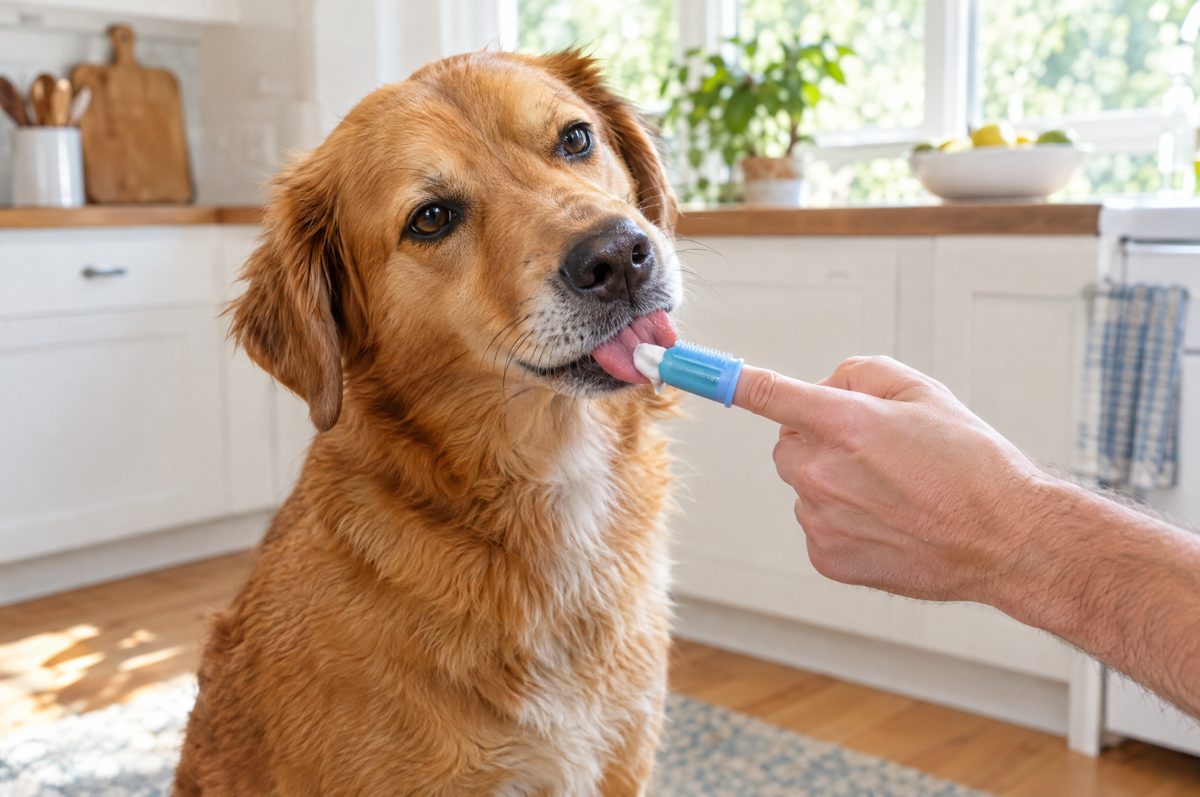
Put a little dog toothpaste on your finger. Let your dog lick it off. Praise. Do this once a day for a few days. The University of Illinois says to start by letting the pet lick toothpaste off the brush.
Step 2: touch the lips
Touch the side of the lips for one second. Treat. The ASPCA suggests massaging the lips for 30 to 60 seconds, once or twice a day, for a few weeks, before you start brushing.
Step 3: lift the lip
Lift the upper lip at the side for one second. Look at the big back teeth. Let go. Treat. You do not need to open the mouth. The outside of the teeth is right there under the lip.
Step 4: finger on one tooth
Put paste on your finger. Lift the lip. Rub one upper back tooth for one second. Let go. Treat.
Step 5: finger brush
Use a rubber finger brush with paste. Rub two or three teeth on the outside. Stop while your dog still likes it.
Step 6: the toothbrush
Let your dog lick paste off the toothbrush. Then a few slow strokes on the upper back teeth. The University of Illinois says to add a few brush strokes gradually.
Step 7: more teeth, a little longer
Add teeth on one side, then the other. Then the canines and the front teeth. Then the lower teeth.
If your dog says no
Watch for the small signs. The Cornell Riney Canine Health Center lists lip licking, yawning when not tired, freezing, pulling away and showing the whites of the eyes. If you see one, go back one step. If your dog growls, stop calmly. The Edmonton Humane Society says punishing warning signs may stop a dog from warning you, which raises the bite risk.
Where to brush first
The Veterinary Oral Health Council (VOHC) says plaque and tartar build up fastest on the cheek side of the upper teeth. So start there:
- Lift the upper lip at the side.
- Brush the outside of the big upper back teeth.
- Then the canine (the long tooth) and the small front teeth.
- Then the outside of the lower teeth.
The University of Illinois says to focus on the outside surfaces. VOHC says the inside surfaces can get extra strokes when practical, but a dog that is just learning does not need them.
How often
VOHC says daily brushing is the standard. The University of Illinois says daily or every other day has been shown to reduce plaque build-up a lot.
Do not worry if your dog is not there yet. VOHC says some dogs will not accept the full brushing routine, and that any brushing done regularly is better than none. A few teeth, brushed well every day, is a real win.
Chews, wipes and water additives
The University of Illinois says to look for treats, chews and dental wipes approved by the Veterinary Oral Health Council. It says water additives help some pets but are less effective than brushing or a dental diet. None of them replace brushing or your vet’s dental checks.
When to get help
Ask your vet or a reward-based trainer for help if your dog has snapped, if the fear gets worse, or if you cannot lift the lip after a few weeks of small steps. The Cornell Riney Canine Health Center recommends your vet, a veterinary behaviourist or a qualified humane trainer when grooming has become stressful.
Keep a record
Write one line after each session: the date, the step, the teeth you brushed, and how your dog felt. It is easy to forget how far you have come.
Our program Yes, Paws has a toothbrushing module with an 8-step ladder and a photo for each step, a drawn “where to brush” diagram, an “if my dog…” page and a log. The same calm method covers nails, ears, brushing, baths, the harness and vet visits.
Related guides
- Dog won’t let you cut his nails
- Dog hates being brushed
- Dog scared of the vet
- How to tell if your dog is in pain
For what a professional cleaning costs, read dog dental cleaning cost.
Questions
Why does my dog refuse to have his teeth brushed?
Most often the steps were too big: a brush pushed into the mouth before the dog was ready. Sore gums are another common reason. The University of Illinois College of Veterinary Medicine says to check with your vet first, because sore gums make brushing unpleasant.
How often should I brush my dog's teeth?
The Veterinary Oral Health Council (VOHC) says daily brushing is the standard. The University of Illinois says daily or every other day reduces plaque. VOHC also says any brushing done regularly is better than none.
Can I use human toothpaste on my dog?
No. The University of Illinois College of Veterinary Medicine says human toothpaste is not safe for pets because it may contain fluoride and xylitol. Use a toothpaste made for dogs.
Which teeth matter most?
VOHC says plaque and tartar build up fastest on the cheek side of the upper teeth. Brush the outside surfaces of the big upper back teeth first. The University of Illinois also says to focus on the outside surfaces.
Does brushing remove tartar?
No. The University of Illinois says brushing can slow tartar build-up, but only a dental cleaning under anaesthesia removes tartar. Keep your dog's dental checks with your vet.
My dog bites the toothbrush. What should I do?
Go back to steps with no brush. Use a finger with toothpaste, or a soft finger brush, for a few seconds at a time. Stop at the first sign of worry. If your dog growls or snaps, do not punish it; make the next step smaller, and ask your vet or a reward-based trainer for help.
Sources
- University of Illinois College of Veterinary Medicine (Dr Mallory Kanwal): Toothbrushing for Dogs and Cats, January 2021
- Veterinary Oral Health Council (VOHC): Brushing
- ASPCA: Dog Grooming Tips
- Cornell Richard P. Riney Canine Health Center (Dr Aly Cohen): Grooming - Cooperative Care, February 2026
- Edmonton Humane Society: Dog Behaviour Guide, Touch Sensitivity
This article helps you organise care. It does not replace advice from your vet.