Dog shaking at night: dreams, cold, pain or a seizure?
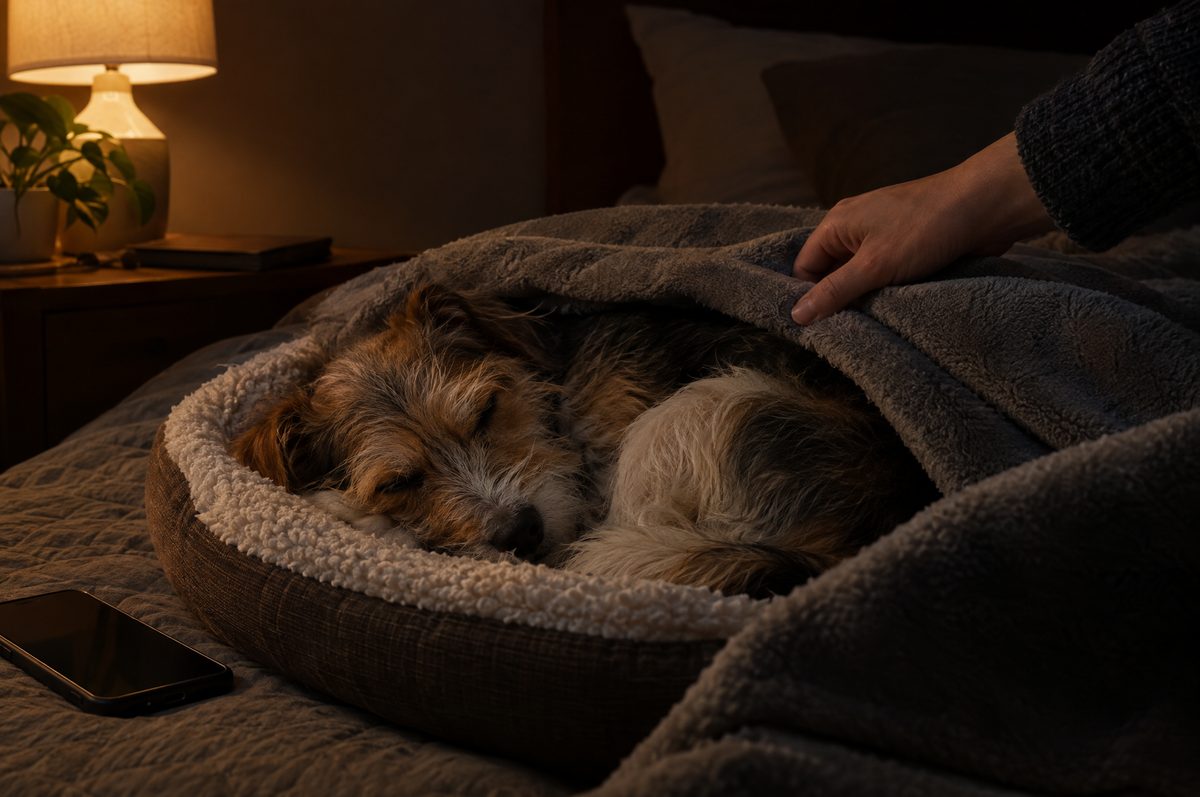
You wake in the night. Your dog is on the bed beside you, and the bed is shaking. Is your dog cold? Dreaming? Ill?
Most night shaking has a simple cause. Some does not. This guide helps you tell them apart, shows when to go to the vet now, and tells you what to film so your vet can see what you saw.
This page gives general information. It is not veterinary advice. Your vet knows your dog.
Go to a vet now if
- Your dog cannot be woken, goes stiff, paddles the legs, drools or loses bladder control. This may be a seizure.
- A seizure lasts more than 5 minutes, or one follows another.
- It is your dog’s first seizure.
- Your dog may have eaten a toxin: snail bait, insect poison, chocolate, or human medicine.
- The shaking is strong and your dog is hot, panting hard, or confused.
- Your dog is diabetic and on insulin.
Cornell lists a first seizure, a cluster of seizures, or one lasting more than 5 minutes as reasons to go to the ER. Veterinary Partner says poisoning is an emergency, and that severe tremors can raise body temperature to a dangerous level.
If you think your dog ate a toxin, call the ASPCA Animal Poison Control Center on (888) 426-4435, any time of day. A fee may apply.
Shaking vs a seizure: how to tell
| Sign | Dreaming or shivering | Possible seizure |
|---|---|---|
| Wakes when you say its name | Yes | No, or not fully |
| Body | Soft, small twitches | Stiff, jerking or paddling |
| Mouth | Maybe small whimpers | Drooling, chomping |
| Bladder or bowel | Normal | May empty |
| After | Normal at once | Confused, wobbly, may pace |
This table is a guide, not a diagnosis. Veterinary Partner says some brain problems cause fine tremors, not big jerks. If you are not sure, treat it as a vet visit.
Keep safe. Do not put your hand near the mouth of a dog that may be seizing. It cannot control its jaw. Move it away from stairs and hard edges. Time the episode.
Cause 1: dreaming
Veterinary Partner lists dreaming as a normal cause of shivering. A dreaming dog twitches its paws, lips or eyelids, and may yip softly. It wakes easily and is normal at once. You do not need to do anything.
Cause 2: cold
Veterinary Partner lists cold as a normal cause, and says a blanket usually fixes it. Small dogs, thin-coated dogs and old dogs feel cold sooner. As nights get colder in autumn, check where your dog sleeps. A tiled floor or a draughty corner can be cold.
Cause 3: fear and noise
Veterinary Partner lists fright as a normal cause. Fireworks, storms, a strange noise or a bad dream can set it off. Comfort your dog calmly. If fear shaking happens often, talk to your vet about anxiety.
Cause 4: tired or weak muscles in older dogs
Veterinary Partner describes leg tremors in elderly dogs with muscle loss. The muscles shake when they are overworked, often after a long walk, and it stops when the dog rests. A dog that shakes in the back legs after the evening walk may fit this.
Ask your vet about shorter, more frequent walks, and about muscle and joint health. Our guide to an old dog slipping on floors has tips on grip at home.
Cause 5: pain
Cornell lists these pain signs in dogs: restlessness, not able to get comfortable to sleep, panting at rest, stiffness, limping, licking one area, and a change in face. Some dogs tremble when they hurt. Our guide on how to tell if your dog is in pain has a full list.
Do not give human pain medicine. Many are dangerous for dogs.
Cause 6: toxins
Veterinary Partner names snail bait with metaldehyde, insecticides and chocolate among toxins that cause tremors. It says poisoning is an emergency. Check the house and garden for anything your dog could have reached. Read our guide on what to do if your dog ate chocolate.
Cause 7: low blood sugar
Veterinary Partner lists low blood sugar among the causes of whole-body tremors. Tiny dogs, young puppies and diabetic dogs on insulin are most at risk. A diabetic dog that shakes needs a call to the vet at once.
Cause 8: tremor disorders and seizures
Veterinary Partner describes steroid-responsive tremor syndrome, once called “little white shaker syndrome”. It causes whole-body tremors, often with balance problems. It says the outlook is generally good with treatment.
Epilepsy and other brain diseases can also cause tremors or seizures. Only a vet can sort these out, often with blood tests and sometimes with tests of the nervous system.
Old dog, restless at night?
If your older dog also wakes, paces, whines or seems lost at night, it may be more than shaking. Cornell’s dementia page says sleep changes are often the first sign families notice. Read our guides on old dog pacing at night and dog dementia stages.
Film it: what to record
A video helps your vet more than any words. Veterinary Partner’s own page uses videos to show the types of tremor.
When it happens:
- Turn on a light and film for 30 to 60 seconds.
- Get the whole body in the frame, then the face.
- Say your dog’s name on the video. Does it respond?
- Note the time it started and stopped.
- Note what came before: a walk, a meal, medicine, a noise, cold.
- Note how your dog was after: normal at once, or confused.
Do this for each episode. A pattern of times and triggers is very useful.
Bring it together
Our free vet summary tool puts your notes on one page. The Senior Dog Comfort & Cognition Journal has a night and sleep log and weekly movement scores, so you can show your vet how often the shaking happens and whether it is getting worse.
If the shaking comes with fireworks or storms, read dog scared of fireworks.
This guide is one step in our complete guide on how to care for a senior dog: vet visits, weight, joints, mind and nights, in order.
Questions
Is my dog having a seizure or a dream?
A dreaming dog twitches lightly and wakes easily when you say its name. A dog having a seizure often cannot be woken, may go stiff, paddle its legs, drool, or lose bladder control, and may be confused after. If you are not sure, film it and call your vet.
Why does my old dog tremble at night?
Veterinary Partner says old dogs with muscle loss can shake when the muscles are tired, and it stops once they rest. Pain, cold and anxiety are also common. Cornell lists pain signs such as restlessness and trouble getting comfortable. Ask your vet to check joints and muscles.
Could my dog just be cold?
Yes. Veterinary Partner lists cold as a normal cause of shivering, which a blanket can fix. Small, thin-coated and old dogs feel cold sooner. If the shaking stops when your dog is warm, cold was likely the cause.
Should I wake my dog?
If your dog is dreaming, a soft word from a distance is fine. Do not put your hands near the mouth of a dog that may be having a seizure. It is not in control and could bite by accident. Keep it away from stairs and time the episode.
When is shaking an emergency?
Veterinary Partner says poisoning is an emergency, and that severe tremors can raise body temperature dangerously. Cornell lists a first seizure, a cluster of seizures, or one over 5 minutes as reasons to go to the ER. Go now in those cases.
Can low blood sugar cause shaking?
Yes. Veterinary Partner lists low blood sugar among the causes of whole-body tremors. It is a special risk in tiny dogs, puppies and diabetic dogs on insulin. Call your vet at once if a diabetic dog shakes.
Sources
- Veterinary Partner (VIN): Tremoring or shivering in dogs, Wendy Brooks DVM (revised 23 September 2025)
- Cornell Riney Canine Health Center: When to go to the ER, Dr. Aly Cohen (June 2025)
- Cornell Riney Canine Health Center: Recognizing pain in dogs (updated 21 October 2025)
- Cornell Riney Canine Health Center: Senior dog dementia
- ASPCA Animal Poison Control Center
This article helps you organise care. It does not replace advice from your vet.