Old dog pacing at night: 6 causes, what to do tonight, and when to call the vet
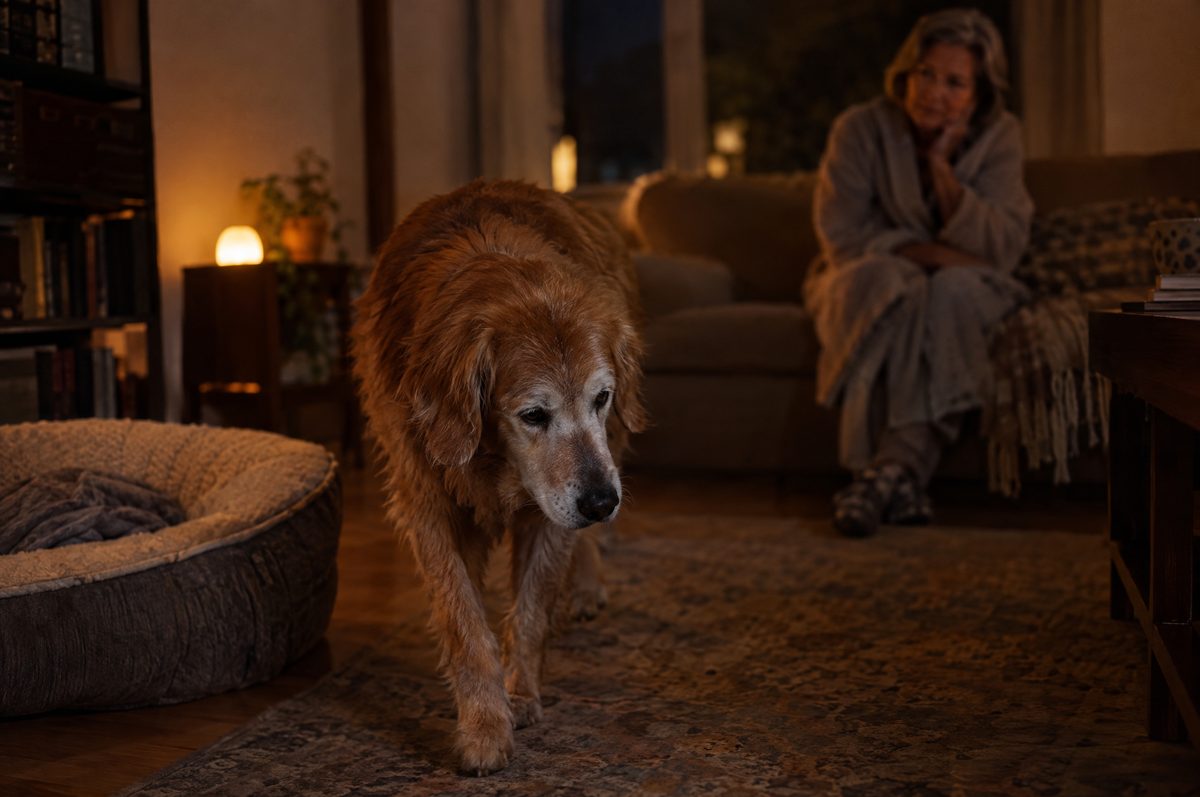
It is 3 a.m. Your old dog is up again. It walks the hall, stops, turns, and walks back. Maybe it whines. You are tired, and you worry. Is this old age? Is it pain? Is it dementia?
Night pacing has more than one cause, and some causes are easy to help. This guide lists the causes that vets name, what you can do tonight, and what to write down so your vet can find the cause.
When to call a vet now
Most night pacing is not an emergency. Some signs are. The American Veterinary Medical Association (AVMA) first aid guide covers emergencies. Call your vet or an emergency clinic at once if your dog also:
- cannot stand or walk, or cries out in pain;
- chokes, or has trouble breathing;
- has a seizure;
- shows a sudden head tilt, circles, or loses its balance;
- may have eaten a poison or a human medicine.
Cornell University says a sudden balance problem needs prompt care. It is not dementia. If you are not sure, call. The clinic tells you if your dog must come in now.
Why old dogs pace at night: 6 causes
Cornell University lists night pacing, getting stuck and calling for help, whining, barking and howling as signs of dementia. Cornell says they are “often the first sign” families notice. But dementia is only one cause. These are the six that vets look for.
1. Dementia (canine cognitive dysfunction)
In 2026, an international working group wrote the first guidelines for this problem. They define canine cognitive dysfunction syndrome as a chronic, progressive, age-associated brain disease. It changes how a dog thinks and acts. The group names seven areas, called DISHAA: disorientation, social interaction, sleep, house soiling, learning and memory, activity and anxiety. Night waking belongs to the sleep area. Pacing belongs to the activity area.
Sleep may be a real part of the disease. In a 2023 study, Mondino and others recorded the sleep of 28 senior dogs. Dogs with higher dementia scores spent less time in non-REM sleep and in REM sleep. Their sleep was also shallower.
2. Pain
Sore joints make it hard to settle. Cornell University lists restlessness, panting at rest, trouble getting comfortable, and poor sleep among the signs of pain. A 2026 review says osteoarthritis affects nearly half of adult dogs. It is the most common long-term bone and joint problem in dogs. Dogs with arthritis may be stiff, slow to rise, and reluctant to use stairs.
Cornell also says that pain signs often develop slowly. That is why a dog’s night pacing can look like “just old age”. It is not. Our guide on how to tell if your dog is in pain lists 18 signs.
3. A full bladder, or a bladder infection
Older dogs may need to go out more often. Cornell says to rule out a bladder infection when a dog starts to have accidents. If your dog paces by the door, or wakes up wet, tell your vet.
4. Poor hearing
Cornell says hearing loss can look like unresponsiveness. A dog that cannot hear may wake in a fright, or not know where you are. Cornell advises you to stamp a foot or speak as you come near a sleeping dog, so it can feel the vibration.
5. Poor sight
An old dog that sees poorly in the dark may bump into things and walk the same path again and again. Cornell advises night lights so the dog can see. Your vet can check the eyes.
6. Anxiety
Anxiety is one of the seven DISHAA areas. Cornell lists new fear of places or people, and unsettled behaviour in the evening. Tell your vet if the pacing comes with panting, trembling or clinging.
What to do tonight
These steps come from Cornell University and the Dog Aging Project. None of them replaces a vet visit. They make the night easier while you wait.
- Take a longer walk before bed. Cornell advises it. Let your dog sniff.
- Use a night light. Put one in the hall and by the dog bed.
- Keep the day the same. Cornell advises the same times for meals, walks and bed, and the same places for the bed and the bowls. Do not move the furniture.
- Block the stairs. Cornell also advises you to block gaps behind furniture, where a confused dog can get stuck.
- Check the floor. Add rugs with a grip on the back, so a stiff dog does not slip. The 2023 American Animal Hospital Association (AAHA) senior care guidelines also advise ramps, rugs and floors with good traction. Read our guide on an old dog slipping on floors.
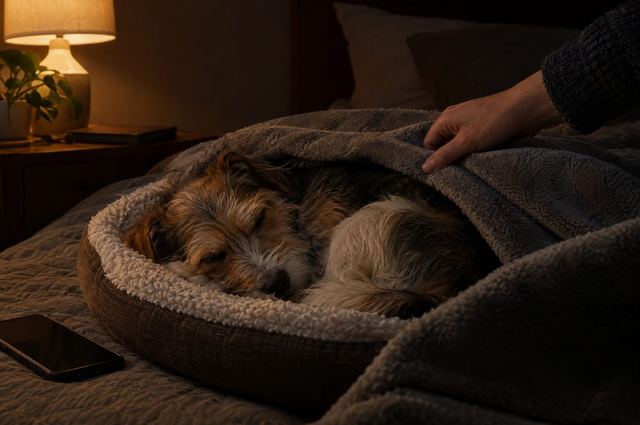
- Give a soft, thick bed in a quiet room, away from noise.
- Let your dog choose its place. Cornell says some dogs want company. Others want a quiet room.
Do not give a human sleep aid or pain medicine. The US Food and Drug Administration (FDA) says a human pain reliever can last longer in a dog and can cause serious harm. Cornell says to ask a vet before you try melatonin, because the evidence is limited.
What to write down for your vet
A vet cannot watch your dog at 3 a.m. You can. Write each night for two weeks. Write:
- the time your dog went to bed, and the time it woke;
- how many times it got up;
- what it did: paced, whined, stared, went to the door;
- what helped: water, a walk, company;
- any accident, and the time of the last trip outside;
- any sign of pain, such as a stiff first step.
Short videos also help. The 2023 AAHA senior care guidelines advise videos, pictures and pre-visit questionnaires to simplify monitoring. A film of your dog pacing tells the vet more than a long description.
Before the visit, the free vet visit summary helps you list your dog’s medicines and the changes since the last visit. The Senior Dog Comfort and Cognition Journal has a night and sleep log with a column for each of these. It also has a weekly mind check built on the seven DISHAA areas, and a “what else could it be” page to take to your vet. The journal records. It does not diagnose.
What the vet does
The 2026 working group says the vet first looks for other causes. The group lists a physical exam, an orthopaedic exam, a neurologic exam and lab work. A diagnosis of dementia needs a consistent history of progressive DISHAA signs. The signs must continue after other conditions are managed. Cornell says diagnosis uses the signs plus blood and urine tests to rule out pain, arthritis, and loss of sight or hearing.
Ask your vet:
- Could pain be the cause? Which tests would show it?
- Should we test the urine and the blood?
- Could my dog have lost some sight or hearing?
- What can I change at home?
- When do you want to see my dog again?
Cornell says dogs with dementia need a vet exam at least every six months, with frequent checks at home. Ask your own vet what is right for your dog.
How common is it?
A large survey of 15,019 dogs in the Dog Aging Project found probable dementia in 1.4% of all the dogs. The average age in that group was only 6.9 years. The chance rose by 52% with each added year of age. So the problem is far more likely in old dogs. Cornell says dogs may start to develop dementia from about 9 years of age. The disease may be underdiagnosed, because owners often think the changes are normal ageing.
If your dog is 8 years or older, our guide on when is a dog a senior explains which changes to report at each visit. For the stages of dementia, read dog dementia stages.
Summary
- Night pacing is often the first sign of dementia that families see. It can also come from pain, a full bladder, poor hearing, poor sight or anxiety.
- Call a vet at once for collapse, trouble breathing, a seizure or a sudden loss of balance.
- Tell your own vet this week if the pacing is new, or happens on 3 nights in a week.
- Tonight: a longer walk, a night light, the same routine, blocked stairs and a soft bed.
- Write each night for two weeks and film a short video. Your records help your vet find the cause.
Is your dog also drinking more? Read dog drinking a lot of water at night.
If your dog also pants or shakes at night, read dog panting at night when it is not hot and dog shaking at night.
This guide is one step in our complete guide on how to care for a senior dog: vet visits, weight, joints, mind and nights, in order.
Questions
Why is my old dog pacing at night?
Cornell University lists dementia as one cause: night pacing, calling and whining are often the first sign families notice. Other causes are sore joints, a full bladder, and poor sight or hearing. The 2026 dementia working group says a vet must look for those other causes first, with a physical exam and lab work.
Is night pacing always dementia?
No. Cornell University says a bladder infection must be ruled out when a dog has accidents. The working group on canine cognitive dysfunction says the diagnosis needs other causes ruled out first. Pain from arthritis can also make a dog restless. Only your vet can tell the causes apart.
How long can an old dog pace at night before I call the vet?
Call your own vet this week if the pacing is new, or happens on 3 nights in a week. Call a vet or emergency clinic at once if your dog also cannot stand, has trouble breathing, has a seizure, or shows a sudden head tilt or loss of balance. The American Veterinary Medical Association (AVMA) first aid guide lists emergencies.
Should I give my dog melatonin or a sleeping pill?
Ask your vet first. Cornell University says to discuss melatonin with a vet, because the evidence for it is limited. Never give a human sleep or pain medicine without your vet's advice. The US Food and Drug Administration (FDA) says human pain relievers can harm dogs.
What can I do tonight to help my pacing dog?
Cornell University advises a longer walk before bed, a night light so the dog can see, and the same routine every day. Keep stairs blocked and the path to the door clear. Stamp a foot or speak before you touch a sleeping dog, in case it cannot hear you.
Do dogs with dementia sleep less?
A 2023 study by Mondino and others recorded the sleep of 28 senior dogs. Dogs with higher dementia scores spent less time in non-REM sleep and in REM sleep, and their sleep was shallower. Owners of dogs with dementia often report that their dogs sleep badly.
Sources
- Cornell University College of Veterinary Medicine, Riney Canine Health Center: Senior dog dementia
- Olby NJ and others, Canine Cognitive Dysfunction Syndrome Working Group (2026). Guidelines for diagnosis and monitoring of canine cognitive dysfunction syndrome. JAVMA, pages 498-505
- Mondino A and others (2023). Sleep and cognition in aging dogs: a polysomnographic study. Frontiers in Veterinary Science
- Cornell University College of Veterinary Medicine, Riney Canine Health Center: Recognizing pain in dogs
- Marcellin-Little DJ and others (2026). A proposed framework for practical multimodal management of osteoarthritis in adult dogs. Frontiers in Veterinary Science 13: 1864824
- American Veterinary Medical Association (AVMA): First aid tips for pet owners
- US Food and Drug Administration (FDA), Center for Veterinary Medicine: Get the Facts about Pain Relievers for Pets
This article helps you organise care. It does not replace advice from your vet.