When is a dog a senior? Age by size, changes to watch and vet visits
Your dog still runs to the door when you come home. But the muzzle is grey now, the stairs take longer, and the walks are shorter. Is your dog a senior? For dogs there is no single age. The answer depends on size, and it changes what you watch for.
The short answer: it depends on size
The 2019 AAHA Canine Life Stage Guidelines define the senior stage as the last 25% of the estimated life span. The life span depends on breed and size. The American Veterinary Medical Association (AVMA) notes that larger breeds tend to live shorter lives than smaller breeds.
Using American Kennel Club data, the AVMA gives these average ages:
| Size | Weight | Senior from about |
|---|---|---|
| Small or toy | Under 20 lb (9 kg) | 8 to 11 years |
| Medium | 20 to 50 lb (9 to 23 kg) | 8 to 10 years |
| Large | 50 to 90 lb (23 to 41 kg) | 8 to 9 years |
| Giant | Over 90 lb (41 kg) | 6 to 7 years |
So a giant breed such as a Great Dane can be a senior at 6. A small dog such as a Yorkshire terrier may not be a senior until 8 to 11. A mixed breed dog fits the row for its adult weight. Your vet can estimate your dog’s life span from its breed and size.
The AVMA also says that age is not a disease. Many senior dogs stay active and happy for years. The point of the label is to start looking for early signs of disease.
The life stages vets use
The 2019 AAHA guidelines use five stages for dogs:
| Stage | When |
|---|---|
| Puppy | Birth to the end of rapid growth (about 6 to 9 months) |
| Young adult | To full physical and social maturity (most dogs by 3 to 4 years) |
| Mature adult | To the start of the last 25% of the life span |
| Senior | The last 25% of the life span, to the end of life |
| End of life | The final stage, at any age |
How often a senior dog should see the vet
The 2019 AAHA guidelines say a senior dog should have at least semiannual exams, which means twice a year. The AVMA agrees: twice a year or more.
The 2023 AAHA Senior Care Guidelines say a medical workup is recommended for senior pets once or twice a year. It may include a complete blood count, a chemistry panel and a urine test. Your vet chooses the tests for your dog.
Why so often? The AVMA says regular exams can find problems in older pets before they become serious. The 2019 guidelines say early detection allows earlier treatment.
Changes to watch for at home
You see your dog every day, so slow changes are easy to miss. These are the changes that the AVMA and AAHA ask owners to report.
Movement and arthritis. The AVMA lists these signs:
- Avoids running, jumping, stairs or getting into the car.
- Favours a leg or walks stiffly.
- Has trouble sitting down or standing up.
- Sleeps more and plays less.
- Does not want to be touched, or snaps at people or pets.
Thinking and behaviour (cognitive dysfunction). The 2023 AAHA guidelines say that about 14 to 22.5% of dogs older than 8 years have age-related cognitive impairment. The most common signs in dogs are:
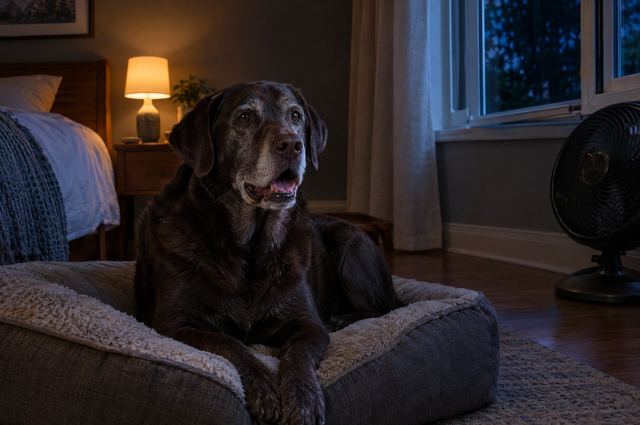
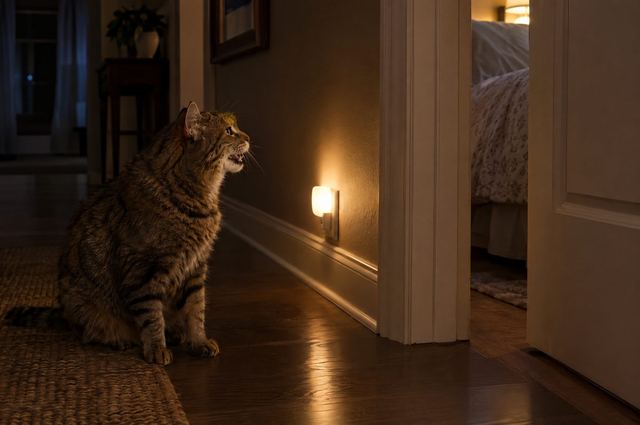
- Sleeping in the day and restless at night.
- Less interest in people.
- Getting lost or confused at home.
- Anxiety.
- Loss of house training.
The AVMA adds more barking, wandering, repeating the same actions, and a slower response to commands.
Weight and appetite. The AVMA says weight gain raises health risks in senior dogs. The 2023 guidelines say dogs tend to lose muscle and gain fat as seniors, then lose weight at an advanced age. Weigh your dog once a month on the same scale.
Other warning signs. The AVMA lists these signs of cancer in senior pets:
- Swelling of the belly.
- Bleeding from the mouth, nose or other body openings.
- Trouble eating, swallowing or breathing.
- Lumps, bumps or discoloured skin.
- Sores that do not heal.
- Diarrhoea or vomiting that does not stop.
- Less appetite or weight loss.
Report any of them to your vet.
Make home easier for an older dog
The 2023 AAHA guidelines and the AVMA suggest simple changes:
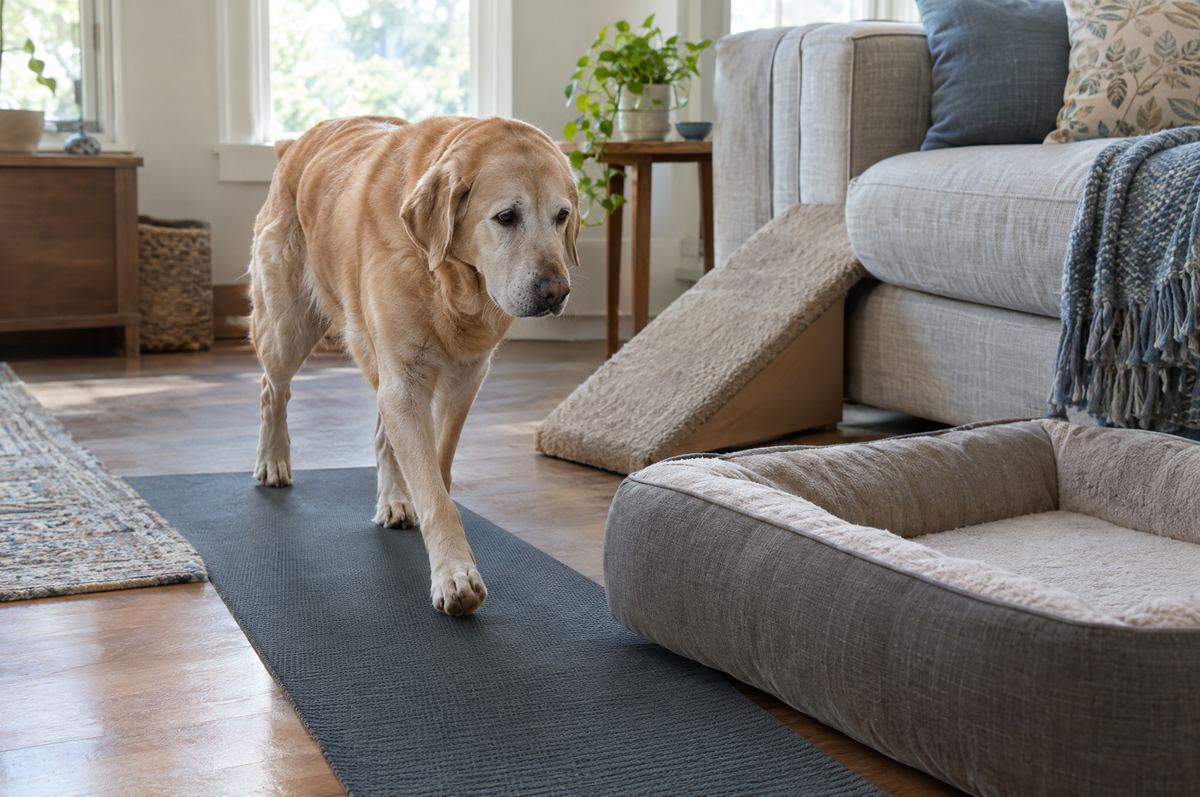
- Put rugs or yoga mats on slippery floors, for better grip.
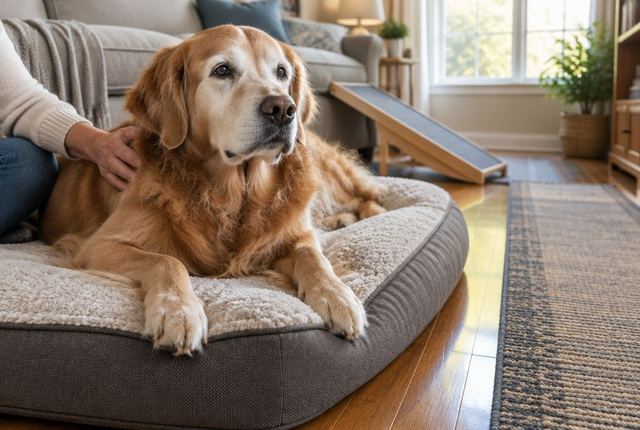
- Add a ramp or pet stairs to the sofa, the bed or the car.
- Raise food and water bowls if bending down is hard.
- Give a soft, supportive bed in a quiet, warm place.
- Block stairs and pools if your dog does not see or hear well.
- Do not move the furniture around if your dog’s sight is poor.
- Keep walks short and regular, and keep playing gentle games.
Keep a record between visits
Six months between visits is long. A short record helps you see a trend and helps your vet.
The 2023 AAHA guidelines suggest that owners take videos of their dog walking and jumping at home. They also suggest marking good days and bad days on a calendar or in a journal. This gives a more objective view of changes over time.
The Medical and Dosing Tracker has a monthly weight tracker and a 31-day daily check for eating, drinking, toilet and energy. It also has a symptom log and a lab results page that keeps 5 visits side by side, so you can see each value change. It records what your vet says. It never suggests a dose or a diagnosis.
Before each check-up, our free vet visit summary puts your dog’s food, medicines and notes on one page for the vet. If you have an older cat too, read when a cat becomes a senior.
Is your senior dog thirsty at night? Read dog drinking a lot of water at night.
This guide is one step in our complete guide on how to care for a senior dog: vet visits, weight, joints, mind and nights, in order.
Questions
Is a 7-year-old dog a senior?
It depends on size. By the AVMA table, a giant dog (over 90 lb) is a senior at 6 to 7 years. A small dog under 20 lb usually becomes a senior between 8 and 11 years. Ask your vet where your dog's breed fits.
Is one dog year equal to seven human years?
No. The AVMA says dogs do not age at a rate of 7 human years per dog year. Large breeds tend to have shorter lives than small breeds. That is why the senior age changes with size.
How often should a senior dog see the vet?
At least twice a year. The 2019 AAHA Canine Life Stage Guidelines say senior dogs should have at least semiannual exams. The AVMA says twice a year or more, so the vet can find problems early.
Is it normal for an old dog to sleep more?
Older dogs often slow down. But the AVMA lists sleeping more as one sign of arthritis. The 2023 AAHA guidelines list sleeping in the day and restlessness at night as common signs of cognitive dysfunction. Tell your vet about changes in sleep.
Why is my senior dog having accidents in the house?
Accidents can come from many causes, such as kidney or bladder disease, diabetes, pain that makes it hard to go out, or cognitive dysfunction. Both AVMA and AAHA list loss of house training as a sign to report. Note when and where it happens, and see your vet.
Sources
- AVMA: Caring for senior cats and dogs
- Creevy KE, Grady J, Little SE, et al. 2019 AAHA Canine Life Stage Guidelines. J Am Anim Hosp Assoc 2019;55:267-290
- 2023 AAHA Senior Care Guidelines for Dogs and Cats. J Am Anim Hosp Assoc 2023;59:1-21
This article helps you organise care. It does not replace advice from your vet.