Old dog slipping on floors: 9 fixes, and when it is a sign of pain
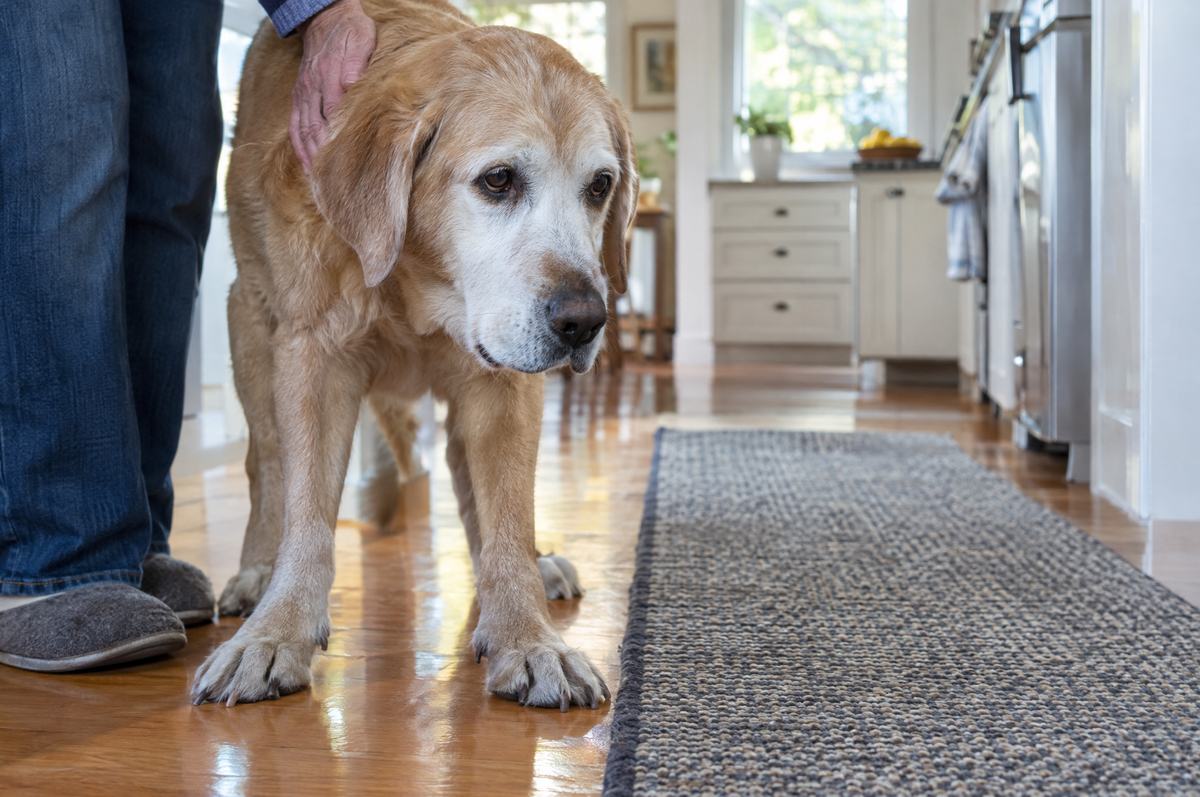
Your old dog used to run across the kitchen. Now it walks with its legs wide, and its paws slide out. It may stop at the edge of the hall and wait. Or it falls, and then it is afraid of the floor.
Slipping is not just a floor problem. It is often a sign that the legs are weak or sore. This guide explains what vets say about it, nine fixes you can make today, and when to see your vet.
Start with the vet, not the rug
A rug helps a slipping dog. But the cause may need treatment. A 2026 review by a group of veterinary experts says osteoarthritis (arthritis) affects nearly half of adult dogs. It is the most common long-term bone and joint problem in dogs. The review lists these signs: trouble climbing stairs, limping, trouble rising, and inability to jump. It says painful dogs may also pull away, or act with anger when touched. (The review was written by an advisory group that a pet health company funded.)
Cornell University lists stiffness, limping and trouble on stairs among the signs of pain. Cornell says that pain signs often develop slowly, and that early action can help slow chronic pain. Our guide on how to tell if your dog is in pain lists 18 signs.
Slipping also happens with other problems. Call a vet or an emergency clinic at once if your dog suddenly cannot stand, cries out, or shows a sudden head tilt or loss of balance. Cornell says a sudden balance problem needs prompt care.
Never give a human pain medicine. The US Food and Drug Administration (FDA) says human pain relievers can last longer in a dog and can cause serious harm. Give only what your vet prescribes.
The 2023 American Animal Hospital Association (AAHA) senior care guidelines say that ageing is not a disease, and that senior care includes changes to the home. They name ramps, rugs and floors with good traction.
9 fixes for an old dog that slips
The Dog Aging Project published its mobility tips in 2021. Dr Kellyn McNulty wrote them. The 2026 arthritis review gives similar advice. Where a tip comes from one of these sources, the text says so.
1. Put rugs with a grip where your dog walks and sleeps
The Dog Aging Project advises area rugs or entry mats with a gripping back. Put them where your dog lies down and in busy places, such as the path to the door, the bowls and the garden. Watch the first uses to make sure the rug does not slip or bunch up. A bunched rug is a trip hazard.
The 2026 review also advises rugs, mats or carpet runners for traction.
2. Keep your dog off the slickest floors
The Dog Aging Project says to limit your older dog’s access to slippery floors. If your dog must cross one, stay near to help. Discourage running, jumping and rough play on slick floors.
3. Trim the nails
Short nails let the paw pads grip. The Dog Aging Project says to ask your vet for help if trimming is hard, especially with dark nails. For overgrown nails, trim often and only a little: only the tip, every 1 to 2 weeks for several months, and not into the quick. When the nails are a good length, trim every 3 to 4 weeks.
4. Trim the hair between the pads
Cornell University advises you to trim the nails and the foot hair for a senior dog. The 2026 arthritis review also lists foot care, which includes nail and hair trims.
5. Check the paws
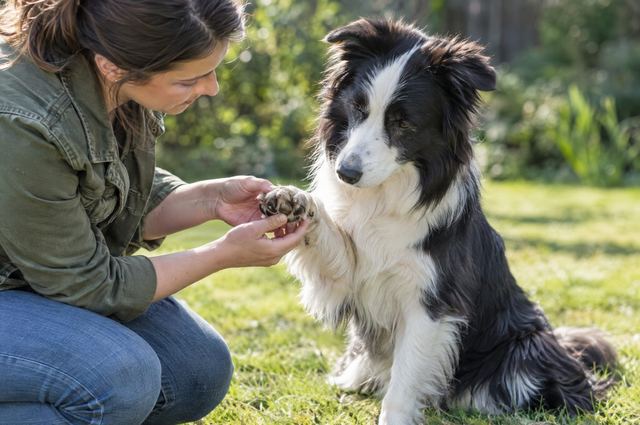
Look at each paw once a week. Look for cracked or dry pads, long nails, and hair between the toes. Write what you see. Tell your vet about any sore spot.
6. Try grip aids, with your vet’s advice
The Dog Aging Project says that products that fit around the nails or stick to the pads can add grip. It says to use them with care if your dog chews or eats things that are not food. Rubber-gripped booties or socks are another choice. Ask your vet about the right product and size.
7. Add steps, ramps and gates
The Dog Aging Project advises small steps to reach the sofa, the bed or the car. Teach your dog to use them with treats. When even a few stairs are too hard, use a ramp with a strong grip. The 2026 review says that ramps may help more than steps. Put a gate across stairs your dog should not use alone, and fit non-slip treads on the stairs that it must use.
8. Raise the bowls, soften the bed
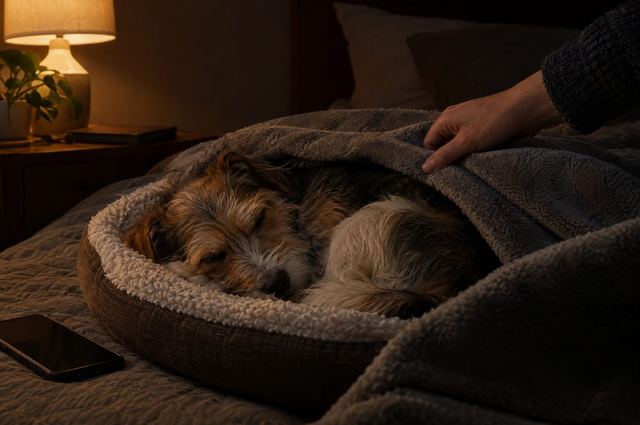
The 2026 review advises that you raise the food and water bowls, adjust the bedding, and change the height and place of the bowls. A thick, soft bed on a non-slip floor makes it easier to lie down and to get up.
9. Use a harness, with care
The Dog Aging Project says that a hind-end lift harness is easy to put on and take off, but it is for short, temporary help. It is not for constant use. A semi-permanent harness supports the front end, the hind end, or both, but it takes more effort to fit. Ask your vet about the product, the style and the size. For a dog that cannot walk, the Dog Aging Project describes a stroller or a wagon with thick padding.
Watch your dog’s weight
The 2026 review says that arthritis develops sooner in large dogs and in dogs with extra weight. It says that a plan for a lean body is the base of care. Extra weight loads sore joints. Ask your vet to show you how to feel your dog’s ribs. Weigh your dog once a month on the same scale, and write the number.
Walk round your home at your dog’s height
Get down and look at what your dog sees. Check each floor type. Check the path from the bed to the water, the door and the family. Ask:
- Where does my dog slip?
- Which floors have no rug?
- Which stairs does my dog use?
- Is the bed high or hard to enter?
- Are the nails short, and is the foot hair trimmed?
The Senior Dog Comfort and Cognition Journal has a “walk round the home” checklist for floors, stairs, rest and feet. It also has a page to write what you changed and what you saw after a week or two.
What to record for your vet
The 2023 AAHA senior care guidelines advise videos, pictures and pre-visit questionnaires. Cornell University asks owners to record what they see, because a dog may walk well on the clinic floor and limp at home.
Write:
- the date, and where your dog slipped;
- what your dog was doing (rising, turning, going to the door);
- how often it happens in a week;
- whether it has stairs, jumping or rising trouble too;
- a short video of your dog as it gets up and walks on a flat floor.
The free vet visit summary lists your dog’s medicines and changes for the visit. The journal’s daily comfort check scores stiffness, limp, stairs and slips from 0 to 3 against your dog’s normal. The weekly movement check shows the trend over twelve weeks. The 2026 review says that a validated owner questionnaire and sustained, structured talks with the vet help to monitor the response. The journal is not a vet test, but it gives your vet a clear record.
When to see the vet
Call your own vet this week if your dog:
- slips more than before, or has started to slip;
- is slow to rise, or avoids stairs or jumps;
- limps, or licks one joint;
- is restless at night. Our guide on an old dog pacing at night lists the causes.
If your dog seems confused as well as unsteady, read dog dementia stages. If your dog is 8 years or older, read when is a dog a senior. To keep the medicines and doses in one place, see the Medical and Dosing Tracker.
If your dog limps, read dog limping but not crying. If the back legs shake after walks, read dog shaking at night.
This guide is one step in our complete guide on how to care for a senior dog: vet visits, weight, joints, mind and nights, in order.
Questions
Why is my old dog slipping on the floor?
Slipping often means weak or sore legs. A 2026 review says osteoarthritis affects nearly half of adult dogs, and that it shows as trouble with stairs, jumping and rising. Long nails and thin foot hair also reduce grip. Ask your vet to check for pain before you only change the floor.
How do I stop my old dog slipping on hardwood floors?
The Dog Aging Project advises rugs or mats with a grip on the back where the dog lies down and in busy areas, short nails so the pads can grip, and limited access to slippery floors. Watch the first days to make sure rugs do not bunch up. Ask your vet about grip aids and ramps.
How short should my dog's nails be?
The Dog Aging Project says short nails let the paw pads grip the floor. For overgrown nails, trim often and only the tip, every 1 to 2 weeks for several months, and avoid the quick. When the nails reach a good length, trim every 3 to 4 weeks. Ask your vet for help with dark nails.
Is slipping on floors a sign of arthritis?
It can be. A 2026 review says functional signs of arthritis include trouble climbing stairs, limping, trouble rising and inability to jump. The review also says these problems often start in middle-aged dogs. Only your vet can tell the cause, after an exam. Do not give a human pain medicine.
Do dog socks and grip booties work?
The Dog Aging Project says rubber-gripped booties or socks are sold in shops, and some owners make their own. It also says to use toe grips carefully if your dog chews or eats things that are not food. Ask your vet which product suits your dog, and check the fit often.
When does an old dog need a ramp or a harness?
The Dog Aging Project advises small steps for the sofa, bed or car, and a ramp with a strong grip when stairs are too hard. A lift harness is for short, temporary help, not for constant use. A 2026 review says ramps help more than steps. Ask your vet to choose the right product.
Sources
- Dog Aging Project, McNulty K (18 March 2021). Mobility Tips and Tricks for Senior Dogs
- Marcellin-Little DJ and others (2026). A proposed framework for practical multimodal management of osteoarthritis in adult dogs. Frontiers in Veterinary Science 13: 1864824
- 2023 AAHA Senior Care Guidelines for Dogs and Cats: at a glance
- Cornell University College of Veterinary Medicine, Riney Canine Health Center: Recognizing pain in dogs
- Cornell University College of Veterinary Medicine, Riney Canine Health Center: Senior dog dementia
- US Food and Drug Administration (FDA), Center for Veterinary Medicine: Get the Facts about Pain Relievers for Pets
This article helps you organise care. It does not replace advice from your vet.