Dog hates being brushed? Why it happens and how to change it
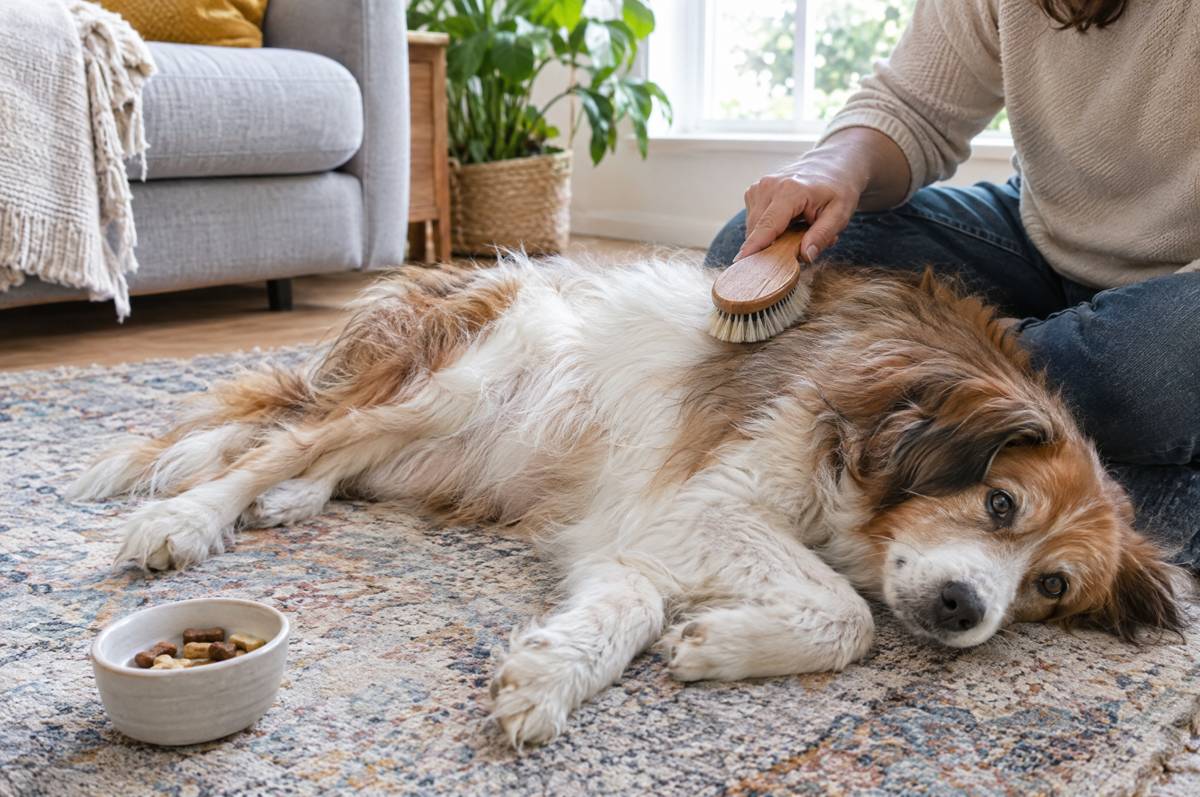
You pick up the brush, and your dog leaves the room. Or the dog stays, but twists, mouths the brush, or growls when you reach the legs. Brushing should be a quiet, pleasant time. For many dogs it has become a fight.
The good news: this is learned, so it can change. Pat Miller, writing in the Whole Dog Journal, describes her dog Bonnie. Bonnie went from putting up with brushing to relaxing fully during grooming, after training with a simple “yes” signal.
This guide gives general information. It does not replace your vet.
Check for pain first
The Edmonton Humane Society says that if your dog enjoyed touch before and now suddenly does not, you should see a vet. A health issue that causes pain can cause sudden touch sensitivity.
Look for these signs while you groom. The ASPCA lists them as reasons to call a vet:
- Redness, bumps, rashes or scabs.
- Open sores, bald spots or a thinning coat.
- Dull, dry hair that pulls out easily.
- A lot of scratching, foot licking or face rubbing.
- Small black specks in the coat (flea dirt).
- Red, moist, sore patches (hot spots).
Also watch where your dog reacts. A dog that only hates brushing on the hips or the back may have joint or back pain. Read our guide on how to tell if your dog is in pain.
Why dogs learn to hate the brush
- A pulled hair or a mat. Mats pull on the skin. Brushing through them hurts. The Cornell Riney Canine Health Center says brushing helps prevent painful matting, so the problem can feed itself: no brushing, more mats, more pain.
- The wrong brush. A hard brush on thin skin, or a metal pin brush on a short coat, can scratch.
- Sessions that are too long. Thirty minutes of brushing is too much for a dog that is unsure.
- Being held still. The Edmonton Humane Society says forcing a dog to accept touch can lead to snapping or biting, and can increase the fear of that area.
- Sensitive places. Legs, paws, tail, belly and the face are more sensitive than the back.
Signs your dog is not happy
The Cornell Riney Canine Health Center lists the stress signs: lip licking, yawning when not tired, freezing, pulling away, and showing the whites of the eyes. A growl or a snap comes after these.
Do not punish a growl. The Edmonton Humane Society says punishing warning signs may teach your dog to stop warning you. That makes a bite more likely.
The plan: make the brush mean good things
The American Veterinary Society of Animal Behavior says reward-based methods should be used for all dog training. Here is a reward-based plan in small steps.
Step 1: the brush appears, treats appear
Show the brush. Give a treat. Put the brush away. Repeat a few times, a few times a day. Do not brush yet.
Step 2: the back of the brush
Touch your dog’s shoulder with the back of the brush for one second. Treat. Then two seconds.
Step 3: a few strokes where your dog likes touch
Most dogs like touch on the back and the shoulders. Give three slow, light strokes there. Treat. Stop. The Cornell Riney Canine Health Center says to keep sessions short and predictable and to end on a positive note.
Step 4: more strokes, the same easy places
Build to ten strokes, then a minute. Use small, frequent treats. A lick mat with a spread can help some dogs stay still.
Step 5: one sensitive area at a time
Add one new area: the chest, then the sides, then the legs. Go back to fewer strokes each time you add a new area. Keep the tail, the belly and the paws for last.
Step 6: let your dog say stop
Pat Miller describes the bucket game in the Whole Dog Journal. Your dog looks at a bowl of treats while you brush. If your dog looks away, you stop. Miller says that once dogs learn their signal to stop will be respected, they tend to cooperate.
Move up, stay or go back
- Relaxed: stay at this step, or try the next one.
- Small stress signs: go back one step.
- A growl or a snap: stop calmly. Start two steps back next time.
The Cornell Riney Canine Health Center says stopping early while things go well is a success.
How often to brush
The ASPCA gives these guides:
- Smooth, short coat: about once a week.
- Short, dense coat that can mat: about once a week, with a slicker brush for tangles. Do not forget the tail.
- Long, silky coat: daily.
- Long coat that mats often: a daily routine to remove tangles before they become mats.
When you are still training, short daily sessions are better than one long weekly session.
Mats: when to stop and call a groomer
Small tangles can come out with your fingers and a comb, a little at a time. Tight mats pull on the skin and hurt. The ASPCA says dense mats may need clipping, taking care not to come near the skin. Scissors near the skin can cut it. A groomer or your vet can remove mats safely.
The Cornell Riney Canine Health Center suggests a Fear Free certified groomer where one is near you.
When to get help
The Cornell Riney Canine Health Center says that if grooming has become stressful, you should reach out to your vet, a veterinary behaviourist, or a qualified trainer who uses humane methods. Get help sooner if your dog has bitten.
Keep a record
Write the date, the area you brushed, the number of strokes and how your dog felt. A short record shows progress that is easy to miss.
Our program Yes, Paws has a coat brushing module with an 8-step ladder and a photo for each step, an “if my dog…” page and a log. The same method covers nails, teeth, ears, baths, the harness and vet visits.
Related guides
Questions
Why does my dog hate being brushed?
Usually because brushing has hurt or felt like too much. A pulled mat, a hard brush, or a long session teaches a dog to avoid the brush. The Edmonton Humane Society says unpleasant handling can teach a dog to expect discomfort when that area is touched.
My dog suddenly hates being brushed. Why?
A sudden change needs a vet visit. The Edmonton Humane Society says a dog that enjoyed touch and now suddenly does not may have a health issue causing pain, such as an illness or an injury.
How often should I brush my dog?
It depends on the coat. The ASPCA says smooth, short coats need brushing about once a week. Long, silky coats need daily attention. Coats that mat often need a daily routine to remove tangles before they become mats.
Should I brush out mats myself?
Small tangles, yes, gently. Large or tight mats pull the skin and hurt. The ASPCA says dense mats may need clipping, taking care not to come near the skin. A groomer or your vet can remove them safely.
My dog bites the brush. What should I do?
Stop and do not punish the bite. The Edmonton Humane Society says punishing warning signs can teach a dog to stop warning, which raises the bite risk. Go back to short touch sessions with treats, and get help from a reward-based trainer if your dog bites.
Why is brushing important?
The Cornell Riney Canine Health Center says brushing helps prevent painful matting, reduces shedding and supports healthy skin by spreading the natural oils. It matters most for double-coated dogs.
Sources
- Cornell Richard P. Riney Canine Health Center (Dr Aly Cohen): Grooming - Cooperative Care, February 2026
- Edmonton Humane Society: Dog Behaviour Guide, Touch Sensitivity
- ASPCA: Dog Grooming Tips
- Pat Miller, Whole Dog Journal: Cooperative Care for Dogs, January 2021
- American Veterinary Society of Animal Behavior (AVSAB): Humane Dog Training Position Statement, 2021
This article helps you organise care. It does not replace advice from your vet.