Why is my dog licking his paws? Causes, when to see a vet, and what to record
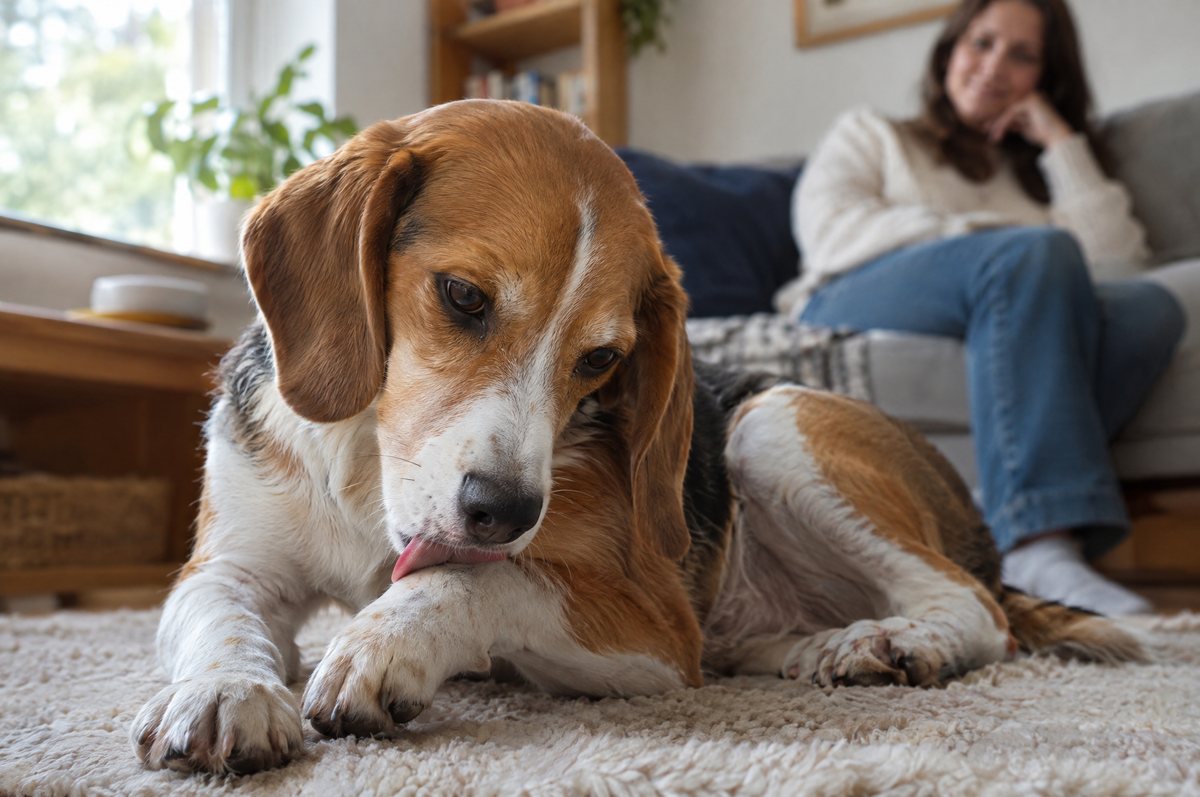
Your dog lies on the rug and licks one paw, then the other. You hear it again at night. In the morning the fur between the toes looks rusty brown. Paw licking has many causes. The paw itself, and a simple record, help your vet find which one it is.
When to see a vet now
Call your vet the same day if you see any of these:
- Your dog limps or will not put weight on the paw.
- The paw is swollen, hot, bleeding or has an open sore.
- There is pus or a bad smell from the paw or between the toes.
- You see a lump, or a nail that is broken or bent.
- Your dog licked something on a walk, such as de-icing salt or antifreeze, and now seems unwell.
The American Veterinary Medical Association (AVMA) warns about chemicals on paths. De-icers and antifreeze can poison a dog that licks them off its feet. If you think your dog swallowed a chemical, call your vet or an animal poison line now.
Why dogs lick their paws: the main causes
VCA Animal Hospitals uses the word pododermatitis for inflammation of the paws. It lists these groups of causes:
| Cause | Examples from VCA | Clue you may see at home |
|---|---|---|
| Allergy | Environmental allergy (atopy), seasonal allergy, food allergy, contact allergy | Itch all the time, tops of the paws, reddish-brown fur |
| Infection | Bacteria, yeast, fungus, parasites | Red, swollen paws, bumps, pus, hair loss, constant licking |
| Irritants and injury | A splinter or other foreign body, trauma, long runs on hard ground | Often one paw, sudden start |
| Immune disease | Pemphigus foliaceus, lupus | Crusts and sores, often all four feet, pads and nail beds |
| Hormone disease | Low thyroid, Cushing’s disease | Skin infections that keep coming back |
| Tumours | Several types | Usually one foot, a lump or a sore |
Allergy is a common reason. Guidelines on canine atopic dermatitis (Hensel and others, 2015) list the paws among the usual itchy areas. The others are the face, the ears, the belly, the armpits and the groin. So a dog that licks its paws and also scratches its ears or rubs its face may have an allergy.
What the paw tells you
Look at the paw in good light. Gently spread the toes. The place and the pattern are useful clues, VCA says:
- Tops of the paws, all four feet, reddish-brown fur. This suggests allergy. The brown colour comes from saliva or yeast.
- Undersides of the paws. This suggests contact with something the dog walks on, such as a cleaning product or a plant.
- One foot only. Think of a splinter, a grass seed, a cut, a broken nail or a lump.
- Crusts and sores on pads and nail beds of all four feet. This needs a vet soon, to look for immune disease.
Do not squeeze lumps or dig for a splinter yourself. You can push it deeper or get bitten.
Pain, stress and boredom
Not all licking comes from the skin. Some dogs lick over a sore joint. Some lick when they are anxious or bored.
VCA describes the lick granuloma (acral lick dermatitis). The dog licks one spot, often the front of the wrist, again and again. A sore forms, becomes infected, and the dog licks more. VCA says the cause is both physical and psychological. Physical causes include allergy, infection and joint pain. Psychological causes include fear, anxiety and compulsive behaviour. It is most common in medium and large breeds, but any dog can get it.
If your dog licks mostly when you leave, when it is alone, or on quiet days with little exercise, write that down. Your vet needs to know it.
What your vet may check
VCA lists the usual steps. The vet asks about the dog’s home, walks, diet, travel and other illnesses. The vet asks if the licking is seasonal or all year. The vet looks for sores in other places on the body.
Tests may include:
- Skin cytology, to look for bacteria and yeast.
- Skin scrapings and hair plucks, to look for mites such as Demodex.
- Cultures and biopsies, when the first treatment does not work.
- Blood and urine tests, to look for hormone disease.
- X-rays, for a joint or a foreign body.
- A strict food trial, if the vet suspects food allergy.
Only your vet can choose the treatment. VCA notes that allergic and immune causes are managed, not cured. The goal is fewer flares.
What to write down before the visit
The visit is short. A written record shows the pattern that you see at home. Write down:
- Which paws. Front, back, one or all.
- When. Time of day, after walks, at night, when alone.
- How much. A score from 0 (none) to 10 (non-stop).
- Other itch. Ears, face, belly, armpits, bottom.
- The paw. Red, swollen, brown fur, a smell, a limp.
- Food and treats. Everything your dog ate this week.
- Flea treatment. The product and the date.
- Walks. Grass, salt on paths, new places.
- Changes at home. New cleaners, rugs, people or routines.
Take a short phone video of the licking. It shows the vet what happens at home.
Simple things you can do today
These do not replace a vet visit. They help you keep the paws clean and notice changes:
- After winter walks, wipe or wash your dog’s feet, legs and belly, as the AVMA advises. This removes de-icers and chemicals before your dog licks them.
- Check the pads for cracks or bleeding in cold weather, the AVMA says.
- Keep nails short and the hair between the pads tidy, so you can see the skin.
- Keep up the flea control your vet recommends.
- Give more walks and play if licking happens when your dog is bored.
- Do not put creams or home remedies on the paw without asking your vet. Your dog may lick them off.
Keep a daily itch record
Allergy itch comes and goes with seasons, foods and walks. A day-by-day record shows the pattern far better than memory.
The Dog Allergy and Itch Diary has a weekly body check where you mark the paws, ears and other itchy areas. It has a 0 to 10 itch calendar with tick rows for food slips, baths, flea products and walks on grass. It also has a seasons and places page and a summary for the vet. It records only. Your vet chooses any food trial or medicine.
If your dog also scratches its ears or chews its belly, read what to record when your dog itches all the time. Before the appointment, our free vet visit summary puts your dog’s food, medicines and notes on one page.
Questions
Is it normal for a dog to lick its paws?
A short lick to clean the paws after a walk or a meal is normal. Licking that goes on for minutes, happens every day, wakes you at night, or stains the fur is not normal. Write down when it happens and tell your vet.
Why does my dog lick his paws at night?
Itch often seems worse when a dog is quiet and has nothing else to do. Allergy is a common cause of itchy paws. Pain from sore joints can also show when a dog lies down. Note the time, the paw and how long it lasts, then tell your vet.
Why does my dog lick only one paw?
One paw points to a local cause. VCA lists irritants such as a splinter or other foreign body, and says tumours usually affect only one foot. Look between the toes and at the pad and nails. If you find a cut, a lump or swelling, or your dog limps, see your vet.
What does reddish-brown fur between the toes mean?
VCA says allergic dogs usually have reddish-brown staining of the fur on the paws. It comes from saliva pigments or from yeast overgrowth. It shows that the licking has gone on for some time. Your vet can test the skin for yeast and bacteria.
Can I stop my dog licking with a cone or a sock?
Ask your vet first. VCA says vets may use an e-collar, a bandage or a shirt in the early stages of a lick sore, while the treatment starts to work. A cover alone does not treat the cause, and a tight sock can hurt the paw.
Sources
- VCA Animal Hospitals: Pododermatitis in dogs (Hunter T, Ward E; updated January 2023)
- VCA Animal Hospitals: Lick granuloma in dogs (Weir M, Hunter T, Ward E; updated July 2022)
- Hensel P, Santoro D, Favrot C, Hill P, Griffin C. Canine atopic dermatitis: detailed guidelines for diagnosis and allergen identification. BMC Vet Res 2015;11:196
- AVMA: Cold weather animal safety
This article helps you organise care. It does not replace advice from your vet.