Dog itching all the time? What to record for your vet, and why food trials take 8 weeks
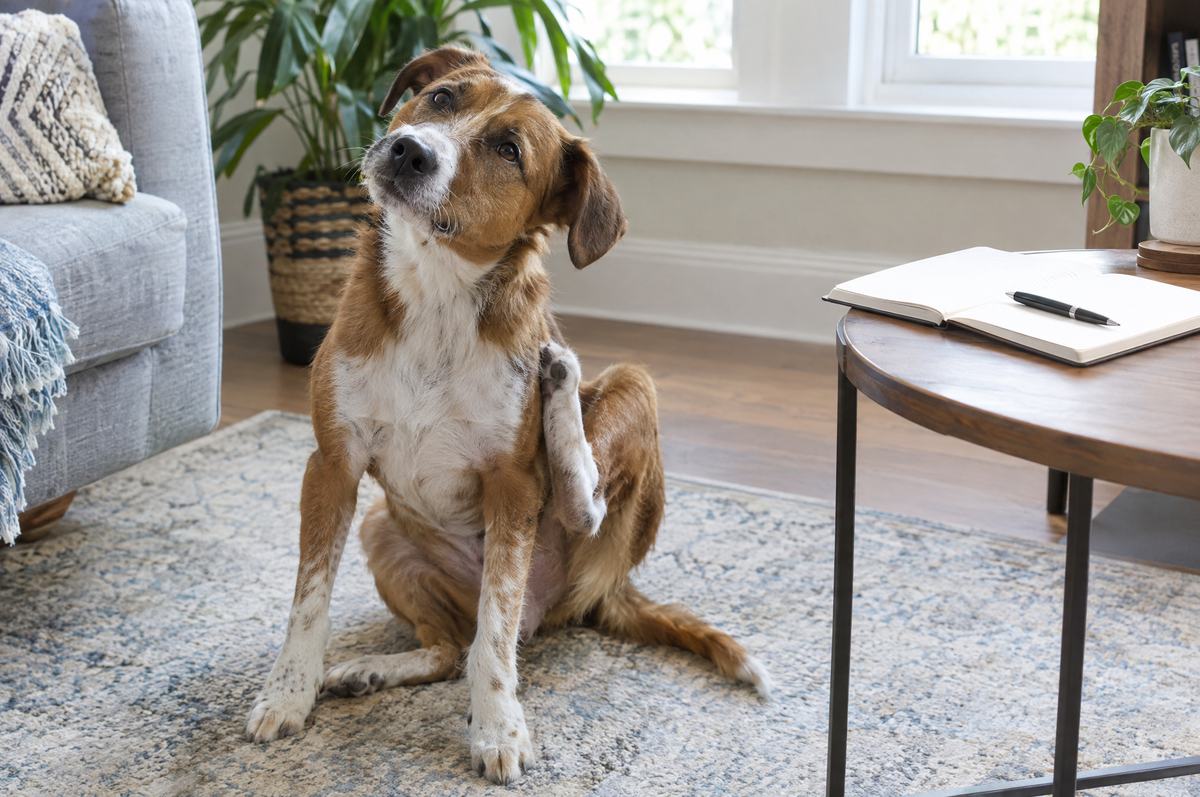
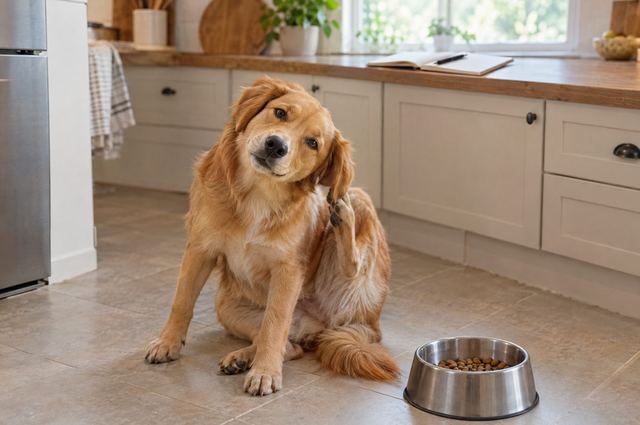
Your dog licks its paws at night. It scratches its ears, rubs its face on the carpet and chews its belly. You change the food, and it seems better for a week. Then it starts again.
Itch in dogs has many causes. Fleas, food and things in the environment, such as pollen and dust mites, can all look the same. A vet finds the cause in steps. A daily record makes each step faster and clearer.
Why the pattern matters
The vet sees your dog for a few minutes. You see your dog every day. The vet needs answers to questions like these:
- Where on the body is the itch?
- Is it there all year, or only in some seasons?
- Did it change after a new food, a new treat or a flea product?
- Does your dog also have loose stools, or ear problems?
Memory is not reliable after a few weeks. A written record is.
Where allergic dogs itch
Veterinary guidelines for canine atopic dermatitis list the areas most often affected:
- The face, and the inner side of the ear flaps
- The belly, the armpits and the groin
- The area around the bottom
- The lower legs and the paws
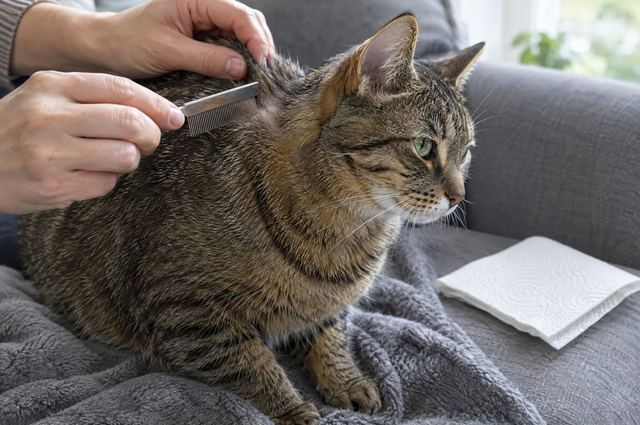
Flea allergy has its own pattern. The itch is often at the lower back, the tail base and the back of the thighs. The same guidelines say to check every itchy dog for fleas with a flea comb. If you find no fleas, they still advise good flea control. Ask your vet which product to use.
What to write down each day
Keep it short, so you do it every day:
- An itch score. Use the same scale each day, for example 0 for no itch to 10 for constant itch.
- Where. Mark the body areas: paws, ears, face, belly, armpits, bottom.
- Everything your dog ate. Include treats, chews, table food, flavoured medicines and toothpaste.
- Flea treatment. Write the date and the product name for each pet in the home.
- Other signs. Ear problems, red skin, loose stools or vomiting.
Take photos of red skin and bald areas. Date each photo.
Why a food trial takes at least 8 weeks
If your vet thinks food may be part of the problem, they may start an elimination diet. Your dog eats only one prescribed food for a set time. Then the vet checks if the itch is better.
A 2015 review of the research found that about half of dogs with food allergy were much better after 3 weeks. More than 95% were better by 8 weeks. The authors say a trial should last at least 8 weeks to find more than 90% of affected dogs and cats.
After the trial, the vet may ask you to give the old food again. This is the food challenge. A 2020 review found that by day 14, more than 90% of dogs with food allergy had a flare. So keep recording the itch score during the challenge.
Keep the trial strict
One treat can spoil weeks of work. The Tufts Petfoodology team lists the common mistakes:
- Treats, rawhides and dental chews
- Toothpaste and flavoured medicines
- Table food and food from children or visitors
- Supplements
They also tell owners to keep a journal during the trial. Write down the symptoms, and write down each mistake. A mistake you record is a mistake your vet can work with.
Blood and saliva tests
Many owners ask for a food allergy test. A 2017 review found that blood tests for food allergy in dogs are not reliable. Tufts calls blood and saliva tests highly inaccurate. The best method is still the elimination diet with a food challenge.
The canine atopic dermatitis guidelines add one more point. Allergy tests for pollen and mites are used only after the vet makes a clinical diagnosis. They help choose allergens for treatment. They do not make the diagnosis.
Take the record to your vet
Bring the diary, the photos and a list of foods your dog has eaten in the past. Our free vet summary tool makes a one-page summary of each pet for the visit.
The Dog Allergy and Itch Diary holds the full record. It has a daily itch score, a body map, a food history, a strict food trial log, flea and medicine records, and a summary page for your vet. It does not diagnose. It helps your vet see the pattern.
If your dog licks mostly its paws, read why dogs lick their paws and what the paw tells you.
Not sure the food is the cause? Read the skin, ear and stomach signs of food allergy in dogs.
Questions
Can a blood or saliva test show my dog's food allergy?
Not reliably. A 2017 review found that blood tests for food allergy in dogs have low repeatability and very variable accuracy. The review says the best method is still an elimination diet, then a food challenge.
How long does an elimination diet take for a dog?
A 2015 review says the trial should last at least 8 weeks to find more than 90% of dogs and cats with food allergy. Some dogs improve sooner. Your vet decides when to stop and test.
Can I use a limited ingredient food from the pet shop?
Ask your vet first. The Tufts Petfoodology team says that many shop diets with limited ingredients contain traces of other foods. Vets usually prescribe a veterinary diet for the trial.
Where do allergic dogs itch most?
Guidelines for canine atopic dermatitis list the face, the inner ear flaps, the belly, the armpits, the groin, the area around the bottom and the lower legs and paws. Flea allergy itch is often at the lower back, the tail base and the back of the thighs.
Sources
- Hensel P, Santoro D, Favrot C, Hill P, Griffin C. Canine atopic dermatitis: detailed guidelines for diagnosis and allergen identification. BMC Vet Res 2015;11:196
- Olivry T, Mueller RS, Prélaud P. Critically appraised topic on adverse food reactions of companion animals (1): duration of elimination diets. BMC Vet Res 2015;11:225
- Olivry T, Mueller RS. Critically appraised topic on adverse food reactions of companion animals (9): time to flare of cutaneous signs after a dietary challenge. BMC Vet Res 2020;16:158
- Mueller RS, Olivry T. Critically appraised topic on adverse food reactions of companion animals (4): can we diagnose adverse food reactions with in vivo or in vitro tests? BMC Vet Res 2017;13:275
- Tufts Petfoodology: Eliminating mistakes in elimination diet trials (2022)
This article helps you organise care. It does not replace advice from your vet.