Dog food allergy symptoms: the skin, ear and stomach signs, and what to do
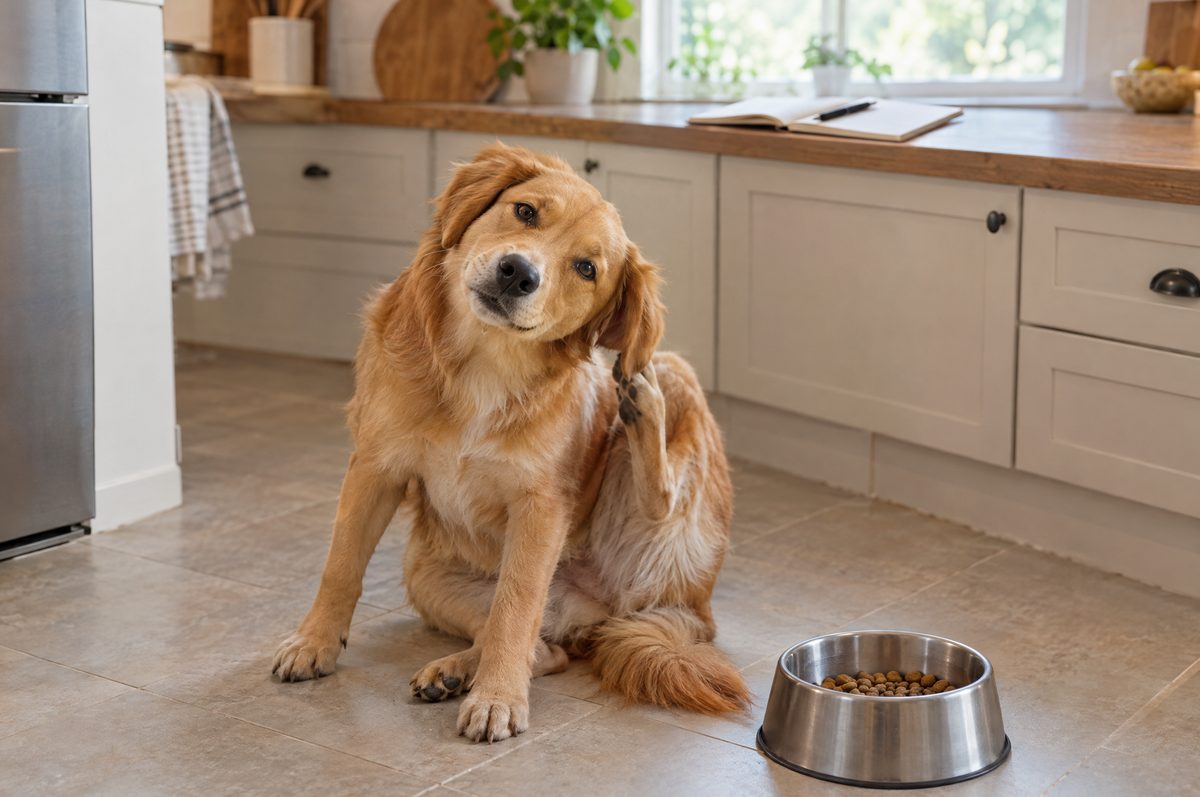
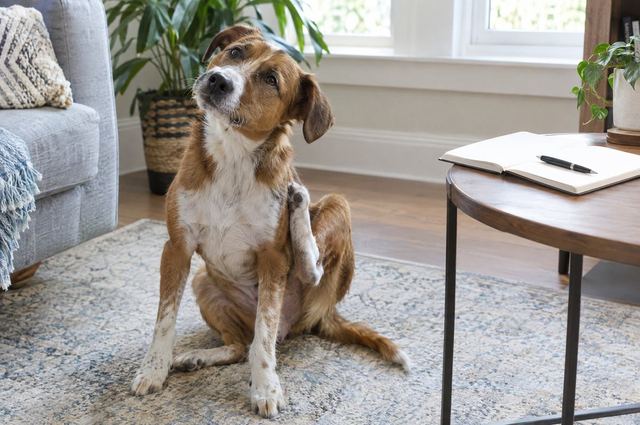
Your dog scratches its ears, licks its feet and has soft stools again. You wonder if the food is the cause. It can be. But food allergy looks like other allergies, and no quick test can prove it. Here are the signs that vets look for, and the record that helps your vet decide.
When to see a vet now
Most food allergy signs build slowly. Some signs need a vet the same day:
- Swelling of the face, hives or trouble breathing after a meal. A 2018 review lists anaphylaxis, a severe allergic reaction, as a rare sign of food allergy in dogs.
- Vomiting or diarrhoea that does not stop, or blood in the stool.
- Your dog will not eat, or is weak and quiet.
- Red, hot, wet or smelly skin, or an ear that is painful to touch.
For itch that goes on for weeks, book a normal visit. Bring a record (see below).
The skin signs: itch first
A 2019 review collected data on 825 dogs with skin signs of food allergy. It found these facts:
- Itch was the main sign in almost all reports. In most studies, over 90% of the dogs were itchy.
- The itch was often generalised, all over the body.
- The ears, feet and belly were common itch sites.
- The area around the bottom was itchy in only 4 to 25% of dogs. That is less than many people think.
Itch that does not follow the seasons is a clue. An environmental allergy, such as to pollen, is often worse at some times of the year. A food allergy is there every time the dog eats that food. Write down the months when the itch is worse.
Repeat skin and ear infections
The same review found that food allergy in dogs often shows as other problems:
- Skin infections that come back again and again, in up to 70% of dogs in some studies.
- Ear infections (otitis externa), in up to 69% of dogs in some studies.
- Atopic dermatitis, the common allergic skin disease.
- Hot spots, in a small number of dogs.
So a dog with ear infections that keep coming back may need a food trial. Ask your vet.
The stomach and gut signs
A 2018 review looked at the signs of food allergy outside the skin. In dogs, these signs got better on a diet trial most often:
- Diarrhoea.
- More frequent bowel movements.
Of 395 dogs with gut signs listed one by one, 93% had diarrhoea. Only 2% had vomiting alone, and 5% had both. Less common signs were sore eyes (conjunctivitis), sneezing and anaphylaxis.
Some dogs have skin and gut signs together. In studies by skin specialists, 27% of the food-allergic dogs had both. The review says a diet trial should come early for a dog with long-term vomiting and diarrhoea.
VCA also lists subtler changes, such as weight loss, low energy and hyperactivity.
Age: often young, but not always
In the 2019 review, the age at the start of signs ranged from under 1 year to 13 years. The mean was 2.9 years. Signs started by 6 months of age in 22% of dogs, and by 1 year in 38%.
So itch that starts in a young dog is a clue, but an older dog can develop a food allergy too. VCA explains why. The immune system must make antibodies first, so the allergy usually shows after long exposure to one food.
Which foods are most often the cause
A 2016 review counted the foods that caused a flare when vets fed them again. In 297 dogs, these were the most common:
| Food | Dogs that reacted |
|---|---|
| Beef | 34% |
| Dairy products | 17% |
| Chicken | 15% |
| Wheat | 13% |
| Soy | 6% |
| Lamb | 5% |
| Corn | 4% |
| Egg | 4% |
The authors say these foods may reflect what dogs ate most in past decades. Your dog reacts to what it has eaten, so your vet needs a full list of every food, treat and chew.
How vets confirm a food allergy
No blood, saliva or hair test replaces the diet trial. VCA describes the steps:
- Your vet chooses a special diet. It must not contain anything your dog has eaten before.
- Your dog eats only that diet for 8 to 12 weeks. No treats, table food, flavoured chews or flavoured medicines.
- If the signs go away, your dog eats the old food again. This is the food challenge.
- If the signs come back within a week, the diagnosis is confirmed.
Why so long? A 2015 review found that about half of dogs improved within 3 weeks on the new diet. Over 95% were in remission by 8 weeks. A shorter trial can miss the allergy. For the full trial rules, read why food trials take 8 weeks.
VCA also says many food-allergic dogs have other allergies too, such as an environmental allergy or a flea allergy. So keep up flea control during the trial, as your vet advises.
What to write down before the visit
Your vet must separate food allergy from fleas, environmental allergy and infections. A record makes that faster. Write down:
- Where your dog itches, and how bad it is each day, on a 0 to 10 scale.
- Every food, treat, chew and flavoured medicine, with the brand.
- The stools: how many each day, and whether they are soft.
- Ear trouble: head shaking, scratching, smell or discharge.
- Flea treatment: the product and the date.
- The months when the itch is worse.
Our free vet visit summary puts your dog’s food, medicines and notes on one page for the appointment.
Keep the full record in one place
The Dog Allergy and Itch Diary holds this record for one dog. It has a daily itch score with tick rows for food slips, stomach signs and ears, a weekly body check, an “everything my dog eats” list, a strict food trial log with a weekly check for 12 weeks, and a food challenge log. It records only. Your vet chooses the diet and any medicine. If paw licking is the main sign, read why dogs lick their paws.
Questions
What are the first signs of a food allergy in a dog?
Itch is the most common first sign. A 2019 review of 825 dogs with skin signs of food allergy found that most were itchy, often all over the body. The ears, feet and belly were also common itch sites.
Can a food allergy cause diarrhoea in dogs?
Yes. In a 2018 review, diarrhoea and more frequent bowel movements were the gut signs that most often got better on a diet trial in dogs. Vomiting was much less common in dogs than diarrhoea.
Can a dog suddenly become allergic to food it has eaten for years?
Yes. VCA says food allergies usually show after long exposure to one brand, type or form of food. The allergy needs the immune system to make antibodies first, so a food your dog has eaten for years can still be the cause.
What is the most common food allergy in dogs?
Beef. A 2016 review of 297 dogs found beef in 34% of the dogs, then dairy (17%), chicken (15%) and wheat (13%). These are often the foods that dogs have eaten most.
Can a blood or saliva test diagnose a food allergy?
No test replaces the diet trial. VCA says the best and most accurate method is an elimination diet trial of 8 to 12 weeks. Then the old food goes back, and signs that return within a week confirm the allergy.
Sources
- Olivry T, Mueller RS. Critically appraised topic on adverse food reactions of companion animals (7): signalment and cutaneous manifestations of dogs and cats with adverse food reactions. BMC Vet Res 2019;15:140
- Mueller RS, Olivry T. Critically appraised topic on adverse food reactions of companion animals (6): prevalence of noncutaneous manifestations of adverse food reactions in dogs and cats. BMC Vet Res 2018;14:341
- Mueller RS, Olivry T, Prélaud P. Critically appraised topic on adverse food reactions of companion animals (2): common food allergen sources in dogs and cats. BMC Vet Res 2016;12:9
- Olivry T, Mueller RS, Prélaud P. Critically appraised topic on adverse food reactions of companion animals (1): duration of elimination diets. BMC Vet Res 2015;11:225
- VCA Animal Hospitals: Food allergies in dogs (Llera R, Barnette C, Ward E; updated January 2022)
This article helps you organise care. It does not replace advice from your vet.