Older cat not jumping anymore: what it can mean and how to help
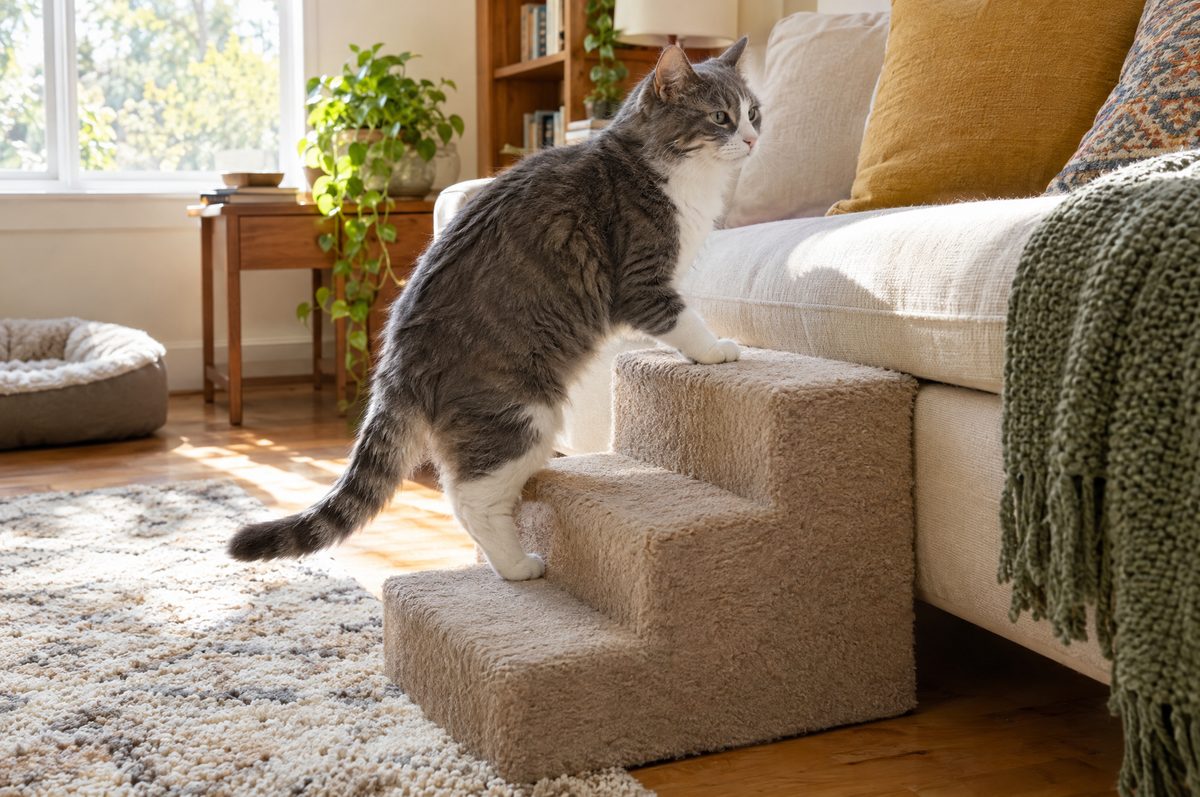
Your cat used to leap onto the kitchen counter, the bed and the top of the bookcase. Now your cat looks up at the bed, thinks, and lies down on the floor instead. Or climbs up in two stages, using a chair.
Many owners put it down to age. But the most common reason is pain, and pain can be treated. This guide explains what to look for, what to log, how to change your home, and what to ask your vet.
This page gives general information. It is not veterinary advice.
See a vet soon if
- The change is sudden.
- Your cat cries out when picked up or touched.
- Your cat will not put weight on a leg.
- Your cat drags the back legs or walks on the hocks.
- Your cat stops eating, or drinks much more.
- Your cat stops using the litter tray.
A sudden weakness in the back legs can be an emergency in cats. Call your vet at once.
Why cats stop jumping
Arthritis. The FDA says vets now look for osteoarthritis more often, especially in older cats. In one small study of 13 cats, half of the cats’ joints had arthritis. In another study of 28 cats with arthritis, almost three-quarters did not want to jump.
The FDA also says cats are small and agile, so they can cope with joint problems for a long time. And they hide pain very well. That is why arthritis is often missed.
Cornell’s older cat guide says cats become more prone to arthritis as they age. Cornell’s page on cognitive dysfunction says arthritis pain can get worse over the years and slow a formerly athletic cat down.
Other causes your vet will think about:
- Weight gain, which makes jumping harder and loads the joints.
- Muscle loss with age or illness.
- Weakness from kidney disease or diabetes.
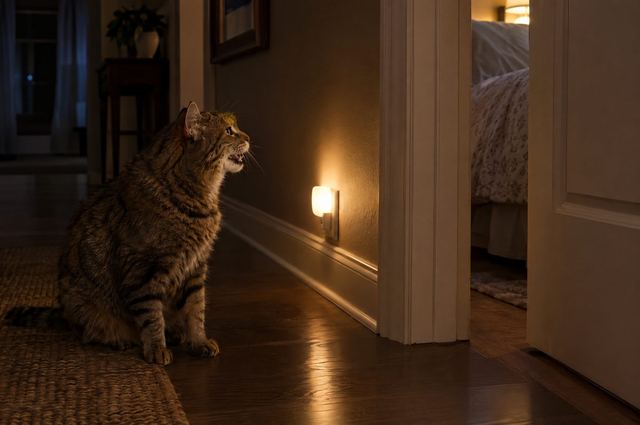
- Poor sight. Cornell suggests night lights for older cats with poor vision.
- Long or ingrown claws, which make landing sore.
Other signs of pain in cats
The FDA lists these signs of arthritis:
- Not jumping as easily as before.
- Urinating or passing stool outside the litter tray.
- Grooming less.
Also watch for:
- Sleeping more, or in lower places.
- Stiffness after rest.
- Matted or greasy fur on the back, where your cat can no longer reach.
- Less play.
- Being cross when touched or brushed.
- Hiding.
What to log for your vet
Cats often act normal at the clinic. Your notes from home help the vet. For two weeks, write down:
- Jump height. Which places does your cat still reach? Floor to sofa, sofa to bed, floor to counter?
- How. One leap, or in stages?
- The tray. Any misses? Does your cat hesitate to step in?
- Grooming. Any matted areas?
- Stairs. Up and down, normal or slow?
- Eating, drinking and weight, if you can weigh your cat.
Film your cat walking and jumping. A 20-second video tells the vet a lot.
Home changes that help
The FDA suggests:
- Litter trays with lower sides, so it is easy to step in and out.
- Raised food and water bowls.
- Ramps or steps to favourite high places.
- Soft bedding.
- Weight control and gentle exercise.
Cornell adds:
- A litter tray on every floor, so your cat does not need the stairs.
- Night lights for cats with poor sight.
More ideas:
- Put a sturdy chair or box next to the bed or window sill, as a halfway step.
- Put rugs or runners on slippery floors, so your cat can push off and land safely.
- Move the favourite bed to a lower, warm spot.
- Brush the areas your cat can no longer reach.
- Trim claws often, or ask your vet team to.
What to ask your vet
- Could this be arthritis? Which joints?
- Are X-rays needed?
- What pain treatment is safe for my cat? The FDA says one treatment, a monthly injection, is approved for arthritis pain in cats.
- Are kidney tests needed before treatment?
- What weight should my cat be?
- How often should we recheck?
Never give human pain medicine
The FDA says acetaminophen is fatal to cats, and that cats should never be given it. It says cats are especially sensitive to the side effects of anti-inflammatory drugs, and most such drugs approved for long-term use in dogs are not approved for long-term use in cats. Only give what your vet prescribes for your cat.
Check-ups for older cats
A vet in Cornell’s older cat guide says six-month check-ups are great for geriatric cats, and that healthy older cats should have at least a yearly exam. Read our guide to when a cat is a senior. If your cat drinks more or loses weight, read the signs of kidney disease in cats. For older dogs with similar problems, see old dog slipping on floors and how to tell if your dog is in pain.
Keep the record
Our free vet summary tool turns your two-week log into one page. The Medical and Dosing Tracker records each dose of a pain medicine as the label says, and keeps vet visits and results over time, so you can see whether treatment is working.
For the full list of pain signs and a face-scoring tool, read signs of pain in cats.
Questions
Is it arthritis?
It often is. The FDA says vets now look for osteoarthritis more often in older cats, and that cats with it may not jump as easily. In one small study, half of the cats' joints had arthritis. Only a vet exam can confirm it.
Can I give my cat pain medicine?
Never give human medicine. The FDA says acetaminophen is fatal to cats, and that cats are especially sensitive to the side effects of anti-inflammatory drugs. Your vet can prescribe medicine made for cats, including an approved monthly injection for arthritis pain.
What home changes help most?
The FDA lists low-sided litter trays, raised food and water bowls, ramps or steps to high places, soft bedding and weight control. Cornell adds a litter tray on every floor. Start with the spots your cat used to jump to.
How often should a senior cat see a vet?
A vet in Cornell's older cat guide says six-month check-ups are great for geriatric cats, with at least a yearly exam for healthy older cats. Ask your vet what suits your cat.
Could it be something other than arthritis?
Yes. Weight gain, muscle loss, weakness from kidney disease, diabetes, or poor sight can all reduce jumping. That is why a vet check matters. Tell the vet about any change in eating, drinking or the litter tray.
Is it just old age?
Slowing down is common, but pain is not a normal part of ageing. Many cats move more and play again once their pain is treated. Ask your vet, rather than accept it as age.
Sources
- US Food and Drug Administration: Osteoarthritis in cats, more common than you think (18 February 2025)
- US Food and Drug Administration: Get the facts about pain relievers for pets (29 September 2022)
- Cornell Feline Health Center: Loving care for older cats
- Cornell Feline Health Center: Cognitive dysfunction (reviewed 2024)
This article helps you organise care. It does not replace advice from your vet.