My cat hates going to the vet: how to make vet visits easier
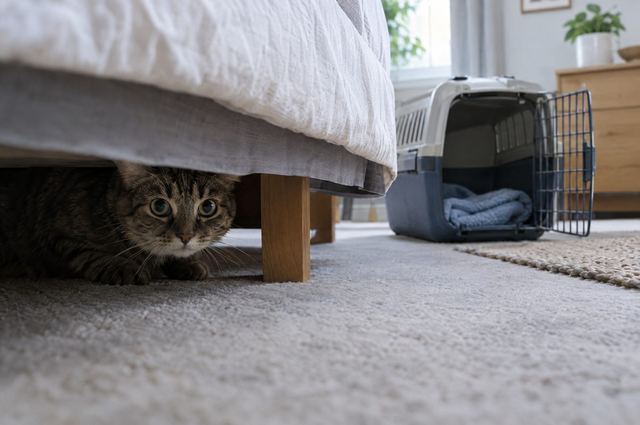
Your cat hides when the carrier appears. It cries the whole drive. At the clinic it hisses at everyone. Then it hides for a day at home. Many owners start to put off vet visits. This guide shows why it happens and how to make each part of the trip easier.
This guide is one step in our complete guide on how to take a cat to the vet, before, during and after.
This page gives general information. It is not medical advice. If your cat is ill or in pain, go to the vet now and train later.
You are not alone
In a 2014 study in the Journal of the American Veterinary Medical Association, 58% of cat owners said their cat hates going to the vet. For 38%, just thinking about the trip was stressful. The authors said most cats fear the carrier and the car, so many owners avoid the hassle. They also found 52% of US cats did not get regular vet care.
That is the real risk. A cat that misses checkups may have an illness that nobody sees in time. So the goal is not to skip the vet. It is to make the trip easier.
The trip has four parts
Most cats do not fear the vet as a person. They fear a chain of events:
- The carrier. It appears only on bad days.
- The car. Noise, movement, strange smells.
- The clinic. Dogs, new people, being held.
- Home again. Other cats may not recognise the smell.
Train each part on its own, on days with no vet visit.
Part 1: the carrier
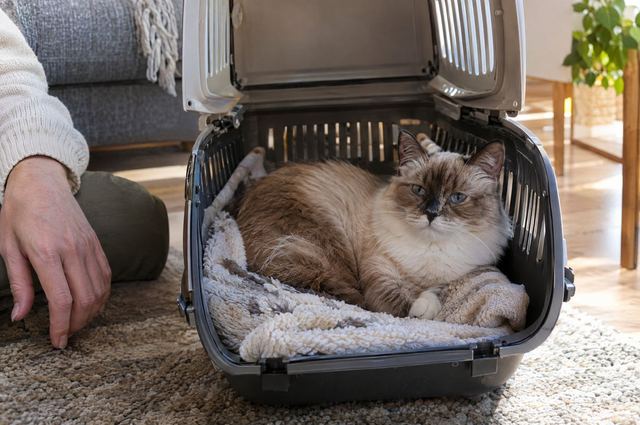
International Cat Care says the carrier should be “part of the furniture” at home. VCA advises putting it where your cat sleeps, with a soft blanket and treats inside, and never forcing your cat in. The Edmonton Humane Society guide breaks carrier training into 8 small steps, in sessions of up to 5 minutes.
Our guide to getting a cat into a carrier has all 8 steps.
Part 2: the car
VCA says cats should always travel in a carrier in the car. It advises at least 10 good car trips for every scary one. Start small:
- Sit in the parked car with your cat in the carrier, and give treats.
- Turn the engine on, then off. Treat.
- Drive to the end of the street and back. Treat.
Not every car trip should end at the vet. Short, boring trips teach your cat that the car is safe. Our guide on how to take a cat in the car has the full steps and the signs of car sickness.
Part 3: the exam
You can practise the vet’s touch at home. Keep each touch short, a few seconds, then give a treat:
- Cheeks and chin first. Most cats like these.
- Then the head, the ears, the lips.
- Then a paw, for a second.
- Then a gentle lift, with one hand under the chest and one under the hindquarters.
Stop if your cat walks away, freezes, turns its ears or flicks its tail. Go back a step.
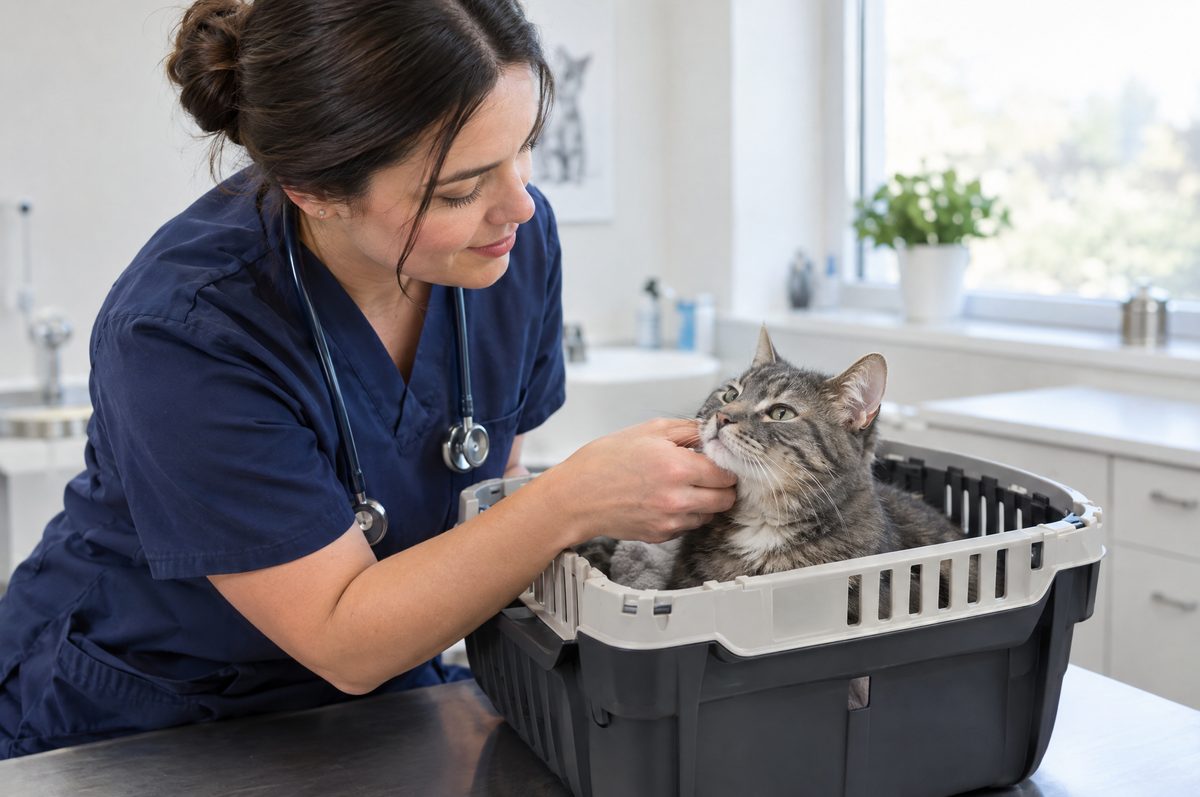
On the day, a carrier with a top that comes off helps. VCA says the vet can then examine your cat in the bottom half, which many cats find easier. iCatCare suggests bedding from home in the carrier.
Bring a handling card
A handling card is a short note for the vet team. Write:
- What your cat can do (for example, walks into the carrier, or takes treats).
- What your cat finds hard (for example, being lifted, or dogs).
- Your cat’s first stop signs.
- What helps (treats, a towel, going slowly).
Hand it over at the desk. It helps the team keep your cat calm. Our free vet visit summary helps you write down what you have seen before the visit.
Part 4: home again
In a home with more than one cat, the cat that went to the vet may smell strange to the others. The Edmonton Humane Society advises:
- Put your cat in a quiet room first.
- Let it leave the carrier by itself.
- Bring the cats back together slowly.
- Do not let them “sort it out” alone.
Then wash the carrier with unscented soap, and put it back in its usual place.
If your cat is very afraid
Talk to your vet team before the next visit. Ask what they can do to help. If your vet suggests a medicine, follow your vet’s advice exactly. VCA says medicines are not a substitute for training, so keep practising too.
A step-by-step program for every part
Vet Days Without the Fight, Cat Edition is a 51-page fillable PDF program. It covers the carrier, the car, the exam and medicine, with a picture for each step, logs, a 30-day plan and a handling card for your vet team.
It teaches with rewards only and never names a medicine or a dose. See every page of Vet Days Without the Fight. For pill days, read our guide on how to give a cat a pill.
After the visit, read cat hiding after the vet. If your vet suggests medicine, read gabapentin for cats before a vet visit.
A cat-friendly clinic helps. See how to find a good vet.
Questions
Why does my cat hate the vet?
For many cats it starts at home, with the carrier and the car. A 2014 study in JAVMA found 58% of cat owners said their cat hates going to the vet, and most cats fear being put in a carrier and driven. Training each part of the trip helps.
How can I make my cat less stressed at the vet?
Train the carrier at home so it is part of the furniture. Practise short car trips. Practise gentle touch at home. Use a carrier with a top that comes off, so the vet can examine your cat in the bottom half, as VCA suggests.
Should I skip the vet if my cat gets very stressed?
No. Stress is a reason to plan the visit, not to skip it. The 2014 study found 52% of US cats did not get regular vet care. Talk to your vet team about your cat's fear. They can help you plan.
Can my vet give my cat something to calm it?
Ask your vet. Only your vet can decide if a medicine is right for your cat. VCA says medicines are not a substitute for training, so keep training too.
Why does my other cat hiss at my cat after the vet?
Your cat may smell of the clinic. The Edmonton Humane Society advises a quiet room, letting your cat leave the carrier by itself, and bringing the cats back together slowly. Do not let them sort it out alone.
What is a cat handling card?
A short note for the vet team: what your cat can do, what it finds hard, its first stop signs and what helps. It tells the team how to keep your cat calm. You can write one yourself.
Sources
- Bayer Veterinary Care Usage Study: Feline Findings, Volk, Thomas and Colleran, JAVMA 2014 (press release)
- VCA Canada: Cat Behavior and Training, Crate Training and Travel, Lindell, Horwitz and Landsberg, 2023
- International Cat Care: Taking your cat to the vet
- Edmonton Humane Society: Cat Behaviour Guide, Cat Carrier Training, 2024
This article helps you organise care. It does not replace advice from your vet.