How to introduce a cat and a dog: the steps, in order, and how long it takes
A new cat is coming home to your dog. Or a new dog is coming home to your cat. The first meeting feels like the big moment. It is not. The days before it matter more.
Slow introductions give both pets time to learn that the other is not a threat. Fast ones can start a fear that lasts.
Before the new pet arrives
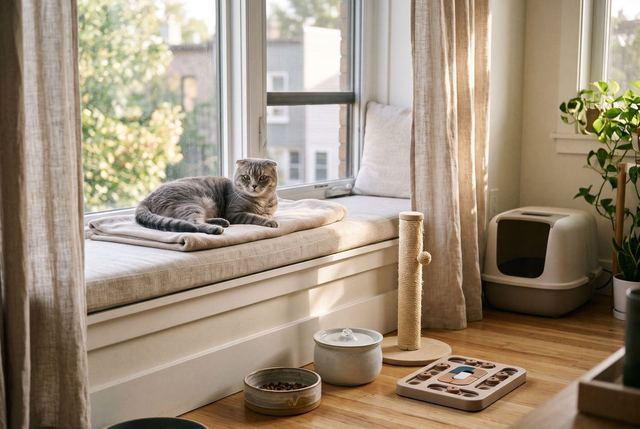
- Give the cat a dog-free area. A room with food, water, a litter tray, a bed, a hiding place and high places to climb.
- Move the cat’s things first. If the dog is new, move the cat’s food, water and tray before the dog arrives. Then the cat does not lose them on the same day.
- Put litter trays where the dog cannot reach them. Use quiet places, away from food and water. Cats Protection says to give one tray per cat, plus one extra.
- Plan separate feeding. Feed the cat and the dog apart.
- Check health care. Make sure that vaccines, worming and parasite control are up to date for both pets.
The steps, in order
RSPCA Australia gives the steps below. Do not move to the next step until both pets are calm.
- Keep them apart. Let the new pet settle in its own area. This can take several days to a couple of weeks.
- Swap scents. Give each pet a cloth or a bed that smells of the other. Do not put it near the cat’s food, water, tray or hiding place at first.
- Take turns. Shut the dog in a room, and let the cat explore the house. Then change places. Do this for several days, with no meeting.
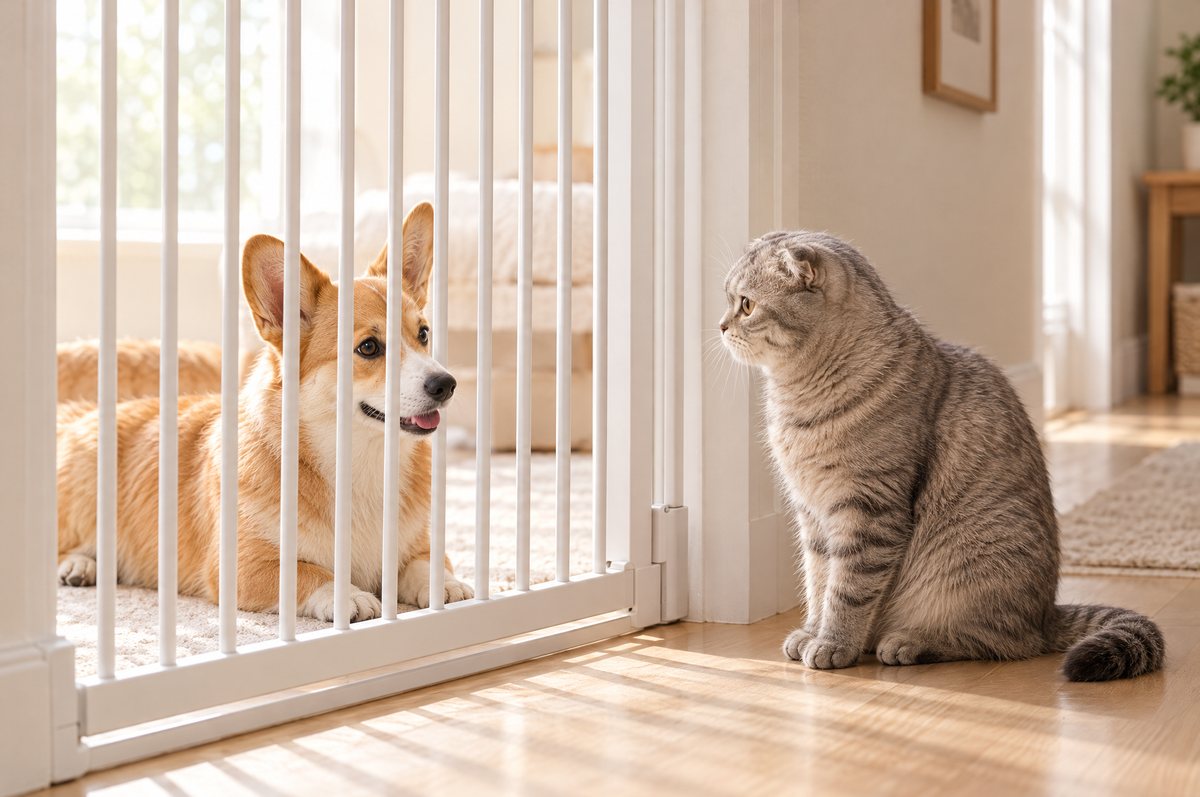
- See, but not touch. Let them see each other through a see-through barrier, such as a pet gate.
- Same room, dog on a lead. Meet in a calm room where the cat can climb to a high place. Keep the lead loose. Reward the dog for calm behaviour. Let the cat choose to come close, or not.
- Lead off, still watched. Only after weeks of calm meetings on a lead. Keep watching closely.
Keep each session short. For the dog-to-cat steps, RSPCA Australia says five minutes or less. Several short sessions a day are better than one long one. When you are not there to watch, keep the pets apart.
Signs to slow down
Some hissing and tail swishing is normal at first. It should settle within a few days. These signs mean you go back a step:
- Hissing that does not stop, ears back, growling or bared teeth
- A dog that strains at the lead, stares or tries to chase
- A cat that hides all day, or avoids rooms where the dog is
Cat stress can be quiet. A cat that only avoids the dog is not always fine.
If a fight starts
- Do not grab either pet with your hands.
- Block their view with a large cushion, a piece of cardboard or wood.
- Move the pet that attacked to a calm room.
- Let both pets calm down. This can take hours.
- Start again from an earlier step, more slowly.
Never punish either pet. Punishment makes the other pet feel like a danger. If the problems do not stop, ask your vet about a trained veterinary behaviourist.
Write it down
Short notes after each session show you the trend. Is each meeting calmer than the last, or worse? A record helps you see when to move on and when to go back.
The Dogs and Cats Together: Introduction Plan has the six steps with dates, a home zones map, a scent swap and take-turns log, a behaviour log, a daily check for one month and a calm-down plan.
Questions
How long does it take for a cat and a dog to get along?
RSPCA Australia says to plan for at least a week, and perhaps a few weeks. The move from meetings on a lead to meetings without a lead can take a few more weeks. Some pairs take longer.
Is hissing normal at the start?
Some hissing and tail swishing is normal at first. RSPCA Australia says it should settle within a few days. If it does not, go back a step and slow down.
What do I do if they fight?
Do not grab either pet. Put a large cushion, a piece of cardboard or wood between them to block the view. Move the pet that attacked to a calm room. RSPCA Australia says to use a thick blanket if you must handle a pet in an emergency.
Will my cat and dog become friends?
Maybe not. RSPCA Australia says your pets may never be best friends. Many pairs still live together calmly. They share space, and they also spend time apart.
Sources
- RSPCA Australia: How should I introduce my new cat or kitten to the family dog?
- RSPCA Australia: How should I introduce my new dog or puppy to my existing cat?
- Cats Protection: Your cat's perfect loo
This article helps you organise care. It does not replace advice from your vet.