New kitten checklist: litter trays, a safe room and the first vet visit

A kitten is small, fast and curious. It hides in places you did not know you had. It also learns its habits in the first weeks: where to toilet, where to sleep and who is safe. Set up the home first, and the rest is easier.
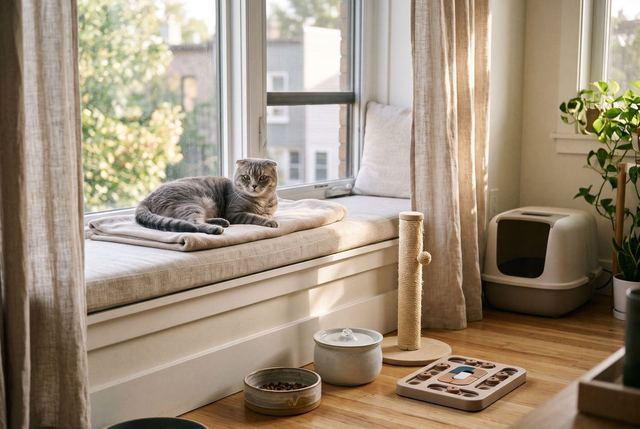
Start with one safe room
A whole house is too big for a new kitten. Give it one quiet room first. Put these things in it:
- Food and fresh water
- A bed, and a place to hide, such as a covered bed or a box on its side
- A litter tray, away from the food and water
- A scratching post and a few toys
Let the kitten come to you. When it eats, plays and uses the tray in that room, open the rest of the home a little at a time.
Litter trays: how many, where, how deep
Cats Protection gives clear rules for litter trays:
- One tray per cat, plus one extra. One kitten needs two trays.
- Quiet places. Away from washing machines, doorways, corridors and cat flaps.
- Away from food, water and beds. Cats do not like to toilet where they eat or sleep.
- About 3 cm of litter. Most cats prefer this depth.
- Clean often. Remove waste twice a day. Empty and wash the whole tray at least once a week.
If your home has more than one floor, put a tray on each floor.
Write down when the kitten uses the tray, and any accident outside it. A change in litter habits is something to tell your vet.
Remove the dangers
- Lilies. The ASPCA lists lilies as toxic to cats. The sign is kidney failure. Keep lilies out of the house, also cut flowers in a vase.
- Dog flea products. The AAFP warns that dog flea products with permethrin are a major cause of poisoning in cats. A cat can also be poisoned when it grooms a dog that was just treated. Use only products made for cats, from your vet.
- Small things. Hair ties, string, thread and rubber bands. Put them away.
- Open windows and machines. Check the washing machine and the dryer before you start them.
Food: do not change it too fast
Ask the breeder or shelter what the kitten eats now. Feed the same food for the first days. If you want to change it, ask your vet how.
Watch that your kitten eats every day. The University of Illinois vet school warns that a cat that does not eat for a few days can get a dangerous liver disease. Call your vet if your kitten stops eating.
Socialisation: gentle and slow
Cats Protection says the socialisation period is from two to seven weeks of age. Kittens should not go to a new home until after eight weeks. So much of the early handling happens before the kitten comes to you.
Ask the breeder or shelter how the kitten was handled, and by whom. At home, keep each new thing calm and short. Let the kitten watch new people from a safe place first. Reward it with play and food. Never force it.
Questions for the first vet visit
- Which vaccines does my kitten need, and on which dates?
- When is the next worming and flea treatment?
- Which food, and how much?
- Is the microchip registered to me?
- When should we talk about neutering and insurance?
Write the answers down. Your vet sets every date and amount. Our free medicine reminders tool puts the dates in your phone calendar.
Keep the first 90 days in one place
The New Puppy and Kitten: First 90 Days guide has a setup checklist, a vet visit log, a vaccine plan to fill in from your vet, a kitten litter log, a socialisation checklist, a weight chart and a 90-day review.
How long can a kitten be alone? See how long can a cat be left alone.
Questions
How many litter trays does a kitten need?
Cats Protection says to give one litter tray per cat, plus one extra. So one kitten needs two trays, and two kittens need three. Put them in quiet places, away from food, water and beds.
How much litter should I put in the tray?
Cats Protection says about 3 cm of litter is generally preferred. Remove waste twice a day, and wash the whole tray at least once a week.
Are lilies dangerous to kittens?
Yes. The ASPCA lists lilies as toxic to cats, with kidney failure as the sign. If you think your kitten ate any part of a lily, call your vet or a poison line at once.
When is the socialisation period for kittens?
Cats Protection says the socialisation period is from two to seven weeks of age. Kittens should not go to a new home until after eight weeks. So ask the breeder or shelter how the kitten was handled.
Sources
- Cats Protection: Your cat's perfect loo
- Cats Protection: Kitten socialisation
- ASPCA: Lily (toxic and non-toxic plants)
- AAFP: Permethrin poisoning and cats
- University of Illinois College of Veterinary Medicine: Hepatic lipidosis, a serious problem when cats stop eating
This article helps you organise care. It does not replace advice from your vet.