New puppy checklist: the first weeks at home, from the first night to puppy class
A new puppy changes your days at once. It needs to go out often, it chews what it finds, and it learns fast. The first weeks set habits that last. This checklist puts them in order.
Before the puppy comes home
- Book the first vet visit. Ask the vet to set the vaccine, worming and flea dates.
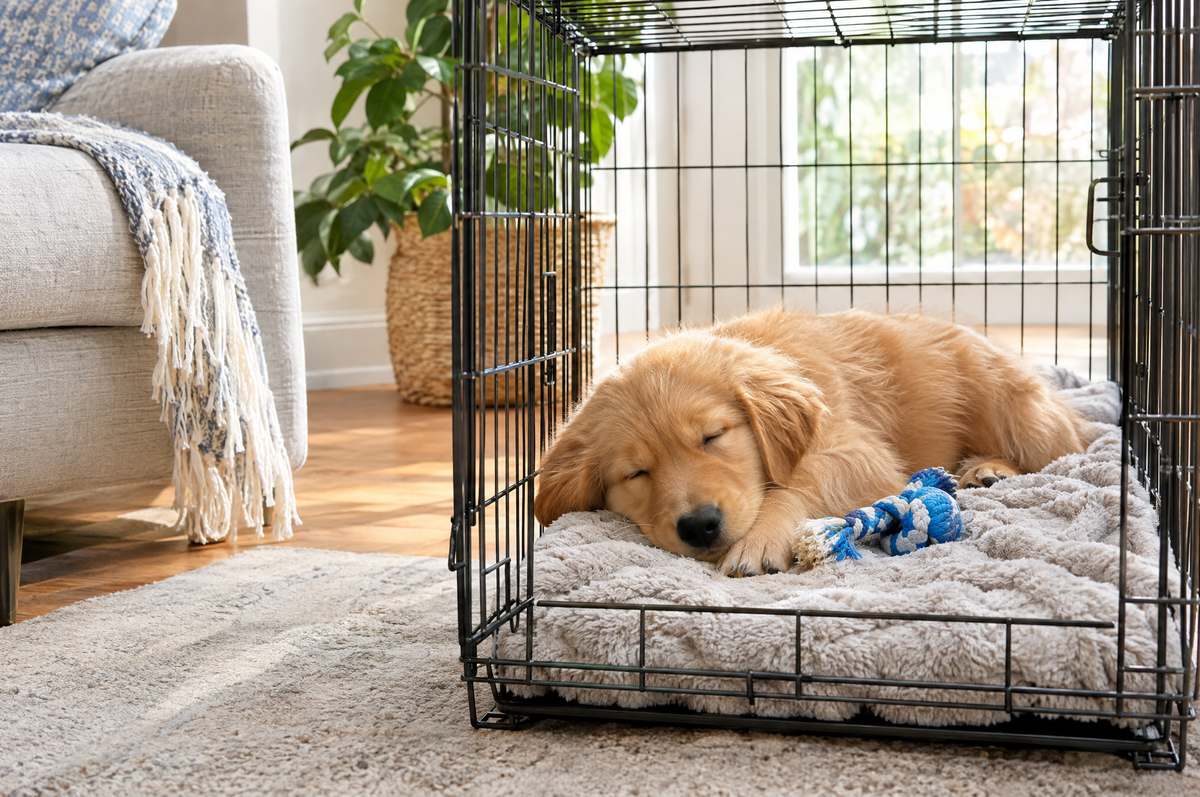
- Choose a crate. The ASPCA says the dog must be able to stand up, turn around and lie down without hitting the top or sides. Buy one for the adult size and use the divider panel.
- Make one safe area. A small room or a pen with the crate, water, a bed and chew toys.
- Remove dangers. Lift cables, shoes, medicines and cleaning products off the floor.
- Know the dangerous foods. The ASPCA list includes chocolate, grapes and raisins, onions and garlic, macadamia nuts and xylitol, a sweetener.
Toilet training: take the puppy out often
The San Francisco SPCA tells owners to take the puppy outside at these times:
- First thing in the morning
- After it eats
- After it wakes from a nap
- After play
- Just before bed
Puppies of 8 to 10 weeks usually need to go out at least once an hour. Go to the same place each time. Give praise and a treat when the puppy goes outside.
If an accident starts in the house, interrupt it gently. Take the puppy outside to finish, and reward it there. Do not punish. A punished puppy learns to hide its mistakes. The San Francisco SPCA says to clean the spot well with an enzyme cleaner.
Write down each toilet trip and each accident for the first weeks. After a few days you can see your puppy’s pattern.
The crate: slow steps and many treats
A crate gives the puppy a safe place to rest. The ASPCA steps start with a hungry, recently exercised puppy and many small treats.
- Toss a treat just inside the crate, and let the puppy eat it.
- Toss the next treats further in.
- Close the door for a few seconds only when the puppy is calm inside.
- Make the time longer in small steps. Give treats for calm behaviour.
Young puppies should not stay in the crate for more than an hour or two at a time, except at night.
Socialisation: start early, and start safe
The AVSAB says the first three months of life are the most important time for socialisation. In that time, puppies learn that new people, animals and places are safe. Poor socialisation in this time can increase the risk of fear and aggression later.
So the AVSAB says safe socialisation should start before the puppy is fully vaccinated:
- Puppy classes can start at 7 to 8 weeks of age.
- The puppy needs at least one set of vaccines 7 days before the first class, and a first deworming.
- Keep the vaccines up to date during the class.
- Avoid dog parks and places used by many dogs of unknown vaccine status.
Use rewards, such as praise, play and treats, not punishment. If your puppy shows fear, ask your vet for advice.
Questions for the first vet visit
- Which vaccines does my puppy need, and on which dates?
- When is the next worming and flea treatment?
- Which food, and how much, for my puppy’s expected adult size?
- Is the microchip registered to me?
- When should we talk about neutering and insurance?
Write the answers down. Your vet sets every date and amount. Our free medicine reminders tool puts the dates in your phone calendar.
Keep the first 90 days in one place
The New Puppy and Kitten: First 90 Days guide has a setup checklist, a vet visit log, a vaccine plan to fill in from your vet, a toilet log, crate training steps, a socialisation checklist, a weight chart and a 90-day review.
How long can a puppy be alone? See how long can a dog be left alone, with hours by age.
Questions
When can my puppy start puppy classes?
The AVSAB says puppies can start classes as early as 7 to 8 weeks. The puppy should have at least one set of vaccines 7 days before the first class, and a first deworming. Your vet sets the vaccine dates.
Should I keep my puppy at home until all vaccines are done?
The AVSAB says safe socialisation should start before the puppy is fully vaccinated. The first three months are the main window. Avoid dog parks and places used by dogs of unknown vaccine status.
How long can a puppy stay in a crate?
The ASPCA says young puppies should not stay in a crate for more than an hour or two at a time, except at night.
Should I punish my puppy for accidents in the house?
No. The San Francisco SPCA says punishment can make a puppy afraid to toilet in front of you, so it hides its mistakes. Interrupt gently, take the puppy outside and reward it there.
Sources
- AVSAB: Position statement on puppy socialization
- San Francisco SPCA: House training a puppy
- ASPCA: Introducing your dog to a crate
- ASPCA: People foods to avoid feeding your pets
This article helps you organise care. It does not replace advice from your vet.