What to pack for dog boarding: a checklist, and what to tell the kennel
You booked the kennel for the holidays. Now the night before, you stand by the door with a bag and wonder what goes in it. A good packing list is short. The written notes you hand over matter as much as the bag.
Book early and ask the kennel these questions
Rules differ from one boarding place to the next. Ask before you pack:
- Which vaccines do you require, and how many days before the stay?
- Do you need a paper record from the vet, or will an email do?
- Can I bring my dog’s own food? Bed? Toys?
- How do you give medicines, and is there a charge?
- Which vet do you use in an emergency, and can my own vet be called?
- Can you send a photo or an update during the stay?
Talk to your vet about vaccines first
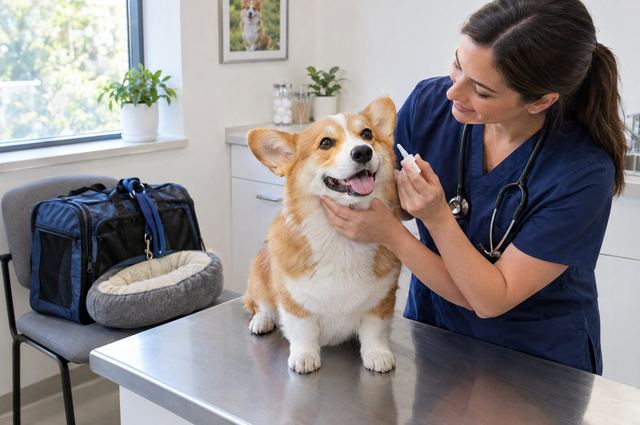
Do this a few weeks before the trip. Some kennels ask for a minimum time between the vaccine and the stay, and your dog may need more than one visit.
The Merck Veterinary Manual says kennel cough spreads rapidly among dogs kept in close confinement. It names boarding facilities, daycare and kennels. Several germs can cause it, including the bacterium Bordetella bronchiseptica, canine parainfluenza virus and canine influenza.
The American Veterinary Medical Association (AVMA) gives the same advice. If you board your pet, ask your vet how to protect it from contagious diseases. Make sure its vaccines are up to date. Your vet decides which vaccines your dog needs.
The packing list
Food and feeding
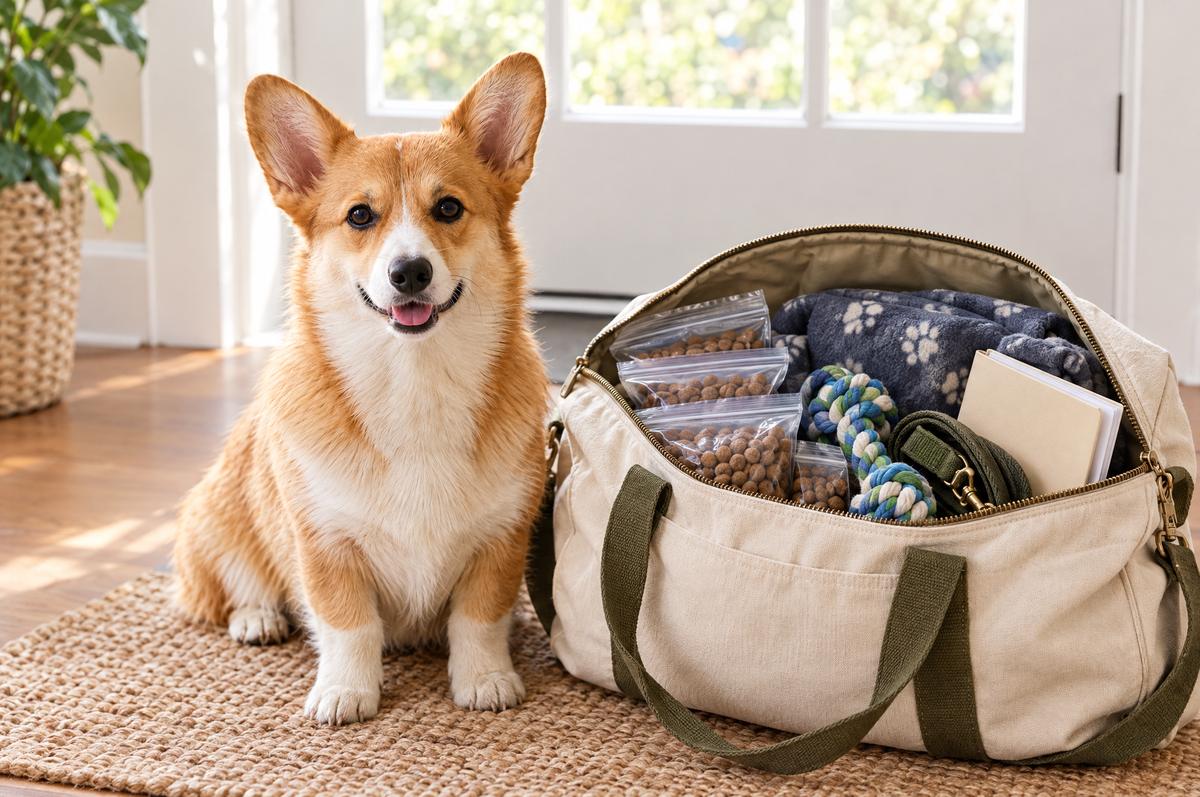
- Your dog’s usual food, measured into one bag per day or per meal.
- One or two extra days of food, in case you come back late.
- Any toppers or special foods, with clear notes.
- Treats your dog knows, if the kennel allows them.
Medicines and health
- Every medicine in its original pharmacy bottle, with the label.
- Written instructions for each one: what, how much, when, and how your dog takes it best.
- Flea and tick products that fall due during the stay.
- A copy of the vaccine record.
- A short list of health problems and allergies.
Identity
- A collar with an ID tag that shows your mobile number.
- The rabies tag and a licence tag, if your town requires one.
- Your dog’s microchip number.
The AVMA says a microchip does not replace a collar with up-to-date tags. A person who finds a lost dog can read a tag at once. Before you go, check that the chip registration has your current phone number.
Comfort
- One small item that smells of home, such as a worn T-shirt or a blanket.
- A favourite toy, if the kennel allows it.
- A spare leash, labelled with your dog’s name.
Label everything with your dog’s name and your phone number.
What to write for the kennel
The bag is easy. The notes are what help the staff care for your dog the way you do. The American Animal Hospital Association (AAHA) advises that a pet carer has clear written instructions before any emergency.
Write these down on one page:
- Your dog. Name, age, breed, weight, and a recent photo.
- Feeding. Food name, amount per meal, times, and any food rules.
- Medicines. Name, amount, times, and how to give each one.
- Behaviour. Fears, habits, how your dog shows stress, and words it knows.
- Health. Conditions, allergies, and the signs that mean “call the vet”.
- Contacts. Your phone, an emergency contact nearby, and your vet’s name, address and phone.
- Vet care while you are away. A signed note that lets the kennel or a vet treat your dog. Add a spending limit and how to reach you.
Ask the kennel for its own forms too. Many have them. Your notes add the details a form leaves out.
On the day, and when you pick up your dog
At drop-off:
- Walk your dog first, so it is calm.
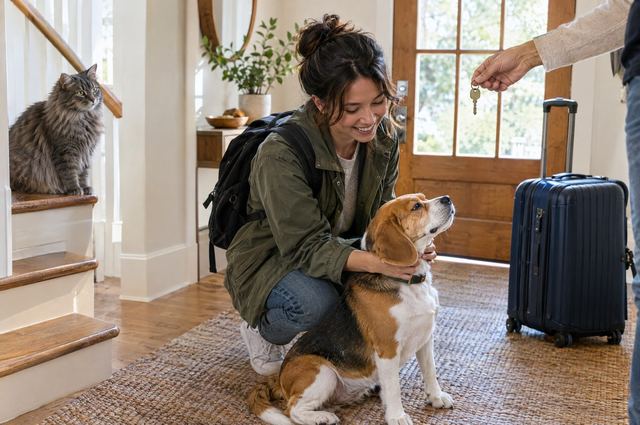
- Hand over the food, medicines and notes together, and go through the medicines in person.
- Keep the goodbye short and calm.
At pick-up, ask how your dog ate, slept and behaved. Ask about any medicine that was missed.
In the next two weeks, watch for a cough. Merck says the cough often sounds like a goose honk. It usually starts 5 to 10 days after exposure. Merck says signs such as fever, a thick nasal discharge, low energy or not eating suggest a more serious infection. Call your vet if you see a cough or any of these signs.
A ready-made packet for the kennel or a sitter
The Sitter Handover and Vet Release Kit puts all of this on fillable pages. It has a care guide with exact food amounts, medicines, behaviour notes and when to call the vet. It also has a signed veterinary treatment authorisation with a spending limit per pet, an emergency plan, and an end-of-stay report. It works for a kennel, a friend or a paid sitter.
For a quick one-page version, our free pet sitter sheet prints your dog’s routine and contacts in a few minutes. If a sitter will stay in your home instead, read what to leave your pet sitter.
Check the vaccine timing first: how long before boarding your dog needs the bordetella vaccine. Still deciding? Read pet sitter vs boarding.
Questions
Should I bring my dog's own food to boarding?
Ask the kennel, but most owners do. Pack the food your dog eats now, measured into one bag per day or per meal. Add a day or two extra in case your return is late. Write the amount and times on the care sheet.
What vaccines does my dog need for boarding?
Each kennel sets its own rules, so ask for its list early. Then ask your vet which vaccines suit your dog. The Merck Veterinary Manual says kennel cough spreads fast where dogs are kept close together, such as boarding and daycare.
Should I pack toys and a bed?
Ask the kennel first. Some allow a bed or a blanket and some do not. One small item that smells of home, such as a worn T-shirt, is easy to pack. Pick things you do not mind losing, and label them.
What should I do if my dog coughs after boarding?
Call your vet. The Merck Veterinary Manual says the kennel cough cough usually starts 5 to 10 days after exposure. Fever, nasal discharge, low energy or not eating can mean a more serious infection. Keep your dog away from other dogs until your vet has checked.
Sources
- Merck Veterinary Manual: Kennel cough (Tonozzi CC; reviewed February 2022, updated September 2024)
- AVMA: Microchipping, FAQs for pet owners
- AVMA: Thanksgiving pet safety
- AAHA: Preparing for the unexpected, essential pet sitter instructions
This article helps you organise care. It does not replace advice from your vet.