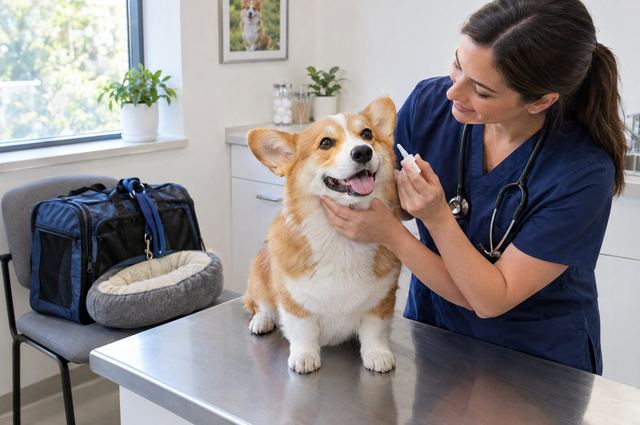
Pet sitter or boarding? A decision sheet for dogs, cats and pets on medicine
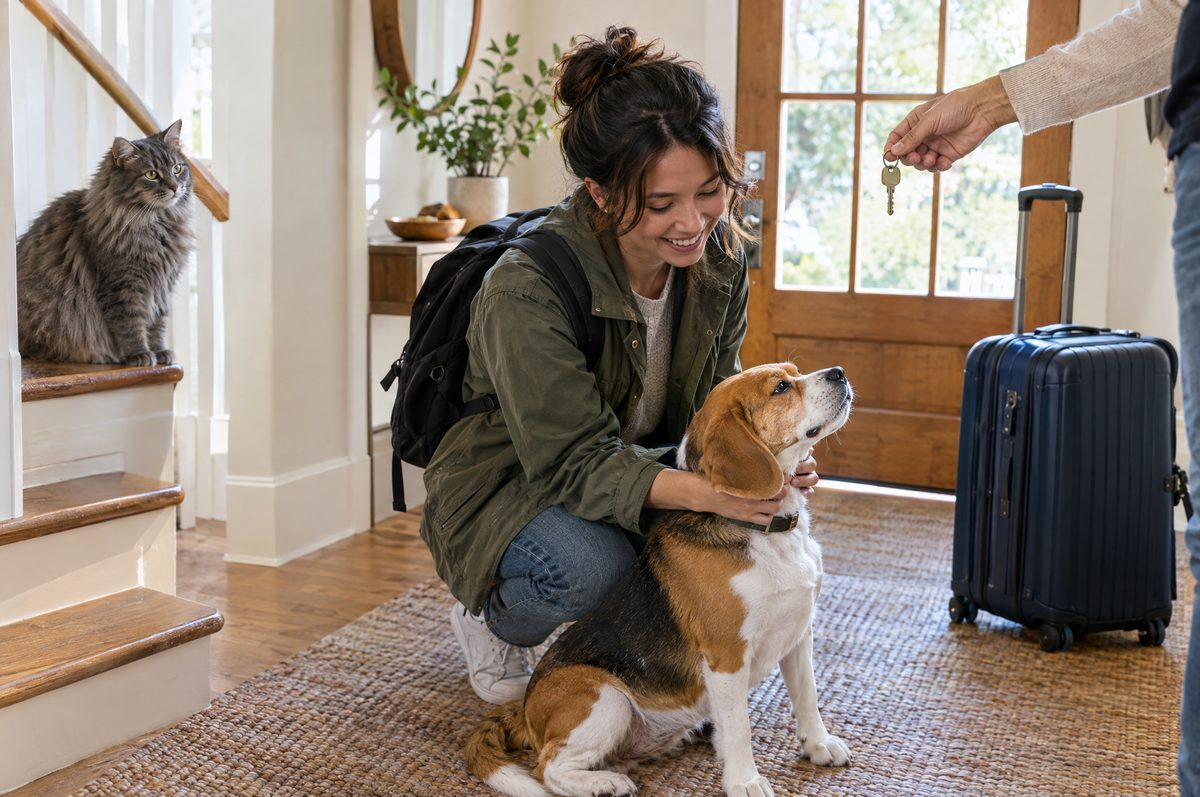
You are going away. Your pet is not. So who looks after them: a sitter at home, or a kennel or cattery?
There is no single right answer. It depends on the pet. This guide gives a short answer by pet type, a side-by-side table, the questions to ask each one, and what to leave whichever you choose.
This page gives general information. It is not veterinary advice. If your pet has a health problem, ask your vet before you book.
The short answer by pet type
| Your pet | Usually better | Why |
|---|---|---|
| Most cats | Home sitter | Cats keep their territory and routine |
| Older dog or cat | Home sitter | Less stress, no new germs, familiar floors |
| Pet on daily medicine | Home sitter, or a kennel with a vet nurse | Medicine needs a steady routine and a skilled hand |
| Anxious or reactive dog | Depends; try a short trial | Some settle at home, some need staff on site |
| Young, healthy, social dog | Either; boarding can suit | Play, staff on site, company |
| Puppy | Ask your vet | Vaccines may not be complete |
| Several pets | Home sitter | One visit covers all; pets stay together |
AAHA says cats and dogs are creatures of habit, and that keeping the routine they know helps them feel safe while you are away. That is the main reason a home sitter suits so many pets.
Side by side
Stress. At home, the pet keeps its bed, smells and routine. At a kennel, everything is new. Many dogs adapt. Many cats do not.
Supervision. A drop-in sitter is there for short visits. A kennel has staff on site through the day. A live-in sitter is there most of the time. For a pet that needs watching at night, ask who is there at night.
Illness risk. Cornell links kennel cough to close-contact places such as boarding, grooming, shelters and parks. It says the germ spreads through coughs and sneezes, contact between dogs, and shared bowls and toys. At home, a pet meets far fewer animals.
Medicine. A sitter gives medicine in your home, in your way. A kennel may have trained staff. Ask both who will give it and how they record it.
Cost. It depends on the number of pets and the type of sitter. One cat with daily drop-ins is often cheaper than a cattery. Three dogs with a live-in sitter may cost more than a kennel. Get quotes for your exact dates.
Security. A sitter has your key and maybe your alarm code. A kennel does not. Choose someone you trust, and check references.
Questions to ask a sitter
- Are you insured and bonded? Can I see proof?
- Can I speak to two clients with pets like mine?
- Have you given this kind of medicine before? Pills, liquid, injections?
- How many visits a day, and how long is each?
- Will you send a photo or message after each visit?
- What will you do if my pet is sick or will not eat?
- Who covers you if you are ill?
- Can we do a meet-and-greet, and a short trial visit?
Questions to ask a kennel or cattery
- What vaccines do you need, and how many days before check-in? See our guide to the bordetella vaccine before boarding.
- Can I see where my pet will sleep?
- Are dogs grouped for play? How do you match them?
- Is someone on site at night?
- Who gives medicine, and how is each dose recorded?
- Which vet do you use in an emergency? Will you call mine?
- What happens if my dog starts to cough?
- Can my pet have a short trial stay first?
The illness question
Boarding is not “bad” for dogs. But owners should know the risk.
The AAHA vaccine guidelines call the bordetella vaccine a noncore vaccine, for dogs at risk of exposure, such as dogs that board. Cornell says the vaccine does not prevent infection, but it can make signs milder.
The Merck Veterinary Manual says the cough often starts 5 to 10 days after exposure. So watch your dog for two weeks after pick-up. Cornell lists a loud, honking cough, sneezing, a runny nose, low energy and poor appetite. Call your vet if your dog breathes hard or stops eating.
What to leave either one
AAHA lists what a sitter needs. It is a good list for a kennel too:
- Your pet’s profile: name, age, breed, personality, fears, medical conditions, food rules, medicines, microchip number and activity level.
- A recent photo of each pet, so they can be told apart and found if lost.
- The routine: meal times and amounts, how medicine is given, walk and play times, and litter tray cleaning.
- Where things are: food, medicine, leashes, litter, cleaning supplies.
- Emergency contacts: your vet, the nearest 24-hour clinic, the ASPCA Poison Control line on 1-888-426-4435, and your insurance details.
- A nearby backup person who knows your pet.
- A first aid kit and a copy of your pet’s medical records.
Add one more thing. A signed note that lets the sitter or kennel get vet care for your pet, and says how much they can spend. Without it, a vet may wait to reach you. Our vet release form guide explains what to put in it.
For more detail, see what to leave your pet sitter and what to pack for dog boarding.
If you cannot travel back fast
If you are going into hospital, not on holiday, the plan is different. Read our guide to a pet care plan if you are hospitalized.
One sheet for either choice
Our free sitter sheet makes a one-page handover in a few minutes. The Sitter Handover and Vet Release Kit adds a fridge sheet, a sitter guide that leaves out door codes, and a signed vet release, so whoever has your pet can act fast.
Home alone for a day? Read how long can a dog be left alone and how long can a cat be left alone.
Questions
Is boarding stressful for cats?
Often, yes. Cats are creatures of habit, as AAHA notes, and a new place, new smells and other animals can upset them. Many cats cope better at home with a sitter who visits once or twice a day. A cat on medicine or with a health problem may need more visits.
Is a pet sitter cheaper than boarding?
It depends. A drop-in sitter for one cat is often cheaper than a cattery. A live-in sitter for several dogs can cost more than a kennel. Get two quotes for your exact dates, and ask what holiday rates apply.
What should a pet sitter know?
AAHA lists your pet's profile, medical conditions, medicines, food, routine, fears, microchip number, a recent photo, your vet, the nearest 24-hour clinic and the ASPCA poison line. Add a signed note that lets the sitter take your pet to the vet.
How early should I book for the holidays?
As early as you can. Good sitters and kennels fill up for Thanksgiving and Christmas. If your dog will board, also check the kennel's vaccine rules now, because a first kennel cough vaccine course can take weeks.
Is boarding bad for dogs?
Not for every dog. A healthy, social dog may enjoy it. But Cornell says kennel cough spreads easily in close-contact places, and the Merck Veterinary Manual says the cough often starts 5 to 10 days after exposure. Watch your dog after pick-up.
What about a dog with separation anxiety?
Either choice can be hard. Some anxious dogs do better at home with a live-in sitter. Others settle better with staff and other dogs nearby. Ask your vet, and do a short trial stay before a long trip.
Sources
- AAHA: Preparing for the unexpected, essential pet sitter instructions, Emily Hall (24 April 2025)
- Cornell Riney Canine Health Center: The risks of kennel cough
- Cornell Riney Canine Health Center: Bordetellosis (updated 20 November 2025)
- Merck Veterinary Manual: Kennel cough, Tonozzi CC (reviewed February 2022, updated September 2024)
- AAHA 2022 Canine Vaccination Guidelines: Recommendations for core and noncore canine vaccines
This article helps you organise care. It does not replace advice from your vet.