How long before boarding should my dog get the kennel cough vaccine?
You booked the kennel for Thanksgiving. Then the email came: “Proof of bordetella required.” Now you want to know how many days ahead your dog needs the shot.
The honest answer: there is no single number. Vet guidelines do not set one. Each kennel sets its own rule. This guide shows how to find your kennel’s rule, what the vet guidelines say about each vaccine type, and a countdown that works for most dogs.
This page gives general information. It is not veterinary advice. Your vet decides which vaccine suits your dog.
The short answer
- Phone the kennel first. Ask: “How many days before check-in must the bordetella vaccine be given? Do you accept nasal, oral and injected types?”
- Phone your vet second. Ask when your dog last had it, and which type.
- Work back from the check-in date.
We read the AAHA vaccine guidelines, two Cornell pages and the Merck Veterinary Manual. None of them gives a number of days before boarding. So the kennel’s rule is the one that counts.
What the vet guidelines say about each type
Bordetella bronchiseptica is one of the germs behind kennel cough. There are three types of vaccine. The AAHA 2022 guidelines give this schedule for a first course:
- Injection (under the skin): two doses, 2 to 4 weeks apart.
- Nasal (drops in the nose): one dose.
- Oral (into the cheek pouch): one dose.
After that, AAHA says to give a booster every year. The Merck Veterinary Manual also says to revaccinate every year. Cornell says some vets advise every six months for dogs at high risk.
AAHA adds a point that matters for boarding. A natural study suggests protection may last as little as about six months. So for dogs at high risk, AAHA says a nasal combination vaccine more often than once a year, for example before boarding, may help.
AAHA also says that the nasal combination vaccine covers parainfluenza and adenovirus too. It does not recommend the single-germ oral or injected vaccines in most cases. Your vet will know which products they stock.
Why the injected type needs the most time
Look at the first-course rule again. If your dog has never had the injected type, it needs two doses, 2 to 4 weeks apart. Then the kennel may want some days after the second dose. So a dog that starts from zero with the injection needs about 3 to 5 weeks or more.
A dog that is only due for a yearly booster needs one visit. A dog that gets a nasal or oral dose needs one visit. These dogs need far less lead time. But the kennel’s minimum still applies.
A countdown before drop-off
Use this if you do not know your dog’s status.
5 weeks before:
- Phone the kennel. Write down its vaccine rules and the minimum days.
- Phone your vet. Ask for your dog’s vaccine dates.
- Book a vet visit now. Holiday weeks fill fast.
4 weeks before:
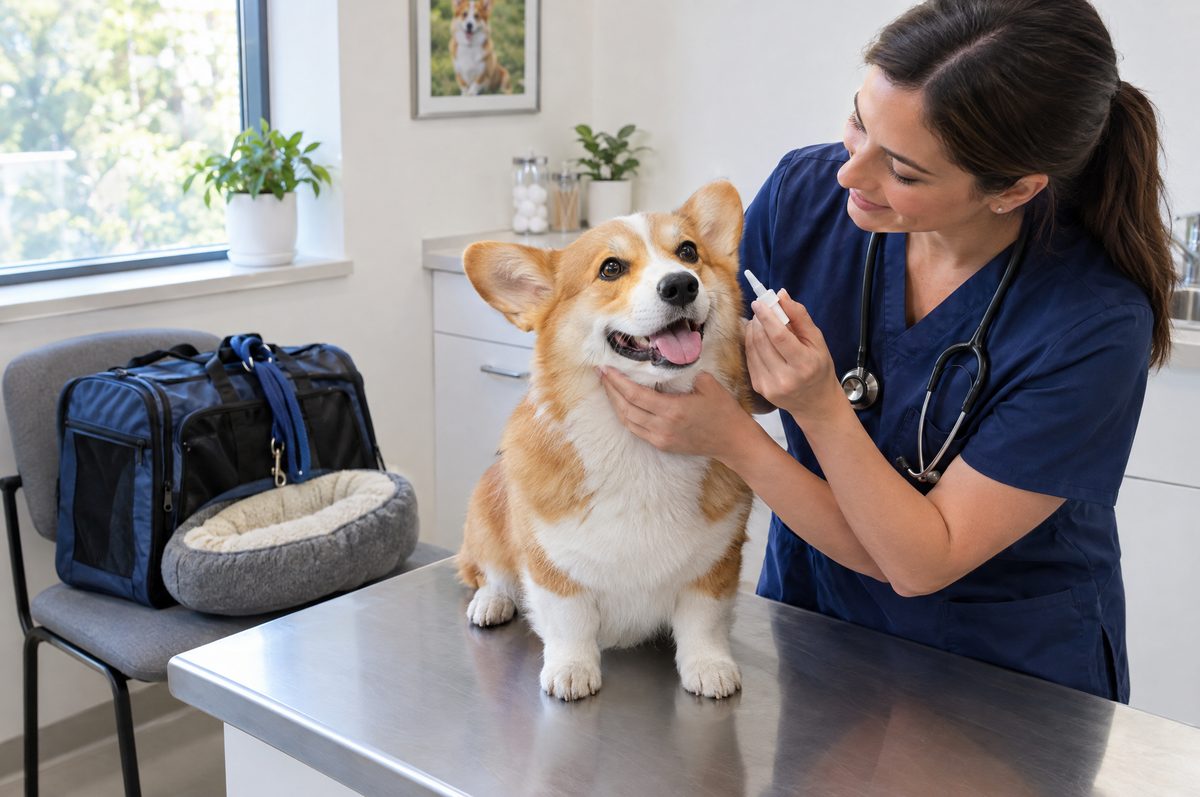
- Vet visit. Your vet picks the type. If it is a first injected course, book the second dose now.
- Check other vaccines the kennel asks for. Most ask for rabies and the core vaccines. Some ask for canine influenza.
2 weeks before:
- Second injected dose, if needed.
- Ask the vet for a printed or emailed record with dates.
1 week before:
- Send the record to the kennel. Ask them to confirm they have it.
- Check flea and tick protection.
- Write the handover sheet (see below).
Drop-off day:
- Bring a paper copy of the record.
- Bring food, medicine and the handover sheet.
If you left it late
If check-in is only days away, call the kennel and the vet today. Ask the kennel if it will accept a booster given now. Some will. Some will not, because they set a minimum number of days. If the kennel says no, ask about a home sitter instead. Our guide to pet sitter vs boarding helps you choose.
What the vaccine can and cannot do
Cornell compares it to the human flu shot. It says the vaccine does not prevent infection. It can make signs milder and lower the need for emergency care. Cornell also says many vaccinated dogs show no signs after exposure, and others have milder signs and shed fewer germs.
Kennel cough has several causes. Cornell lists bordetella, parainfluenza, herpesvirus, adenovirus and mycoplasma. The vaccine does not cover all of them. So a vaccinated dog can still catch a cough.
Cornell says the germ spreads by coughing and sneezing, by contact between dogs, and on bowls, toys and hands. Close-contact places carry more risk: boarding, grooming, shelters, shows and parks.
Signs after boarding
Watch your dog for two weeks after pick-up. The Merck Veterinary Manual says the cough often starts 5 to 10 days after exposure.
Cornell lists these signs:
- A loud, honking cough. Some owners think something is stuck in the throat.
- Sneezing, and a runny nose or eyes.
- Mild fever, low energy and poor appetite.
Cornell says most dogs recover fully in 7 to 10 days. Merck says the illness can last 10 to 20 days. Call your vet if your dog has:
- Hard or fast breathing.
- A wet cough or a high fever.
- No interest in food.
- Any cough and is a puppy, old, or has heart or lung disease.
Cornell says pneumonia can develop, especially in puppies. Keep a coughing dog away from other dogs. Cornell says a dog can stay contagious for weeks after the cough stops.
If your dog is old or has a health problem
Talk to your vet before you book. Ask:
- Is boarding a good idea, or is a home sitter safer?
- Which vaccine type suits my dog?
- What signs should the kennel call me about?
For an older dog, a cough can be more serious. A home sitter avoids contact with many dogs. See our guide to what to leave your pet sitter.
What to give the kennel
The kennel needs more than a vaccine record. Leave:
- Your vet’s name and number, and the nearest 24-hour clinic.
- Your dog’s food, and how much at each meal.
- Every medicine, with the label and the times.
- A signed note that lets them take your dog to a vet. See our vet release form guide.
- Your phone number, and a backup contact.
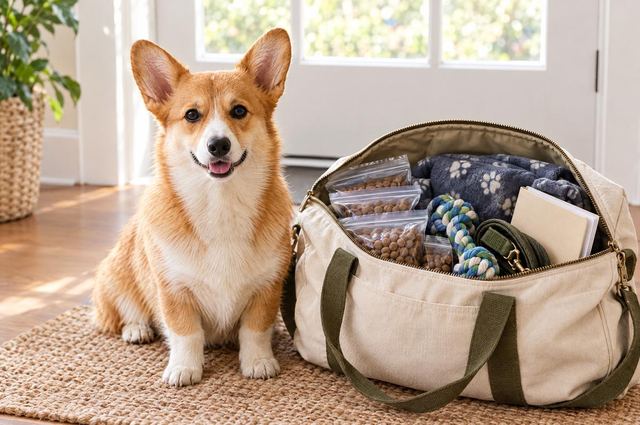
Our packing list for dog boarding covers the bag. If your records are in many places, our guide to organising pet medical records helps.
Before you go
Our free sitter sheet makes a one-page handover. The Sitter Handover and Vet Release Kit adds a fridge sheet, a sitter guide without door codes and a signed vet release, so the kennel or sitter can act fast if your dog gets sick.
Questions
Is the bordetella vaccine required for boarding?
Most US boarding kennels and daycares ask for it, but the rule is the kennel's, not a law. AAHA calls it a noncore vaccine, which means it is for dogs at risk, such as dogs that board. Ask your kennel what it needs and in what form.
How often does my dog need the kennel cough vaccine?
AAHA and the Merck Veterinary Manual say boosters are given every year. Cornell says some vets advise every six months for dogs at high risk. AAHA says that for high-risk dogs, a nasal booster before boarding may help.
Does the vaccine stop kennel cough?
Not fully. Cornell says the vaccine does not prevent infection, much like the human flu shot. It can make signs milder. Cornell also says many vaccinated dogs show no signs after exposure. Kennel cough has several causes, and the vaccine covers only some.
My dog had the vaccine yesterday. Can I still board?
Ask the kennel. Some kennels set a minimum number of days between the vaccine and check-in, and will turn a dog away if the date is too close. Bring the dated record so they can decide.
What does kennel cough look like?
Cornell describes a loud, honking cough. Other signs are sneezing, runny nose or eyes, mild fever, low energy and poor appetite. Most dogs recover in 7 to 10 days. Call your vet if your dog breathes hard, stops eating or is a puppy.
Which type is best: nasal, oral or injection?
Your vet will decide for your dog. AAHA says all three types work to some degree. It says the nasal route is generally preferred for breathing-tract germs, and the nasal combination vaccine also covers parainfluenza and adenovirus.
Sources
- AAHA 2022 Canine Vaccination Guidelines: Recommendations for core and noncore canine vaccines (table)
- AAHA 2022 Canine Vaccination Guidelines: Bordetella, canine parainfluenza and canine influenza (18 August 2022)
- Cornell Riney Canine Health Center: Bordetellosis (updated 20 November 2025)
- Cornell Riney Canine Health Center: The risks of kennel cough
- Merck Veterinary Manual: Kennel cough, Tonozzi CC (reviewed February 2022, updated September 2024)
This article helps you organise care. It does not replace advice from your vet.