Dog not eating after chemo: when to call, and how to help at home
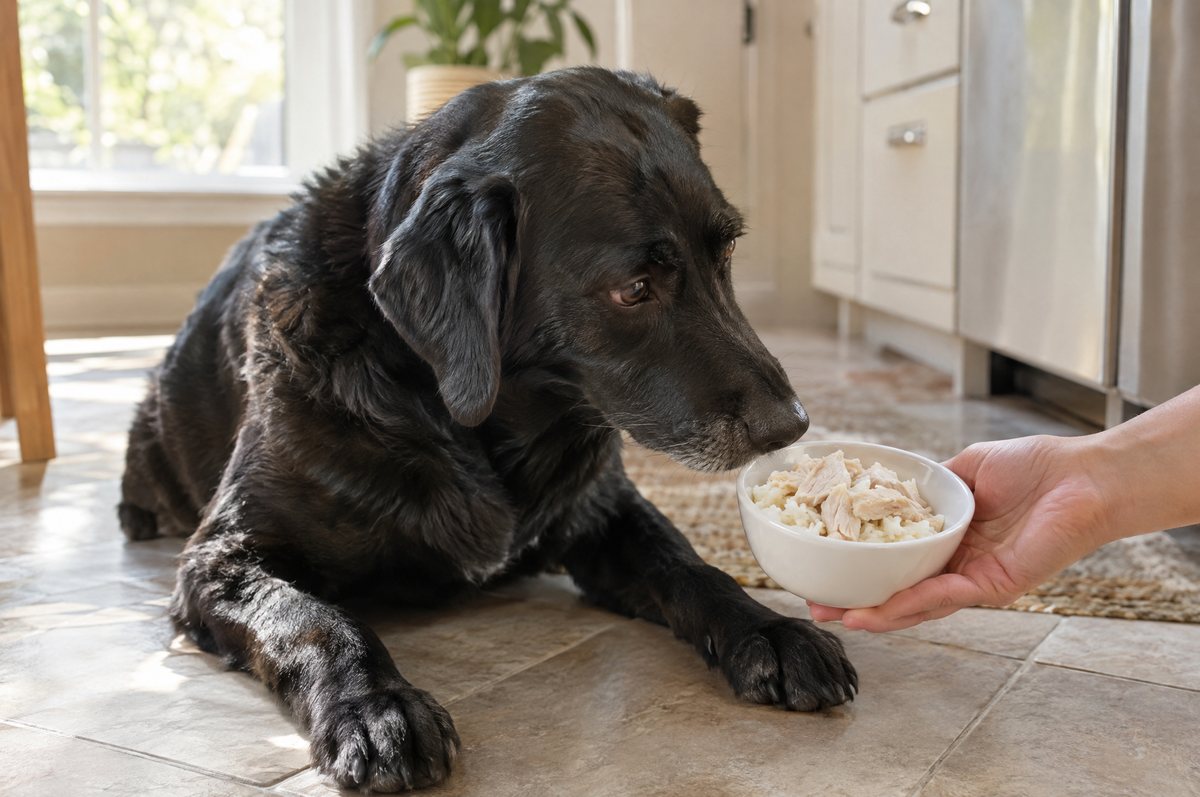
Your dog had chemotherapy a few days ago. Now the food bowl sits full, and your dog turns away. You worry that the treatment is making things worse. A poor appetite is common after chemotherapy, and vets can help. The key is to know when to call, and to tell them early.
When to call the vet now
The Ohio State University oncology team tells owners to call immediately if a dog on chemotherapy:
- skips two or more meals;
- has any vomiting or diarrhoea;
- is lethargic, or has a rectal temperature over 102.5 °F (39.2 °C);
- shows any other sign that worries you.
The University of Missouri Veterinary Health Center also lists blood in vomit, poo or urine, and a dog that does not respond to you. Do not wait a few days to “see if it passes”. Two missed meals is the time to call.
Your oncology team may give you its own rules. Write them down with the after-hours number. The Dog Cancer Care Journal has a page for this at the front.
Why dogs stop eating after chemo
A poor appetite after chemotherapy is common. In a 2026 study from the University of Surrey and AURA Veterinary, owners recorded signs every day for 21 days after a treatment. Eating less was the third most common sign, after tiredness and drinking more. It showed up in 12 of the 27 dogs.
There are several possible causes:
- Nausea. Chemotherapy can make dogs feel sick. The AAHA guidelines list nausea, vomiting and a poor appetite as common side effects.
- The cancer itself. The AAHA guidelines say a poor appetite can come from the disease, for example a lymphoma in the gut.
- Low blood counts. Ohio State says a low white cell count can sometimes come with fever, tiredness and less appetite.
- Something else. The Surrey authors say a sign can come from the treatment, the cancer, another medicine or an unrelated problem.
You do not need to find the cause. Your vet does that. Your job is to notice the change and report it.
When it happens
Appetite changes often follow a pattern after each treatment. Ohio State says stomach and gut side effects most often come 2 to 5 days after a treatment. The University of Missouri says they usually start within 3 days and last 3 to 5 days.
Owners see the same pattern. On the Tripawds forum, one owner wrote that their dog was “off his food he might eat one or two treats” a few days after a treatment. Another member replied that “it only lasts a few days”. A third said a medicine from the vet had the dog “ready to eat again” within about an hour.
Know your dog’s pattern. Write the number of days since the last treatment next to every meal. After two or three treatments, you know which days are hard. Then you can plan, and you can tell your vet before the hard days start.
How vets help
You do not have to manage this alone. Ohio State says pets usually go home with medicines to prevent and control stomach side effects, with clear instructions on when and how to give them.
The 2026 AAHA guidelines say vets should tell owners that appetite changes are likely, and that this side effect can be managed. They say a poor appetite treated early helps a dog stay on its treatment plan. If nausea may be behind it, they treat the nausea first. There are also medicines that help appetite, if your vet thinks they suit your dog.
Give only what your vet prescribes, exactly as the label says. Do not give human medicines. If you give several medicines, the free medicine reminder tool helps you keep the times straight. Our guide to setting up a pet medication schedule explains how.
How to help your dog eat at home
Ask your oncology team what you may try. These simple steps fit the AAHA advice that food must taste good and be eaten:
- Offer your dog’s usual food first, at the usual times.
- Ask your vet if you may warm the food, or offer small meals more often.
- Give the medicines from your vet exactly as the label says, and at the times it says.
- Keep fresh water within reach.
- Keep meals calm and quiet, away from other pets.
What not to do. The AAHA guidelines do not recommend raw food for dogs with cancer. These dogs may fight infection less well, and raw meat brings a risk of Salmonella and E. coli to the dog and the family. For a home-made diet, the guidelines suggest a veterinary nutritionist, because a balanced home-made diet is hard to get right. Do not change the diet without your vet.
If your dog still does not eat after the vet’s treatment, the AAHA guidelines say a feeding tube is one option to discuss. Your vet weighs it with the goals of care and your dog’s quality of life.
What to write down
A short record helps your vet decide what to do. For each meal on the hard days, write:
- the date, the time and the number of days since the last treatment;
- the food you offered;
- how much your dog ate: all, half, a little or none;
- what you saw, for example “went to the bowl and turned away”;
- any medicine from the vet you gave, and what happened after.
Weigh your dog each week on the same scale. The AAHA guidelines say side effects can lead to weight and muscle loss, and that vets check nutrition from the diagnosis on. A number shows a slow loss that your eyes can miss.
The Dog Cancer Care Journal has a two-page appetite and nausea log with these columns, a weight log and a daily symptom diary. For the other common signs, read dog chemo side effects. To prepare for the next visit, see questions to ask your dog’s oncologist.
When eating does not come back
Sometimes a poor appetite is a sign that the cancer is changing. Ohio State says that when the drugs no longer control the cancer, the vet talks with you about keeping your dog comfortable. Ask your vet to help you judge quality of life. The weekly quality of life check in the Dog Cancer Care Journal shows slow changes over weeks. Our guide on how to know when to put your dog down has the questions vets suggest.
Questions
How long can a dog go without eating with cancer?
Do not wait to find out. Ohio State University tells owners of dogs on chemotherapy to call the oncology team at once if the dog skips two or more meals. A dog that does not eat gets weaker. The AAHA guidelines say to treat a poor appetite early, so your dog can stay on its plan.
What can I feed a dog with cancer and no appetite?
Ask your vet first. The 2026 AAHA guidelines say the main goal is food that tastes good to your dog and is eaten, and the diet must be complete and balanced. They do not recommend raw food for dogs with cancer, because of the infection risk. For a home-made diet, ask about a veterinary nutritionist.
Is it normal for a dog not to eat after chemo?
It is common. In a 2026 University of Surrey study, eating less was the third most common sign after chemotherapy, in 12 of 27 dogs. Most signs were mild or moderate. Ohio State says gut side effects most often come 2 to 5 days after a treatment. Common does not mean you should wait: call after two missed meals.
How do I know if my dog is nauseous?
You may see your dog go to the bowl and turn away, or show interest in food but not eat. The AAHA guidelines say that if nausea may be the cause of a poor appetite, vets treat the nausea first. Write down what you see and tell your vet.
Should I give my dog human food to make it eat?
Not without your vet's advice. The AAHA guidelines say every diet change should fit your dog's cancer, its other health problems and its needs. Some human foods are not safe for dogs. A complete and balanced diet is essential. Ask your oncology team which foods you may offer on hard days.
Sources
- The Ohio State University Veterinary Medical Center, Oncology Service: Chemotherapy for Cancer Treatment in Animals (PDF)
- AAHA: 2026 AAHA Oncology Guidelines for Dogs and Cats, Section 7: Supportive and Symptomatic Care
- University of Missouri Veterinary Health Center: Chemotherapy
- Harris J and others (2026). Development and Testing of an Owner-Reported Outcome Measure of Clinical Signs and Quality of Life in Dogs Treated With Chemotherapy. Veterinary and Comparative Oncology 24: 80-94
- Tripawds forum: My Rottie lost appetite after chemo (July 2021)
This article helps you organise care. It does not replace advice from your vet.