Questions to ask your dog's oncologist: a checklist for the first visit
The word “cancer” stops most people from hearing the rest of the visit. Then you get home and remember all the questions you did not ask. A written list helps. Here are the questions vets and owners suggest, in the order a first oncology visit usually goes.
The 2026 AAHA Oncology Guidelines tell vets that owners take part best when each option comes with its pros and cons, the expected outcomes, the prognosis and the costs. These questions ask for exactly that.
Before the visit
Prepare three things:
- Copies of every report. Blood tests, X-rays, scans, and the needle sample or biopsy results.
- A list of medicines. Write each one exactly as the label says, with the dates.
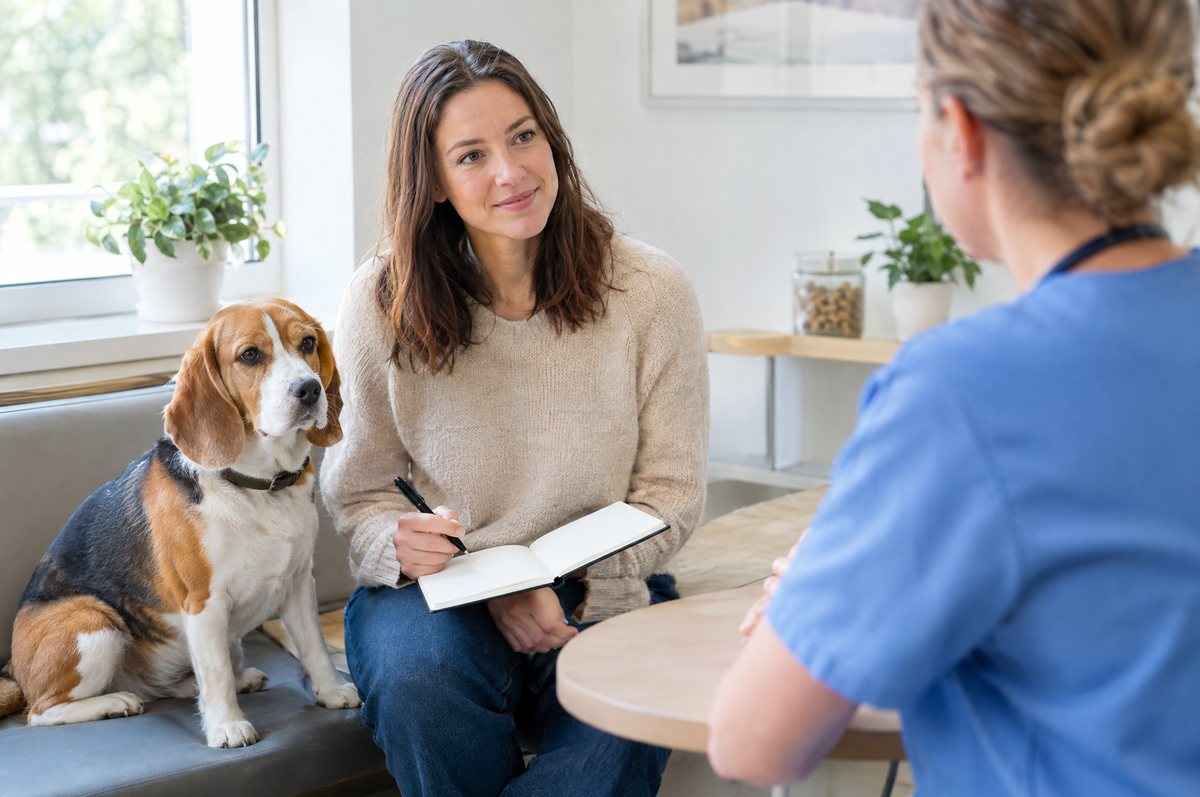
- A notebook, and a second person. The visit brings a lot of new words at once.
If your dog has a new sign, write when it started and how it has changed. Write what is normal for your dog too: appetite, water, walks, sleep and weight. You will need that baseline later, if treatment starts.
Questions about the cancer
- What type of cancer is it, and how sure are we?
- What is the grade? What is the stage?
- Has it spread? Which tests show that?
- Which other tests do you suggest, and how would each one change the plan?
The 2026 AAHA guidelines explain the two key words. The grade describes how the cancer cells look under a microscope: low grade looks more like normal tissue. The stage describes the size of the tumour and whether it has spread to the lymph nodes or further. A needle sample (cytology) gives results in 0 to 2 days. A biopsy (histopathology) takes 3 to 7 days, and it can give the grade.
The guidelines list the usual staging tests: blood and urine tests, chest X-rays, an ultrasound scan of the belly, a lymph node sample or a CT scan. They also say the tests should fit the cancer type. Ask why each test matters for your dog.
Questions about the options
- What are all the options, including no treatment?
- What are the pros and cons of each?
- What is the goal: more time, comfort, or both?
- What would likely happen if we choose no treatment?
- Is a second opinion, or a clinical trial, an option?
The Tripawds list of questions for the oncologist asks for the best case and the worst case, and how likely each one is. It also asks how much time treatment could give, and how much better quality of life could be.
Cornell University’s Riney Canine Health Center suggests five questions for any cancer therapy. Has it been published in peer-reviewed science? Has it been tested in dogs with the same, naturally occurring cancer? Has the drug been studied in live dogs? How was the benefit measured: a smaller tumour, a longer life, or a better quality of life? And which side effects can it cause? Cornell says, “While your veterinarian will make recommendations, your involvement in your dog’s care is important too.”
Ask what the treatment aims to do. Ohio State University says that, in general, chemotherapy drugs control cancer rather than remove it for good. The goal is to control the cancer while your dog keeps the best quality of life.
Questions about side effects and emergencies
- Which side effects are common, and on which days?
- Which signs are an emergency? Who do I call at night?
- What should I keep at home, just in case?
- How do we keep the family safe at home after a treatment?
Ohio State’s oncology team tells owners to call at once if the dog skips two or more meals, has any vomiting or diarrhoea, is lethargic, or has a fever. Ask your team for its own rules and its after-hours number. Write them down before you leave. The Dog Cancer Care Journal has a page for them, right after the cover.
Cornell gives a useful way to think about side effects: “vomiting for a week may be acceptable to you, but permanent incontinence may not.” Tell your vet which side effects you could accept for your dog, and which you could not. There is no wrong answer.
For the common signs and the days to watch, read our guide to dog chemo side effects.
Questions about daily life
- How often are the visits, and how long does each one take?
- Can I stay with my dog during treatment?
- What food is best now? Is any food or supplement a problem?
- Can my dog have vaccines during treatment?
- Can my dog still walk, swim and play with other dogs?
Ohio State says some drugs are given daily, others weekly, and some every 2 to 3 weeks. It also says to ask the oncology team before you restart vaccines. The 2026 AAHA guidelines say raw food is not recommended for dogs with cancer. If your dog stops eating during treatment, see dog not eating after chemo.
Questions about cost
- What will the whole plan cost? Can I have a written estimate for each stage?
- Do I pay at each visit, or before?
- If money is tight, which part matters most?
- Can my own vet give some of the treatments, or do the rechecks?
The AAHA guidelines tell vets not to spend most of a limited budget on tests and leave little for treatment. They suggest that tests which confirm the diagnosis and check general health come first. Say what you can spend at the start. A good team plans with you. Check your insurance policy’s limits too: one owner’s cancer diary blog found that a £7,000 policy did not cover the whole plan.
After the visit
Write the answers down the same day, while you remember them. Note the words to look up, and the questions to ask next time. Ask for a copy of the written plan. Copy each drug and medicine exactly as the vet writes it.
Then keep a record as treatment goes on. In a 2026 University of Surrey study, owners kept a short daily record of their dog’s signs. One owner took the notes to the next visit, and the vet said the signs were “totally expected”.
The Dog Cancer Care Journal is a fillable PDF that starts with these questions, in six groups. It has pages for the diagnosis in the vet’s words, the options and goals, and the treatment plan as written. It also has a treatment calendar, a daily symptom diary and a costs page. It never chooses a treatment: your vet and you decide together.
If the goal later becomes comfort, the Dog End-of-Life and Memory Book has questions for the vet and a good and hard days calendar. Our guide on how to know when to put your dog down explains how vets help families judge quality of life.
Every question on this page fits on one sheet. Print it, or use the Dog Cancer Care Journal, and take it to the first visit.
Questions
What should I bring to my dog's first oncology visit?
Bring copies of every report so far: blood tests, X-rays, scans and the sample results. Bring a list of your dog's medicines exactly as the labels say, your questions, and a notebook. Ask someone to come with you. The AAHA guidelines say vets should explain the options with pros, cons, outcomes and costs, so you will hear a lot at once.
What is the difference between grade and stage?
The 2026 AAHA Oncology Guidelines say the grade describes how the cancer cells look under a microscope. The stage describes the size of the tumour and whether it has spread to the lymph nodes or further. A needle sample gives results in 0 to 2 days. A biopsy takes 3 to 7 days and can give the grade.
What if I cannot afford every test and treatment?
Say so at the start. The AAHA guidelines tell vets not to spend most of a limited budget on tests and leave little for treatment. They suggest tests that confirm the diagnosis and check general health first. Ask which tests would change the plan, and ask for a written estimate for each stage.
Should I ask about a clinical trial?
Yes, it is a fair question. Cornell University's Riney Canine Health Center suggests asking if a therapy has published clinical trials in dogs with the same, naturally occurring disease. A trial may cover some costs. Ask what the trial measures, which side effects are possible and what happens if you stop.
What if we choose no treatment?
Ask what would likely happen, and how to keep your dog comfortable. The Tripawds list includes this question, and the AAHA guidelines say palliative and end-of-life care are among the paths vets help families choose. Ask which signs mean your dog needs help, and how often to recheck.
Sources
- AAHA: 2026 AAHA Oncology Guidelines for Dogs and Cats, Section 3: Tumor Diagnostics and Staging
- AAHA: 2026 AAHA Oncology Guidelines for Dogs and Cats, Section 4: Client Communication
- Cornell University College of Veterinary Medicine, Riney Canine Health Center: 5 questions to ask about cancer therapies
- Tripawds: Questions to ask your veterinary oncologist
- Chris Swan: Milo cancer diary part 6, counting the cost (15 May 2023)
- Harris J and others (2026). Development and Testing of an Owner-Reported Outcome Measure of Clinical Signs and Quality of Life in Dogs Treated With Chemotherapy. Veterinary and Comparative Oncology 24: 80-94
- The Ohio State University Veterinary Medical Center, Oncology Service: Chemotherapy for Cancer Treatment in Animals (PDF)
This article helps you organise care. It does not replace advice from your vet.