Cat missing for 3 days or more? The chances, and what to do now
Three days have passed. You searched the street, you called, and your cat did not come. It is easy to think the chance is gone. It is not. Many missing cats are found after day 3, and most of them are found close to home.
This guide is one step in our complete guide on what to do if your pet is lost, for owners and for finders.
The chances, day by day
A 2018 study collected reports on 1,210 missing cats from many countries. It measured how many cats were found alive over time:
| Time since the cat went missing | Cats found alive |
|---|---|
| 7 days | 34% |
| 30 days | 50% |
| 61 days | 56% |
| 1 year | 61% |
So about one in three cats was found in the first week. About one in five more was found in the next eight weeks. For cats found alive, the median time missing was 6 days. After about two months, few more cats were found.
A US telephone survey found that 75% of lost cats were recovered. The most common way was that the cat came home on its own.
Why your cat has not come out
A frightened cat hides and stays quiet. The Companion Animal Register in New Zealand says lost cats are often within 5 houses of home, hiding in silence. It says it is common for a cat to hide for 3 to 10 days. Then the cat is calm enough, and hungry enough, to come out.
In the 2018 study, half the cats that were found alive were scared when they were found. So your cat may hear you and still not answer. That is normal behaviour, not a bad sign.
Do not wait to search
A US study found that cat owners waited about three days before they started to search. Dog owners waited about one day. Cat owners also waited about eight days between visits to the shelter.
Do not lose those days. Of the owners in the US survey who never found their cat, only 4 out of 18 had searched at a shelter.
Search again, every day or two
The Companion Animal Register advises a thorough search every 24 to 48 hours for the first 2 weeks. Search close, slowly and in person:
- Search your home, your garden and your neighbours’ gardens again. Ask permission first.
- Look “in and under”: under decks, porches, sheds and cars, and inside garages and outbuildings.
- Walk the area at night with a flashlight. In the study, a night walk with a flashlight found cats faster than many other methods.
- Ask each neighbour to check their shed, garage and cars again. A cat can get shut in.
- Ask about tradespeople who worked nearby. Your cat may have hidden in a van.
In the study, 11% of found cats were inside someone else’s house. Curious cats were more likely to be found there.
Visit shelters, and call the council
Shelters keep stray cats only for a short time. In the study, holding periods were usually 3 to 5 business days. So visit the shelters near you in person, with a photo, and go back every few days.
Also call the microchip registry and confirm that your phone number is current. The Companion Animal Register also advises a call to your local council. In some areas, the council collects cats killed on the road. It is a hard call to make, but it can end a long wait.
Use a camera to find the hiding place
If you think your cat is near, find out where. Some owners in the study used a wildlife camera or a video baby monitor. Put it near food that you leave out at night. Check the video in the morning. A cat on camera tells you where to put a trap.
How to use a humane trap safely
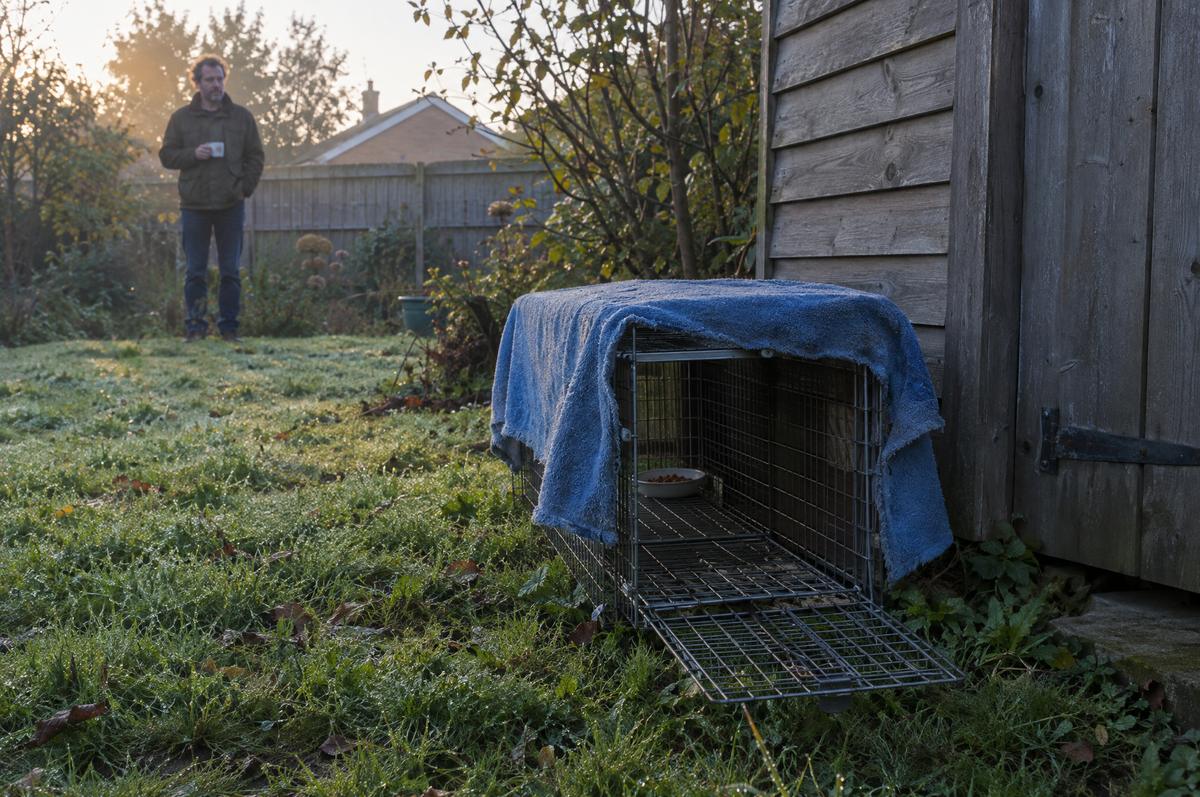
A humane trap is a wire box with a door that closes behind the cat. In the study, 171 owners used a humane trap or a drop trap. Of those who trapped their cat and found it alive, 72% said the trap helped most.
The Companion Animal Register gives clear rules for a trap:
- Set it only when you have a good reason to think your cat is there. Do not set it “just in case”.
- Get the consent of the property owner. Tell them when the trap is set and when you will check it.
- Tell the neighbours. Ask them to keep their own cats inside while the trap is set.
- Use strong-smelling food that your cat likes as bait.
- Check the trap often: every 3 to 6 hours in the day, and first thing in the morning after a night.
- Never set it without shade or shelter if hot, cold or wet weather is coming.
- Read the trap instructions before you set it. Follow the law where you live.
Expect other animals in the trap, such as other cats. Let them go calmly. In the study, 4% of the cats found alive outside were found in a cat trap.
Keep your hope, and your record
Write down each search, each sighting and each call, with the date and time. A sighting log shows you where your cat goes, and when. Cats Protection says it often reunites cats with owners weeks, months or even years after they went missing.
The Lost Cat Kit has the pages for this stage: a humane trap plan with trap checks, a sightings log, a night and dawn search log, a call and visit list, and a LOST CAT poster. If your cat is an indoor cat that just got out, start with what to do when an indoor cat gets out.
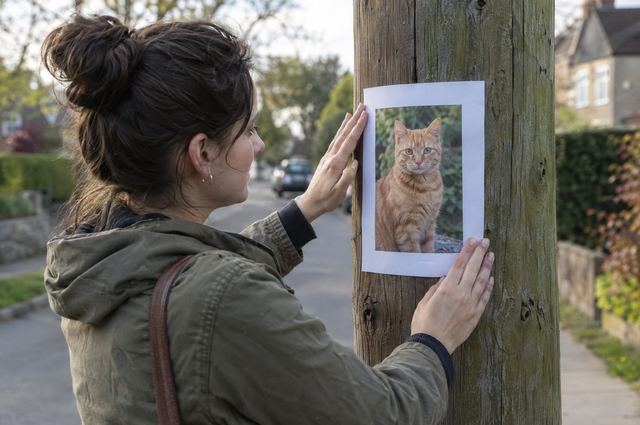
Keep your flyers fresh. Our guide to a lost cat flyer: what to put on it, and where to post it shows what to put on the page.
Questions
Is it normal for a cat to go missing for 3 days?
For an indoor cat, no. Treat it as lost and search now. Cats Protection says some cats that go outside disappear for days and come back healthy. If this is not normal for your cat, follow a search plan.
What are the chances of finding a lost cat after a week?
Good, and they still grow. In the 2018 study, 34% of missing cats were found alive by day 7. By day 30 it was 50%, and by day 61 it was 56%. After about two months, few more cats were found.
How long can a cat hide?
Days. The Companion Animal Register in New Zealand says it is common for a cat to hide for 3 to 10 days before it feels calm and hungry enough to come out. Search every 24 to 48 hours for the first 2 weeks.
How often must I check a humane trap?
Often. The Companion Animal Register advises a check every 3 to 6 hours in the day, and first thing in the morning after a night. Local law may also set a limit. Never leave a trap without shade or shelter in hot, cold or wet weather.
When should I stop looking for my cat?
Only you can decide. Cats Protection says it often reunites cats with owners weeks, months or even years after they went missing. Keep your microchip details current and your posters up, even if you search less.
Sources
- Huang L, Coradini M, Rand J, et al. Search methods used to locate missing cats and locations where missing cats are found. Animals 2018;8(1):5
- Weiss E, Slater M, Lord L. Frequency of lost dogs and cats in the United States and the methods used to locate them. Animals 2012;2(2):301-315
- Companion Animal Register (New Zealand): Lost pet advice for cats
- Cats Protection: Lost a cat
This article helps you organise care. It does not replace advice from your vet.