What to do if your pet is lost: find a lost dog or cat, step by step
Your dog slipped the lead at the park. Your indoor cat shot out of an open door. Or you found a frightened dog with no collar. This guide puts every step in order, for owners and for finders. Each step links to our detailed guide on that step.
This page gives general information. It is not legal advice. Rules on lost and found animals differ by city and state.
You have a good chance
Most lost pets go home. In a 2012 US survey by Weiss, Slater and Lord, about 14% of dogs and 15% of cats were lost in a five-year period. Of those, 93% of dogs and 75% of cats were recovered.
Dogs and cats come home in different ways. The same survey found that dogs were most often found by searching the neighbourhood. Cats most often came home on their own. So the plan for a dog and the plan for a cat are not the same.
The first hour
Act at once. The ASPCA says swift action and neighbourhood networking increase the odds of finding your pet.
- Search your home. The ASPCA says to look under beds, in closets, in dark and small places, and behind furniture. Shake a treat jar or a food bowl.
- Ask who saw your pet last. Note the time and the place.
- Search close to home. Walk, do not drive. Call your pet’s name calmly.
- Phone for help. Call animal control, local shelters, vets and rescue groups. The ASPCA says one of them may already have your pet.
- Check the microchip record. Make sure the registry has your current phone number.
If your dog is lost
Lost dogs are often found nearby, or by a call to an animal agency. In a JAVMA study of 187 lost dogs in Ohio, 71% were recovered, with a median of 2 days. The most common ways back were a call or visit to an animal agency, a dog licence tag, and neighbourhood signs. Owners who called or visited an animal agency had a higher chance of recovery.
Our guides go step by step:
If your cat is lost
Lost cats usually hide close to home. In a study of 1,210 missing cats by Huang and colleagues, 75% were found within 500 metres of where they escaped. The authors found evidence that a physical search increased the chance of finding a cat alive. Indoor-only cats travelled much shorter distances than cats with outdoor access.
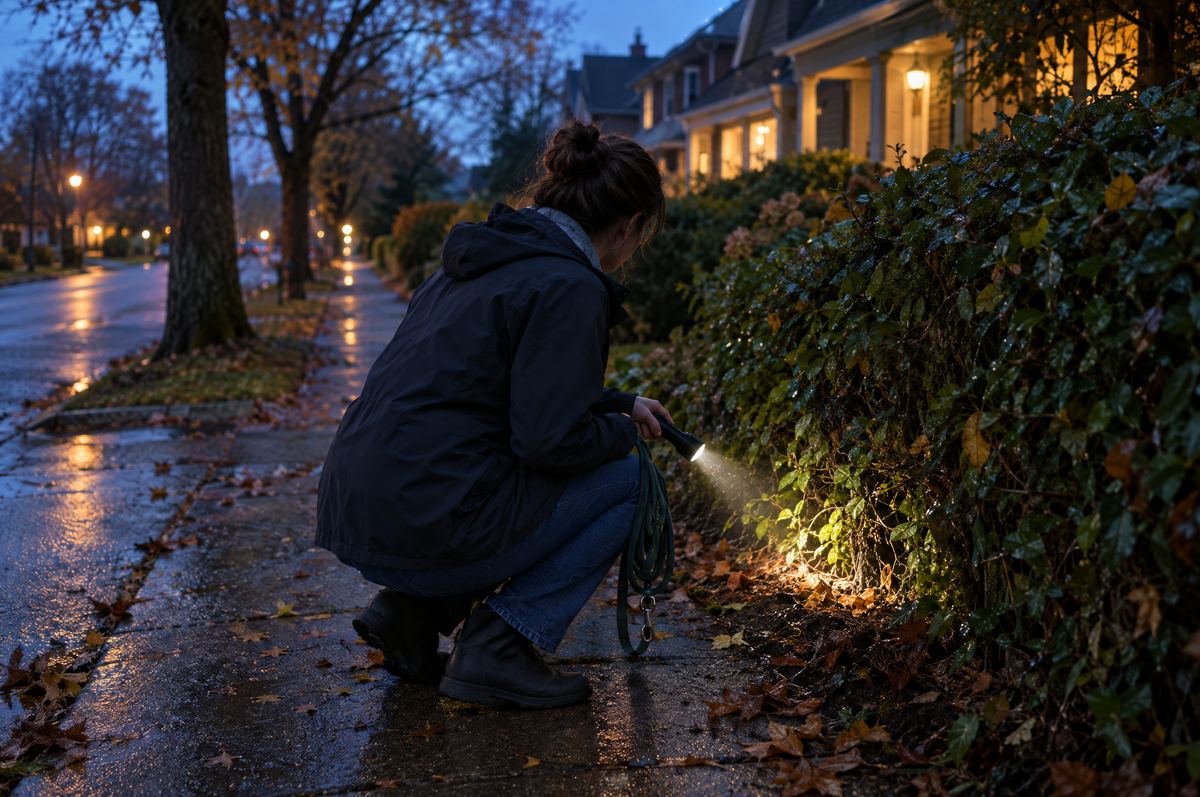
Search slowly and quietly. Look under decks, porches, sheds and cars. Search again at night with a flashlight.
Our guides go step by step:
Time matters. Huang and colleagues found 34% of cats were recovered alive within 7 days, and few were found alive after 90 days. They advise a thorough search in the first week.
Visit the shelters in person
Call, then go. The ASPCA says to check in with shelters daily, and to visit in person with photos of your pet.
Shelters hold strays for a limited time. Huang and colleagues note that the holding period in US and Australian shelters is usually 3 to 5 business days. Ask each shelter what its period is.
Posters and posts
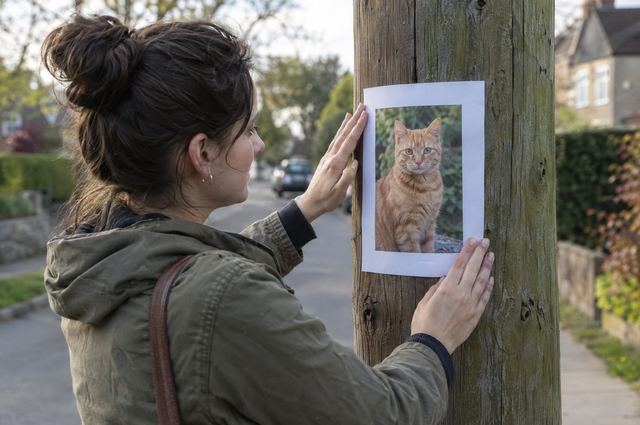
Put the word out wide. The ASPCA advises one flyer design, used everywhere, with:
- A big headline people can read from far away, such as “LOST DOG” or “MISSING CAT”.
- One clear, recent photo.
- Breed, sex, colour, age, weight and any special marks.
- When and where your pet was last seen.
- Your name and two phone numbers.
The ASPCA suggests vets, pet shops, groomers, dog parks and busy shops. It also says to put flyers at children’s eye level, because children notice animals. Post on local “lost pet” pages online too. Our guide to a lost cat flyer shows what to put on it, line by line.
Check the microchip
A microchip only works if the details are right. The AVMA says the chip holds only a number, and you must keep your contact details current with the registry.
A JAVMA study of 7,704 microchipped animals in 53 shelters shows why. When shelters could not find the owner, the main reason was a wrong or disconnected phone number. Of the animals whose registry was contacted, only 58% were registered in the database.
Do this today, even if your pet is at home. Our guide on how to check if your dog’s microchip is registered shows each step. The same steps work for cats.
If you found a lost pet
Your first job is safety. Humane World for Animals says a frightened animal can behave unpredictably, and may bite or scratch. If you feel unsafe, stay in your car and call animal control.
If you can help safely:
- Check for a collar and tags.
- Take the animal to a vet or shelter for a microchip scan.
- Tell animal control or the shelter that you have it. Humane World says this lets them match it if the owner calls.
- Keep it apart from your own pets.
- Post a found notice with a photo. Keep one detail back, so you can check a caller is the real owner.
Humane World for Animals also says a finder does not own a found animal straight away. In almost every state, the legal holding period must pass first, and you must try to find the owner.
Our guides cover each case:
Before it happens
The best time to plan is now:
- A collar with an ID tag and your phone number. The ASPCA says this applies to indoor-only pets too.
- A microchip, with your current details in the registry.
- Recent, clear photos of your pet, from the side and the front.
- A list of your local shelters and animal control, with phone numbers.
Our free pet emergency card puts your pet’s key details and phone numbers on one page. If your dog fears loud noises, read dog scared of fireworks before New Year.
Every guide in this series, in order
- Lost dog: what to do in the first hours: the first steps, in order.
- How far do lost dogs travel?: what two studies found.
- Indoor cat got out?: where to look first.
- Lost cat: where to look first: the first week.
- Cat missing for 3 days or more?: the chances, and what to do now.
- Lost cat flyer: what to put on it, and where.
- How to check a dog’s microchip registration: step by step.
- Found a stray dog?: the first hour.
- Found a stray cat?: lost pet or community cat.
A plan on paper
If you want every step ready before you need it, the Lost Dog Kit and the Lost Cat Kit are fillable PDFs. The dog kit has a first-hours call list, a LOST DOG poster, and search and sighting logs. The cat kit has a search plan, a LOST CAT poster, a humane trap plan, and call and sighting logs.
Questions
What is the first thing to do when your pet is lost?
Search your home first. The ASPCA says to look under beds, in closets and behind furniture, because a pet may be hiding or asleep. Then search the streets nearby and call your local shelters, animal control and vets. Do not wait a day to start.
What are the chances of finding a lost pet?
Good for most dogs, lower for cats. In a 2012 US survey by Weiss, Slater and Lord, 93% of lost dogs and 75% of lost cats were recovered. Dogs were most often found by searching the neighbourhood. Cats most often came home on their own.
How far do lost cats go?
Usually not far. In a study of 1,210 missing cats by Huang and colleagues, 75% were found within 500 metres of where they escaped. Indoor-only cats travelled shorter distances than cats with outdoor access. Search close to home, slowly, and in person.
Should I visit the shelter or just call?
Visit in person, and often. The ASPCA says to check in with shelters daily, in person, with photos of your pet. In a JAVMA study of 187 lost dogs, owners who called or visited an animal agency had a higher chance of getting their dog back.
Does a microchip help find a lost pet?
Yes, if the details are current. In a JAVMA study of 7,704 microchipped shelter animals, the most common reason an owner could not be found was a wrong or disconnected phone number. Check your registry record today. The AVMA says to ask your vet to scan the chip at checkups.
What should I do if I find a lost dog or cat?
Keep yourself safe, then check for a tag. Have the animal scanned for a microchip at a vet or shelter. Humane World for Animals says to tell animal control or the shelter that you have it, so the owner can find it. Post a found notice.
Can I keep a stray pet I found?
Not straight away. Humane World for Animals says that in almost every state, a finder does not own a found animal until the legal holding period has passed and they have tried to find the owner. Ask your local animal control about the rules.
Sources
- ASPCA: Finding a lost pet
- Weiss E, Slater M, Lord L. Frequency of lost dogs and cats in the United States and the methods used to locate them. Animals 2012;2(2):301-315
- Huang L, Coradini M, Rand J, et al. Search methods used to locate missing cats and locations where missing cats are found. Animals 2018;8(1):5
- Lord LK, Wittum TE, Ferketich AK, Funk JA, Rajala-Schultz PJ. Search and identification methods that owners use to find a lost dog. JAVMA 2007;230(2):211-216
- Lord LK, Ingwersen W, Gray JL, Wintz DJ. Characterization of animals with microchips entering animal shelters. J Am Vet Med Assoc 2009;235(2):160-167
- AVMA: Microchips reunite pets with families
- Humane World for Animals: How to help a stray pet
This article helps you organise care. It does not replace advice from your vet.