Lost cat: where to look first, and what to do in the first week
A lost cat does not behave like a lost dog. A dog often runs and looks for people. A frightened cat usually hides, close to home, and stays quiet. So the search for a cat is slower and closer.
This guide is one step in our complete guide on what to do if your pet is lost, for owners and for finders.
Most missing cats are close to home
A 2018 study collected reports on 1,210 missing cats. It found these facts:
- 75% of the cats were found within 500 metres of the place they escaped.
- Indoor-only cats went less far than cats that were allowed outside.
- About a third of the cats were found alive within 7 days. Few were found alive after 90 days.
- A physical search increased the chance that the owner found the cat alive.
The authors say that a thorough physical search in the first week is a useful plan. Start it today.
Search your home first
Check the house before you go outside. Cats hide well.
- Look under beds, in closets, behind large furniture and inside cupboards.
- Check small, dark places, such as the back of a wardrobe or behind the washing machine.
- Shake a food bowl or a treat bag, the sound your cat knows.
Search outside, slowly and close
Walk around your home in small circles. Make each circle a little larger.
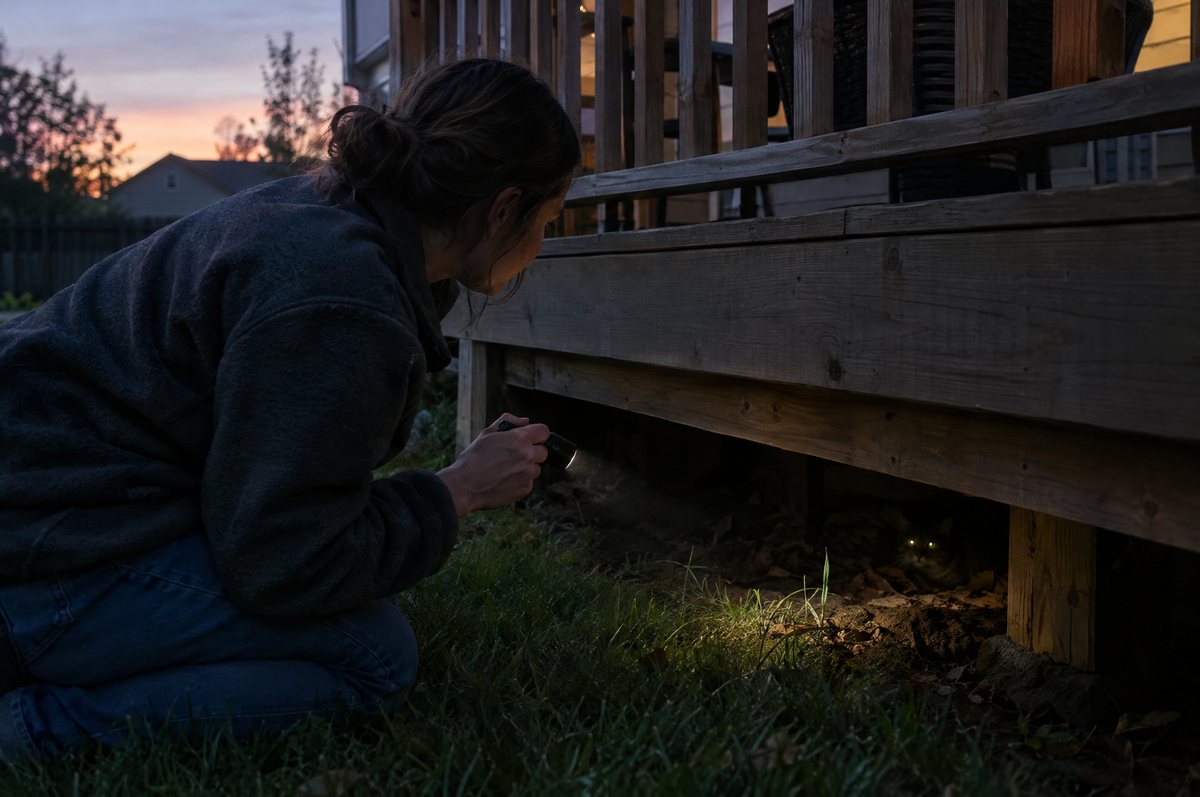
- Look under decks, porches, sheds, cars and thick shrubs.
- Ask each neighbour to check their shed, garage and basement. A curious cat can get shut in.
- Look with a torch. The light shows your cat’s eyes, also in the dark.
- Search again in the evening and early morning, when the street is quiet.
- Call softly. A frightened cat may stay quiet even when it hears you.
Write down each place you search, with the date. Then you know which places you checked.
Make the calls and check the chip
Phone animal control, the shelters near you, local vets and rescue groups. Visit the shelters in person, bring photos and go back often.
Then call the microchip registry. Confirm that your name and phone number are current, and tell them your cat is lost. The AVMA says that the chip works only when the registry details are current.
Put up posters close to home
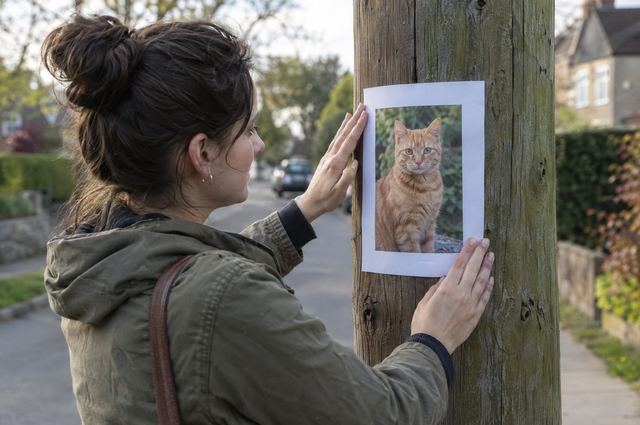
Most found cats were close, so most posters go close. Use one design for all copies.
- A big headline: MISSING CAT
- One clear, recent photo
- Colour, age, sex and marks that make your cat different
- When and where your cat was last seen
- Your name and two phone numbers
Put them on the streets around your home and give them to neighbours. Also use vet clinics, pet shops and local noticeboards. Post the same photo on local lost pet pages online.
Get ready before it happens
Fit a collar and ID tag with your current phone number, also on an indoor cat. Keep the microchip number and the registry name in one place. Take a clear photo every few months.
The Lost Cat Kit puts these steps in order. Search inside first, go door to door, and search again at night and at dawn. It has a LOST CAT poster, a humane trap plan, a call list, a search map, and logs for each search and each sighting.
If your cat lives indoors and just got out, read what to do when an indoor cat gets out. If your cat has been gone for 3 days or more, read the chances, and how to use a humane trap safely.
Ready to print a poster? Read lost cat flyer: what to put on it, and where to post it. Found a cat instead? Read found a stray cat: lost or community cat, and what next.
Questions
How far do lost cats go?
Most go a short distance. In the 2018 study, 75% of the cats were found within 500 metres of the place they escaped. Indoor-only cats went less far than cats that were allowed outside.
Will my cat come home on its own?
Many do. In a US telephone survey, the most common way that lost cats were found was that they came home on their own. Do not wait for that. Search in person in the first week.
Why does my cat not come when I call?
A frightened cat often hides and stays quiet, even when it hears you. Search slowly, and look into small, dark places. Look with a torch, also at night.
Does my indoor cat need an ID tag?
Yes. The ASPCA says that all pets need a collar and ID tag with a current phone number, also indoor-only pets. In the US survey, cats were less likely than dogs to have any type of ID.
Sources
- Huang L, Coradini M, Rand J, et al. Search methods used to locate missing cats and locations where missing cats are found. Animals 2018;8(1):5
- Weiss E, Slater M, Lord L. Frequency of lost dogs and cats in the United States and the methods used to locate them. Animals 2012;2(2):301-315
- ASPCA: Finding a lost pet
- AVMA: Microchips reunite pets with families
This article helps you organise care. It does not replace advice from your vet.