Found a stray dog? What to do in the first hour (US)
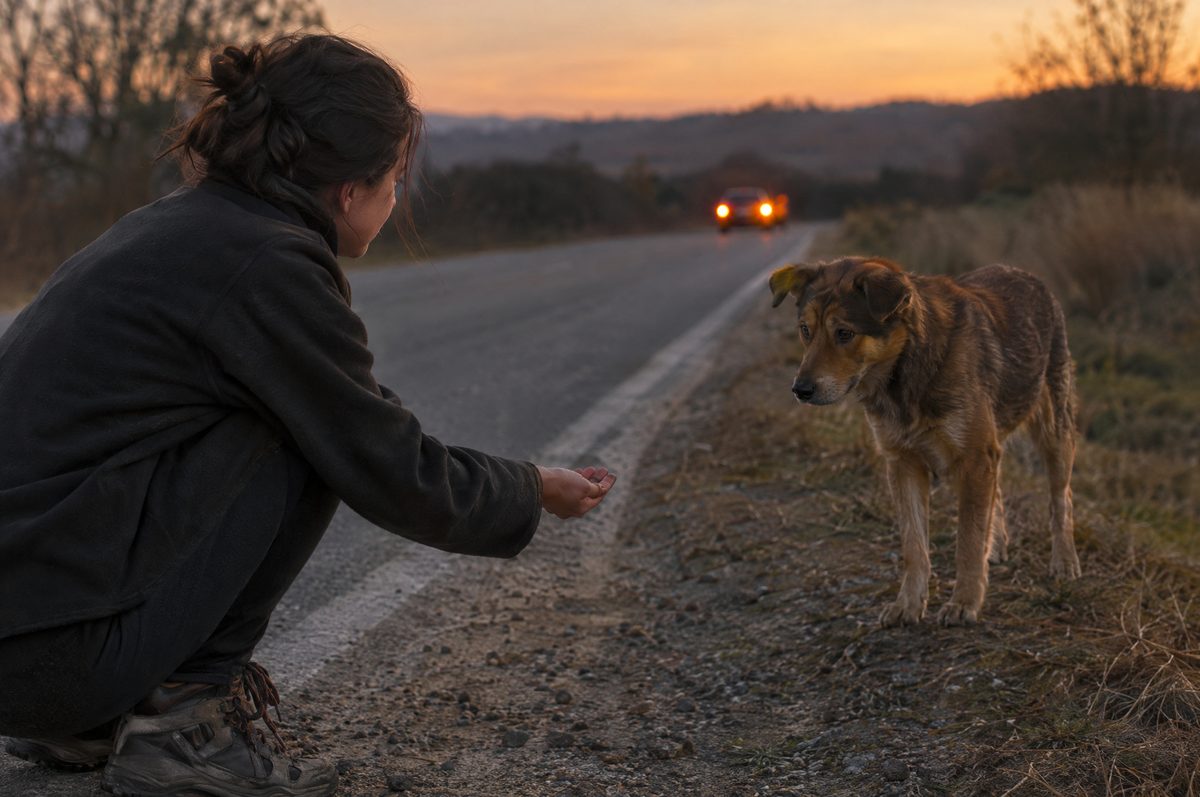
A dog trots down the road with no owner in sight. Maybe it has no collar. Maybe it looks scared. You want to help, and you want to do it safely. This guide gives the steps in order.
This guide is one step in our complete guide on what to do if your pet is lost, for owners and for finders.
This page gives general information. It is not legal or veterinary advice. Laws on found animals differ by state, county and town, so ask your local animal control.
Step 1: Stay safe, and keep the dog safe
Humane World gives this advice for a dog on a road:
- Check your mirror before you brake. Signal and pull fully off the road.
- Switch off the engine, set the brake and turn on your hazard lights.
- A sudden move, even opening your car door, can make a scared animal run into traffic.
- If the dog seems threatening, or you feel uneasy, stay in your car.
If you can safely restrain the dog, use a leash, a cloth or a rope. Speak calmly and keep the dog in view. Humane World says strong-smelling food such as canned tuna or dried liver can coax a dog to you.
Do not drive with a loose dog in the car. Humane World says to lure a dog into your car only if animal control can come very soon.
If you cannot catch the dog, do not chase it. Call for help, and stay nearby if you can. Give the exact place using road names, mile markers or landmarks.
Step 2: Call animal control
Humane World says to call animal control, or the police in a rural area. Do this whether or not the dog is hurt or tagged. Leave your phone number and ask how long they will take.
The ASPCA says to contact your local shelter for the next steps. In some cities there is a special way to report strays. The ASPCA names NYC311 for New York City and the LA Animal Services website for Los Angeles.
Step 3: Look for tags, then get a microchip scan
Look for a collar and tags. Keep any collar and tags on the dog.
Then arrange a microchip scan. A vet clinic or shelter can do this. Humane World explains how it works:
- A microchip is a tiny transponder, about the size of a grain of rice. It sits under the skin, often between the shoulder blades.
- It holds an ID number. It is not a GPS tracker.
- A scanner reads the number. Only shelters, animal services and similar agencies usually have scanners.
- The clinic can call the chip registry to get the owner’s details. Anyone can also use the AAHA online microchip lookup tool, which searches major registries.
- Scans can be missed if staff do not use the scanner well.
Ask for a second scan if the first finds nothing. A chip may exist but not be registered.
Our guide to checking a dog’s microchip registration shows what to do with the number.
Step 4: Decide where the dog spends the night
You have two options.
Take the dog to the shelter. Whole Dog Journal says a lost dog’s chance of going home is best at the shelter. Staff can scan for a chip and check lost-dog reports. They can also file a found-dog report. Owners tend to call shelters first.
Keep the dog while you search. Humane World says to contact your local shelter or animal control first, and tell them you have the dog. Give a description in case the owner calls. Whole Dog Journal says that if strays are quickly put down where you live, and you can feed and house the dog safely, you can tell the shelter you will keep him while you search.
If you keep the dog, Humane World gives these rules:
- Keep the dog apart from your own pets. It might be sick, scared or aggressive.
- Take photos. Make a “found pet” flyer.
- Post notices at vet clinics and on sites such as Petfinder.
Step 5: Post a found notice
Post a clear photo and a short description. Include where and when you found the dog.
Whole Dog Journal gives a tip. Keep one detail back, such as a collar colour or a marking. Ask a caller to describe it. That helps you tell the real owner from someone who is guessing.
Humane World says you can usually place a free found ad in the local paper or on sites such as Craigslist. Whole Dog Journal also suggests big photos on signs near where you found the dog, if local law allows. Put flyers up at vet clinics, pet supply shops and groomers.
Step 6: Check the law before you keep a dog
This step matters. Humane World says to check state, county and town laws. It says a finder does not automatically become the owner until the local holding period has passed. The finder must also try to reunite the dog with its owner.
Whole Dog Journal tells finders to ask shelter staff what their state requires before they claim a dog. Only then should you license the dog in your name, microchip him and register the chip.
Both sources say not to rush to find the dog a new home. Whole Dog Journal says the shelter is generally better than rehoming him yourself. It also says to keep sharing found-dog posts for at least a couple of months.
If the dog is hurt or sick
Call animal control or a vet clinic first. Humane World says shelters have limited budgets. They may not be able to pay for costly surgery. It adds that before you take an injured dog to a private vet, you should be ready to cover the cost, and you should discuss it with the vet in advance.
Ask yourself two questions, as Humane World suggests. Would you want a finder to help your own dog? Can you pay for care if no owner turns up? If you cannot, the shelter or animal control is the right place.
Be ready next time
Humane World suggests a kit for your car:
- A phone with the numbers for animal control, the shelter and a 24-hour vet.
- A carrier or cardboard box, plus a strong leash and a collar.
- A heavy blanket, water and bowls, and strong-smelling food.
- An animal first-aid kit.
If your own dog goes missing
Many of these steps work the other way. Call the shelters. Check the chip record. Post a clear photo. Our guide to what to do in the first hours when a dog is lost has the plan, and our post on how far lost dogs travel tells you where to search.
The Lost Dog Kit has a flyer page, a call list, a search map and a daily log. If you find a dog, you can use the same pages to log what you did and who you called.
Found a cat instead? Read found a stray cat: lost or community cat, and what next.
Questions
Can I keep a stray dog I found?
Not at once. Humane World says a finder does not automatically become the owner until the state or local holding period has passed. You must also try to find the owner. Ask animal control or your shelter what your area requires.
Who do I call when I find a dog?
Humane World says to call animal control, or the police in a rural area, even if the dog has tags or is not hurt. The ASPCA says to contact your local shelter. Leave your phone number and give the exact place.
How do I check a dog for a microchip?
Take the dog to a vet clinic or shelter. Staff use a scanner. Humane World says only agencies and clinics usually hold scanners. The clinic can then call the chip registry to reach the owner. Anyone can also use the AAHA online lookup tool.
Should I take a stray dog to a shelter?
Whole Dog Journal says a lost dog has the best chance of finding its owner at the shelter. Owners look there first. If strays are put down quickly where you live, tell the shelter you will keep the dog while you search.
What if the dog is hurt?
Call animal control or a vet clinic first. Humane World says to be ready to cover the cost if you take the dog to a private vet, and to discuss it in advance. Shelters have limited budgets.
Is it safe to touch a stray dog?
A frightened dog can bite. Humane World says that a sudden move can make a frightened animal bolt, and that you should stay in your car if the animal seems threatening. Keep calm, stay at a distance and call for help.
Sources
- Humane World for Animals: How to help a stray pet
- Whole Dog Journal: What to do with a stray dog (Nancy Kerns, 15 July 2023)
- ASPCA: Finding a lost pet
- Humane World for Animals: Microchips, high-tech identification for lost pets
This article helps you organise care. It does not replace advice from your vet.