How far do lost dogs travel? What two studies found, and where to search
Your dog ran out of the gate an hour ago. Now you picture it miles away, crossing a highway. That can happen, but it is not the usual case. Two studies measured how far lost dogs actually go. Most were found close to home, and most were found within days.
This guide is one step in our complete guide on what to do if your pet is lost, for owners and for finders.
What the studies found
Ohio, 2005. Researchers phoned the owners of 187 dogs lost in Montgomery County, Ohio. Of the 124 recovered dogs with a known distance, these were the results:
| Where the dog was found | Dogs |
|---|---|
| Came home on its own | 8% |
| Less than 1 mile from home | 71% |
| 1 to 5 miles from home | 14% |
| More than 5 miles from home | 7% |
Of all 187 dogs, 71% were recovered. The median time to recovery was 2 days.
Dallas, 2019. A study looked at stray dogs that Dallas Animal Services returned to their owners. For 5,228 dogs, the shelter knew both the home address and the place the dog was found. Of these, 70% were found within 1 mile of home. And 42% were found within about 400 feet, about one city block.
Dogs found in the northern part of Dallas had gone farther from home, a median of 1.5 to 2.5 miles. Dogs found in the denser southern part had gone 0 to 0.5 miles. So a dog may go farther where houses are far apart.
Why some dogs go farther
The studies did not measure every reason. Some facts help you plan your search:
- In Dallas, distance changed with the area. Dogs found in the north, where homes are more spread out, had gone farther.
- A finder may take a dog to the closest vet, the Connecticut Humane Society says. So call the vets near the place your dog was lost.
- In the Ohio study, 7% of dogs were found more than 5 miles from home. So do not stop at your street if the first day finds nothing.
Search close first, then wider
Start at home and work out. The ASPCA gives these first steps:
- Ask everyone at home where they last saw the dog.
- Search the house, the garden and the garage. A scared dog can hide under a bed or a deck.
- Walk or drive slowly around your neighbourhood with a recent photo.
- Look under porches and shrubs. Ask neighbours to check their sheds and garages.
- Shake a food dish, a treat jar or a favourite toy.
Then walk the routes your dog knows: your daily walks, the park, a friend’s house. Search each route again later in the day.
Follow the walk routes, by day and at night
The Connecticut Humane Society says dogs often follow their normal walking routes. It also says a dog is more likely to run on a cleared path than through a wooded area. So search the paths and pavements your dog knows before you search the woods.
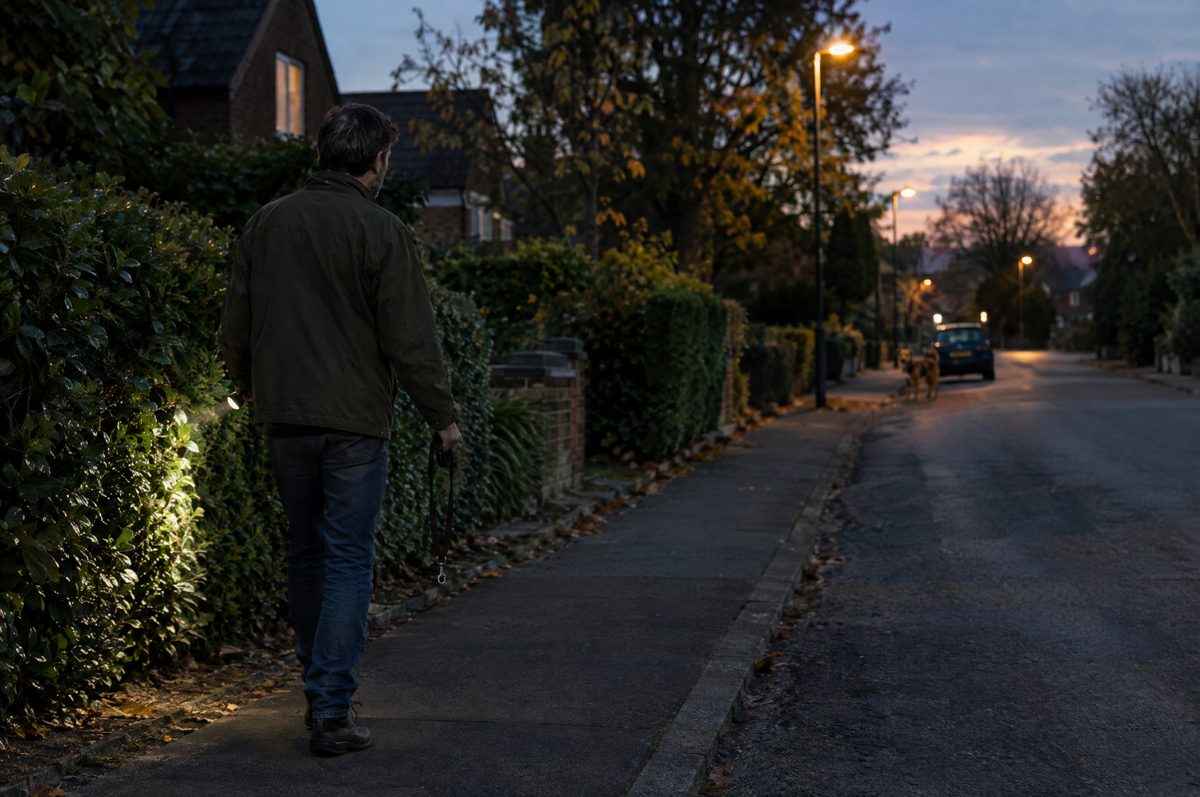
No large study has tracked where lost dogs go at night. Search at dusk and in the early morning too, when the streets are quiet and you can see and hear more.
- Bring a flashlight. Look under parked cars, along hedges and fences, and in garden corners.
- Bring treats, as the Connecticut Humane Society advises.
- Walk slowly. Stop often and listen.
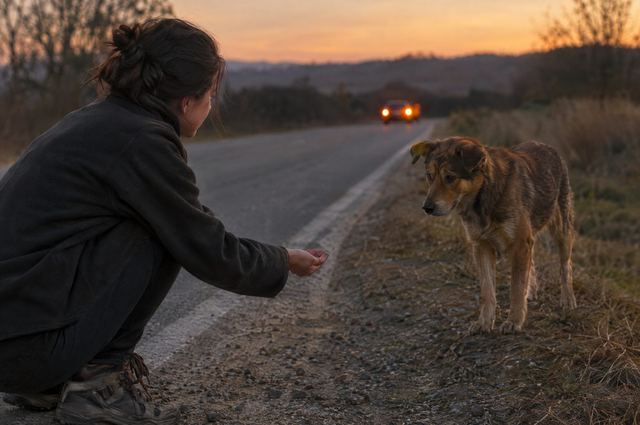
- If you see your dog, do not chase it. The Connecticut Humane Society says a lost dog may be disoriented. Sit down and call your dog softly.
- If your dog likes car rides, open a car door. The same guide suggests it.
Stay safe. Do not search alone on busy roads or in deep woods in the dark.
Make the calls in the first hours
In the Ohio study, three actions made recovery more likely:
- Owners who called an animal agency were about twice as likely to recover the dog over time.
- Owners who visited an animal agency were also more likely to recover it.
- Dogs wearing a dog licence tag were more likely to be recovered.
A call or visit to an animal agency was how 35% of the recovered dogs came home. The owners who found their dogs also visited the shelter more often: a median of every 2 days. The owners who did not find their dogs waited a median of 17.5 days between visits.
So call animal control, the shelters, rescue groups and vet clinics today. Call the shelters in the next towns too. Then visit in person with a photo, every day or two. The ASPCA says to check shelters daily.
Check the ID and the microchip
In the Ohio study, only 48% of lost dogs wore any ID. A licence tag led to recovery for 32% of the dogs that wore one. A personal ID tag did so for 31%.
In the Dallas data, healthy adult stray dogs with a microchip went home 71% of the time. Dogs without a chip went home 39% of the time. So call the microchip registry now. Report your dog as lost, and check that your phone number is current. Read how to check if your dog’s microchip is registered.
Put up posters close to home
In the Ohio study, 79% of dogs with a known distance were found less than 1 mile from home, or came home alone. The authors say owners will have the most success with signs close to home.
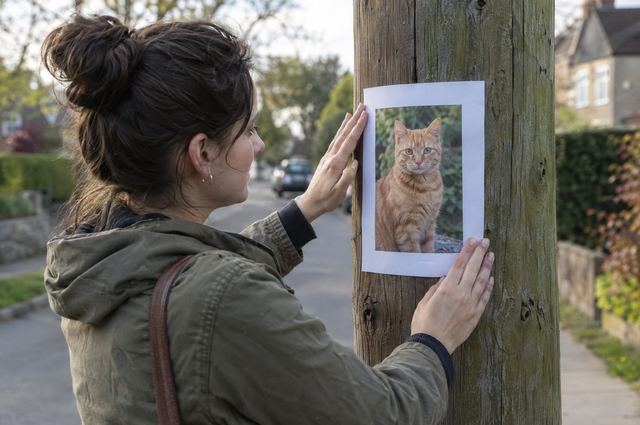
The ASPCA suggests a big headline, LOST DOG, and one clear, recent photo. Add the breed, sex, colour, age, weight and any marks. Say when and where your dog was last seen. Give two phone numbers. Put posters on lampposts near the place your dog was lost, and at children’s eye level near schools.
Keep going
A US telephone survey found that 93% of lost dogs were recovered. The most common ways were a search of the neighbourhood and the dog coming home on its own. So keep searching close, keep calling, and keep visiting the shelters.
The Lost Dog Kit holds all of this in one place. It has a first hours checklist, a map of your walk routes, a search map, a call and visit list for animal control in your town and the next towns, a sightings log and a LOST DOG poster. For the step-by-step first hours, read what to do when your dog is lost.
If you are the one who found a dog, read found a stray dog: what to do in the first hour.
Questions
How far can a lost dog travel in a day?
Some go far, but most do not. In a study of 187 lost dogs in Ohio, 71% of the dogs with a known distance were found less than 1 mile from home. Only 7% were more than 5 miles away.
Will a lost dog come home on its own?
Some do. In the Ohio study, 8% of recovered dogs came home on their own. In a US survey, coming home alone and a search of the neighbourhood were the most common ways that lost dogs were found. Do not wait for it. Search and call now.
Should I search for my lost dog at night?
Yes, if it is safe for you. Streets are quieter at night. Bring a flashlight and treats, walk slowly, and look along the routes your dog knows. If you see your dog, do not chase it. Sit down and call it softly.
How often should I visit the shelter?
Every day or two. The ASPCA says to check shelters daily, in person, with photos. In the Ohio study, owners who found their dogs visited a median of every 2 days. Owners who did not find their dogs waited a median of 17.5 days between visits.
What are the chances of finding a lost dog?
Good. In a US telephone survey, 93% of lost dogs were recovered. In the Ohio study, 71% were recovered, and the median time was 2 days.
Sources
- Lord LK, Wittum TE, Ferketich AK, Funk JA, Rajala-Schultz PJ. Search and identification methods that owners use to find a lost dog. JAVMA 2007;230(2):211-216
- Kremer T. A new web-based tool for RTO-focused animal shelter data analysis. Frontiers in Veterinary Science 2021;8:669428
- Weiss E, Slater M, Lord L. Frequency of lost dogs and cats in the United States and the methods used to locate them. Animals 2012;2(2):301-315
- ASPCA: Finding a lost pet
- Connecticut Humane Society: Have you lost a dog? (flyer)
This article helps you organise care. It does not replace advice from your vet.